High-Density Grinding Media Balls for Industrial Applications

The Day the Scratch Disappeared
I remember a project years ago. We had a batch of alumina components with a beautiful glaze, but a final inspection revealed subtle, hazy scratches from the previous grinding stage. The deadline was tight. Re-firing was impossible. That’s when we pulled out the 400 grit silicon carbide. Two hours of careful lapping later, the haze was gone. The surface wasn’t just smooth; it had a refined, uniform satin finish that passed inspection with flying colors. That’s the precision this powder delivers.
Why 400 Grit Silicon Carbide is a Ceramic Workshop Staple
For fine grinding and lapping ceramics, you need an abrasive that’s harder than your workpiece. Silicon carbide (SiC) fits that bill. At 400 grit (approximately 35 microns average particle size), it hits the sweet spot between cutting speed and final surface quality. It’s significantly harder than aluminum oxide, which means it cuts cleaner and wears slower when working on tough materials like zirconia or silicon nitride. Many users on forums like Ceramic Arts Daily or Reddit’s r/Pottery mention how switching to a dedicated 400 SiC powder gave them more control over final finishes compared to generic sandpapers.
Your Step-by-Step Guide to Using 400 Grit SiC Powder
Step 1: Prepare Your Workspace and Slurry
Safety first. Put on a NIOSH-approved N95 dust mask and safety glasses. Fine powder can irritate lungs. Work in a well-ventilated area.
- Mixing the Slurry: Use a non-porous container like glass or plastic. A common starting ratio is 1 part 400 grit silicon carbide powder to 3 parts water or light honing oil. For oil, use a paraffin-based or dedicated lapping oil.
- Consistency is Key: Mix thoroughly. You want a creamy, pourable slurry. Too thick and it will glaze over; too thin and it lacks cutting power.
Step 2: Apply and Work the Abrasive
This is where the magic happens. We’re not sanding; we’re lapping.
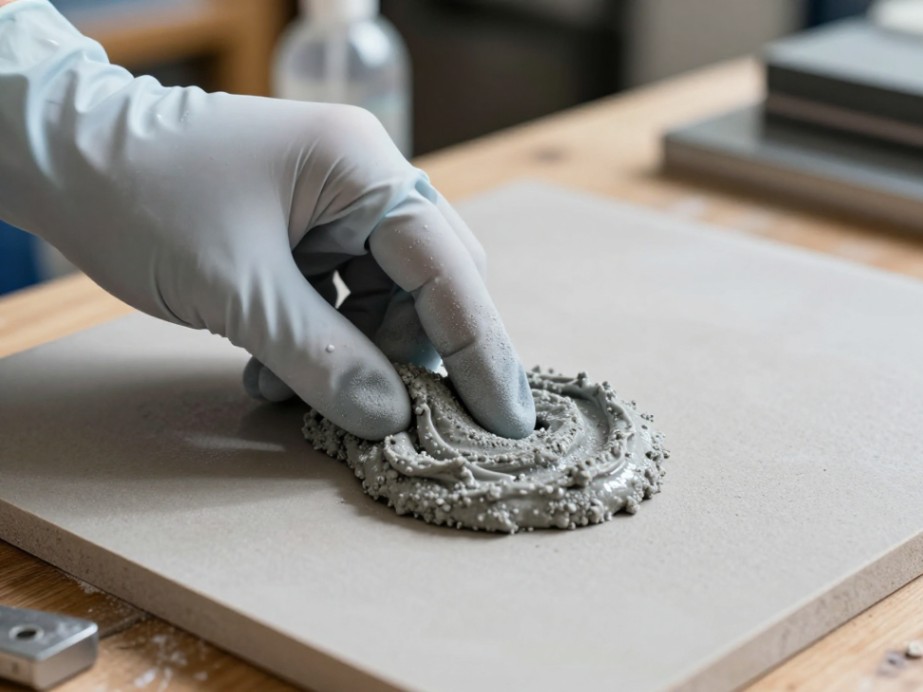
- Apply Slurry: Spread a thin, even layer of your mixed slurry onto your flat lapping plate (cast iron or glass are ideal) or directly onto a felt polishing wheel.
- Use a Figure-Eight Pattern: For flat work, move your ceramic piece in a gentle, consistent figure-eight motion. This prevents grooving and ensures even stock removal. Apply light, consistent pressure.
- Replenish as Needed: As the slurry turns gray with removed material, add a few drops of liquid and a small pinch of fresh powder to maintain cutting action.
Step 3: Clean and Inspect
Rinse the ceramic piece thoroughly with clean water. Dry it completely. Inspect under good light. The 400 grit finish should be uniform and free of deeper scratches from previous, coarser steps. It creates the perfect pre-polish surface.
Critical Know-How for Perfect Results
Understanding these details separates a good finish from a great one.
- Grit Comparison: Think of it this way. Use 220 grit for major shape correction. The 400 grit is your primary fine grinding powder to remove 220’s scratches and establish final geometry. Move to 600 grit for a pre-polish. 400 is the critical bridge.
- Material Compatibility: This grit works exceptionally well on high-alumina ceramics, zirconia, silicon carbide itself, and most advanced technical ceramics. It’s less ideal for soft, porous clay bodies where it can embed.
- Buying Advice: Don’t just buy “silicon carbide.” Look for FEPA-graded 400 grit (F600). Check the datasheet for a tight particle size distribution. Consistent grain size means predictable, even cutting. Store it in a sealed, dry container to prevent clumping.
Wrapping Up the Grit
Mastering 400 grit silicon carbide powder gives you control. It turns a rough ground ceramic part into a precision component ready for final polishing or coating. The process demands attention to slurry, motion, and pressure. But the result-a dimensionally accurate, uniformly fine surface-is worth the focus. Try it on your next project that needs that critical fine grind. Start with a small amount, follow these steps, and see the difference in your finish.
eduloc founded on October 17, 2012, is a high-tech enterprise committed to the research and development, production, processing, sales and technical services of ceramic relative materials such as Your. Our products includes but not limited to Boron Carbide Ceramic Products, Boron Nitride Ceramic Products, Silicon Carbide Ceramic Products, Silicon Nitride Ceramic Products, Zirconium Dioxide Ceramic Products, etc. If you are interested, please feel free to contact us.
RELATED POSTS
High Purity Zirconium Silicide ZrSi2 Powder CAS 12039-90-6, 99.5%

does dragon ball grind work with friends xenoverse 2
Cupric (II) Oxide (CuO)-Sputtering Target

Lead Titanium (PbTi (2:1 at%))-Sputtering Target

Yttria-Stabilized Zirconia (YSZ) ZrO2-Y2O3) CAS 64417-98-7 Sputtering Target Powder