High-Density Grinding Media Balls for Industrial Applications

Key takeaways
- Cost-effectiveness depends on the application, not on a universal ranking of the two media.
- Silicon carbide balls are harder and generally more wear-resistant than alumina balls.
- Alumina balls are generally lower in upfront cost and widely used in conventional milling.
- Total cost of ownership includes media price, replacement frequency, downtime, energy, and product quality.
- Contamination and product purity can make media wear a quality issue, not just a maintenance issue.
- A controlled trial under your own mill conditions is the most reliable way to compare the two.
Silicon Carbide Balls vs Alumina Balls: The Short Answer on Cost-Effectiveness
Neither silicon carbide balls nor alumina balls win on cost-effectiveness in every case, because the answer depends on what you are grinding, how you are grinding it, and how you define cost. Silicon carbide balls are harder and denser, so they tend to suit abrasive, high-wear duties where contamination and media loss are the main cost drivers. Alumina balls are generally positioned as a lower-cost, widely used grinding medium for many conventional milling tasks. The practical way to compare them is to look at purchase price, wear life, contamination risk, energy use, and the value of the finished product together, rather than at the price per kilogram alone.
This article compares silicon carbide balls and alumina balls across the dimensions that usually decide cost-effectiveness: material properties, wear and replacement frequency, contamination, energy and throughput, and application fit. It is written for buyers and process engineers who need a structured way to choose, not a blanket recommendation. Where a claim depends on your specific mill, feed material, or quality target, it is flagged as something to verify with your supplier or through your own trials.
| Comparison Dimension | Silicon Carbide Balls | Alumina Balls |
|---|---|---|
| Material | Made from silicon carbide, a hard technical ceramic | Made from aluminum oxide, available in multiple purity grades |
| Hardness and wear resistance | Harder and generally more wear-resistant | Lower hardness than silicon carbide; wear depends on grade and duty |
| Density and milling behavior | Denser media can transfer more energy per impact | Density varies by grade; adaptable to many standard mills |
| Purchase price | Generally higher upfront cost | Generally lower upfront cost |
| Replacement frequency | Can be lower in abrasive duties due to wear resistance | Can be higher in abrasive duties, increasing replacement cost |
| Contamination risk | Considered when media wear must be limited | Wear contribution must be compatible with product specification |
| Energy and throughput | Higher mass can affect mill load and power draw | Widely used across standard milling setups |
| Typical fit | Severe wear, downtime-sensitive, or purity-sensitive duties | Conventional milling with manageable wear and cost sensitivity |
| Decision basis | Total cost of ownership and product value | Total cost of ownership and product value |
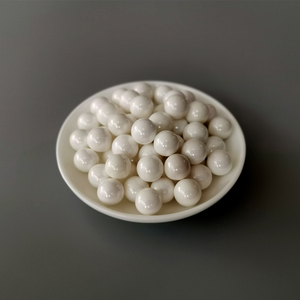
What Silicon Carbide Balls and Alumina Balls Are
Silicon carbide balls are grinding media made from silicon carbide, a very hard ceramic material. In grinding applications they are chosen when high hardness and wear resistance matter, for example when the media must survive aggressive abrasion or when the milled product must avoid certain metallic contamination. Because silicon carbide is a technical ceramic, the balls are typically produced to controlled dimensions and are used in mills, mixers, and dispersion equipment where durability is a priority.
Alumina balls are grinding media made from aluminum oxide, usually in purity grades that range from standard to high alumina content. They are one of the most common ceramic grinding media because they balance hardness, density, and cost across a broad range of milling duties. Alumina balls are used in ball mills, attritors, and similar equipment for grinding minerals, ceramics, glazes, pigments, and other materials. The choice between the two materials is therefore not simply hard versus soft; it is a question of matching media properties to the feed material and the required output.
How the Two Media Differ in Hardness, Density, and Wear
Hardness and density are the properties that most directly shape wear and milling behavior. Silicon carbide is harder than alumina, which generally means silicon carbide balls resist abrasion better when the feed is abrasive. Higher hardness can translate into slower media wear and less frequent replacement, but it does not automatically make a ball more cost-effective if the application does not need that level of wear resistance.
Density affects the energy transferred to the feed during milling. A denser ball carries more momentum per impact, which can improve grinding efficiency in some duties but also increases the load on the mill and the drive. Alumina balls are available in a range of densities depending on grade, so two alumina products can behave differently in the same mill. The practical conclusion is that hardness and density should be evaluated against your feed and mill, not treated as universal advantages.
Purchase Price vs Total Cost of Ownership
Purchase price is the most visible cost, and it is also the most misleading when comparing grinding media. A lower-priced alumina ball may need to be replaced more often in an abrasive duty, while a higher-priced silicon carbide ball may last longer and reduce replacement labor and downtime. Cost-effectiveness is therefore the sum of media purchase, replacement frequency, labor, downtime, and any impact on product quality.
A useful way to frame the decision is to ask which cost dominates in your process. If media consumption is low and the duty is mild, a lower-cost alumina ball can be the more economical choice. If wear is rapid, contamination is unacceptable, or downtime is expensive, the higher wear resistance of silicon carbide may justify its price. Because actual wear rates depend on the mill, the feed, and operating conditions, the only reliable comparison is a controlled trial under your own conditions.

Contamination and Product Purity Considerations
Contamination is a cost factor that does not appear on a media price list but can affect the value of the finished product. As grinding media wear, material from the media enters the product. For applications where the milled material must meet strict purity requirements, the wear behavior of the media becomes a quality issue, not just a maintenance issue.
Silicon carbide balls are often considered when contamination from the grinding media must be limited or when the media must withstand aggressive conditions. Alumina balls are widely used where the alumina contribution is acceptable or where the process is designed around alumina media. The right question is not which material is universally cleaner, but whether the wear products of a given media are compatible with your product specification. That is a question for your quality team and your media supplier.
Energy Use, Throughput, and Mill Compatibility
Grinding is energy-intensive, so media choice can influence operating cost through mill load and grinding efficiency. Denser media can transfer more energy to the feed, which may improve throughput in some circuits, but it also increases the rotating mass the mill must move. The net effect depends on the mill design, the fill level, and the target particle size.
Alumina balls are used across many standard milling setups and are available in multiple sizes and grades, which makes them adaptable to different mills. Silicon carbide balls are selected when their hardness and wear resistance provide an operational advantage that outweighs their cost. Neither material is automatically more energy-efficient; the comparison has to be made at the mill level, ideally with a trial that measures power draw and output quality under the same conditions.

Application Fit: When Each Media Is the More Cost-Effective Choice
Alumina balls tend to be the more cost-effective choice when the application is a conventional milling duty, the feed is not extremely abrasive, media wear is manageable, and the budget is sensitive to upfront media cost. They are also a practical choice when the process is already designed around alumina media and the product specification accepts the resulting wear contribution.
Silicon carbide balls tend to be the more cost-effective choice when wear is severe, when media replacement and downtime are costly, or when contamination from the media must be minimized. In those cases, the higher purchase price can be offset by longer service life and more stable product quality. The decision should be based on the dominant cost in your process, not on a general ranking of the two materials.
How to Run a Fair Cost-Effectiveness Comparison
A fair comparison starts by defining the cost you are trying to minimize. If it is media spend, compare price per kilogram and expected consumption. If it is total operating cost, include replacement frequency, labor, downtime, energy, and any quality losses. If it is product value, include contamination limits and consistency requirements.
Next, run the comparison under your own conditions. Use the same mill, feed material, fill level, and target particle size, and measure media wear, power draw, and output quality over a defined period. Document the results so the decision is based on evidence rather than on general claims. Finally, confirm the media specification with your supplier, including grade, size, and any certification or documentation your process requires.
Frequently Asked Questions
Common questions about silicon carbide balls and alumina balls usually focus on price, wear, and application fit. The answers below summarize the comparison logic used in this article and point to the factors that should be verified for a specific process.
Is silicon carbide more expensive than alumina? In general, silicon carbide is a higher-cost technical ceramic than standard alumina grinding media, but the relevant comparison is cost per unit of production, not price per kilogram. A higher-priced media can be more economical if it lasts longer or reduces downtime.
Which media lasts longer? Wear life depends on hardness, density, feed abrasiveness, mill conditions, and operating parameters. Silicon carbide is harder and generally more wear-resistant, but the actual difference in your process can only be established by testing.
Can I switch between the two in the same mill? Media changes can affect mill load, power draw, and product quality. Any switch should be evaluated with a trial and confirmed with the mill and media supplier.
Which is better for high-purity products? The answer depends on whether the wear products of the media are compatible with your product specification. This should be reviewed with your quality team and supplier.

Frequently asked questions
Is silicon carbide more expensive than alumina?
In general, silicon carbide is a higher-cost technical ceramic than standard alumina grinding media. However, the relevant comparison is cost per unit of production rather than price per kilogram, because a higher-priced media can be more economical if it lasts longer or reduces downtime.
Which grinding media lasts longer, silicon carbide or alumina?
Wear life depends on hardness, density, feed abrasiveness, mill conditions, and operating parameters. Silicon carbide is harder and generally more wear-resistant, but the actual difference in a specific process can only be established by testing under those conditions.
Can I switch between silicon carbide balls and alumina balls in the same mill?
Media changes can affect mill load, power draw, and product quality. Any switch should be evaluated with a trial and confirmed with the mill and media supplier before full implementation.
Which media is better for high-purity products?
The answer depends on whether the wear products of the media are compatible with your product specification. This should be reviewed with your quality team and your media supplier.
About Us
We are a professional supplier of high-performance grinding media, including alumina, silicon carbide, zirconia, and stainless steel balls. Our products serve lithium batteries, semiconductors, photovoltaics, and ceramics. With advanced technology and strict quality control, we deliver reliable quality, customized solutions, and fast delivery to global partners.
RELATED POSTS

Sodium Gluconate Concrete Retarder Global Market Research and Development in 2025-2030 accelerator and retarder in concrete

Teach you how to use polycarboxylate water reducer safely! cement superplasticizer

Molybdenum dithiocarbamate (MoDTC): the future star of high-performance lubricants and agricultural applications modtc

Calcium acetate monohydrate (Ca(OOCCH3)2•H2O)-Powder

Silicon Carbide Powder: The Secret Ingredient Powering Next-Gen Semiconductors
