High-Density Grinding Media Balls for Industrial Applications

Key takeaways
- Zirconium dioxide balls combine high density, extreme hardness, and fracture toughness for efficient ceramic grinding.
- Their chemical inertness and low wear rate minimize product contamination, meeting strict purity requirements.
- Zirconia media outlasts alumina and steel balls in demanding applications, reducing total cost of ownership.
- They are the benchmark for grinding advanced ceramics such as alumina, silicon carbide, and battery materials.
- Consistent performance batch after batch ensures high reproducibility and process stability.
What Are Zirconium Dioxide Balls?
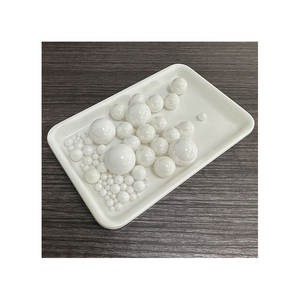
Zirconium dioxide balls (zirconia grinding beads) are advanced ceramic media designed for high-end grinding and milling. Their hardness, fracture toughness, and chemical inertness make them the preferred choice for contamination-free, high-efficiency grinding in industries like advanced ceramics, electronics, and battery materials.
Unlike conventional media, zirconia balls offer superior wear resistance and retain their spherical shape over extended use, giving consistent particle size and minimal contamination. This combination meets the strict demands of high-end ceramic grinding, where purity and precision are critical.
Key Properties That Define Zirconium Dioxide Balls
High density provides sufficient impact energy to break hard ceramic materials efficiently. The extreme hardness (well above alumina or steel) causes very slow wear, extending media life and reducing replacement frequency. Excellent fracture toughness prevents chipping or cracking under severe milling conditions. Chemical inertness means the balls react minimally with acidic or alkaline slurries, making them ideal for pH-sensitive or high-purity ceramic formulations.
Together, these properties enable zirconia balls to deliver high grinding efficiency, low contamination, and long service life—a combination other media cannot match. The consistent performance also yields better batch-to-batch reproducibility, a critical factor in industrial production of advanced ceramics.
| Property | Benefit for High-End Ceramic Grinding |
|---|---|
| High Density | Provides sufficient impact energy to break hard ceramic materials efficiently. |
| Extreme Hardness | Very slow wear rate extends media life and reduces contamination. |
| Excellent Fracture Toughness | Resists chipping and cracking under harsh milling conditions. |
| Chemical Inertness | Minimal reaction with slurries, preserving chemical purity. |
| Low Wear Rate | Reduces product contamination and maintains consistent particle size. |
| Long Service Life | Lowers replacement frequency and overall operational cost. |

Applications in High-End Ceramic Grinding
Zirconium dioxide balls are widely used in wet and dry grinding of advanced ceramic powders like alumina, silicon carbide nanoparticles, silicon nitride, and zirconia itself. They are also used in producing ceramic inks, dielectric materials for electronics, and battery cathode or anode materials, where trace contamination can degrade product performance.
In these applications, the goal is a fine, uniform particle size while keeping impurities below parts-per-million thresholds. The low wear rate of zirconia media ensures virtually no abraded material from the balls enters the product, maintaining chemical purity. Additionally, the high specific gravity enables efficient grinding in ball mills, attritors, and bead mills for lithium battery production without excessive energy consumption.
Why Zirconium Dioxide Outperforms Conventional Media
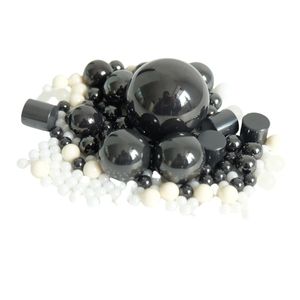
Compared to common media like alumina balls and steel balls, zirconium dioxide balls offer a distinct advantage in high-end ceramic grinding. Alumina balls, though lower in cost, have less hardness and toughness, causing faster wear and higher contamination risk. Steel balls introduce metallic ions that can ruin the purity of sensitive ceramic products and are prone to rust in wet grinding.
Zirconia balls avoid these drawbacks entirely: they do not corrode, cause minimal contamination, and last two to three times longer than alumina in many applications. Although the upfront cost is higher, the total cost of ownership often favors them due to reduced downtime, lower waste disposal, and consistent product quality. This makes them the first choice for processes where product purity and process stability are non-negotiable.
Long-Term Value of Choosing Zirconium Dioxide Balls
Investing in high-quality zirconium dioxide grinding media pays off with extended equipment life, fewer production stops, and higher yields. The enhanced durability means mills require less frequent media refilling, and consistent performance reduces the need for process adjustments. For manufacturers of high-end ceramics, maintaining tight specifications batch after batch is a competitive advantage that justifies the media cost.
The low contamination profile of zirconia balls supports compliance with strict industry standards, such as those in biomedical ceramics or semiconductor components. As ceramic applications push toward higher purity and finer particles, zirconium dioxide balls remain the benchmark grinding medium.
Frequently asked questions
What is the typical size range for zirconium dioxide balls?
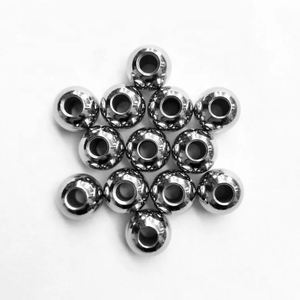
Sizes commonly range from 0.1 mm to 30 mm in diameter, depending on the milling equipment and target particle size.
Can zirconium dioxide balls be used in wet grinding?
Yes, they are highly resistant to chemical attack and corrosion, making them ideal for wet grinding of acidic or alkaline slurries.
How do zirconia balls compare to yttria-stabilized zirconia?
Most commercial zirconium dioxide balls are stabilized with yttria (3 %–5 %) to enhance toughness; the term "zirconia ball" typically refers to these stabilized versions.
Do zirconium dioxide balls require special handling or storage?
They should be stored in dry conditions to avoid moisture absorption, but they are generally robust and easy to handle.
About Us
We are a professional supplier of high-performance grinding media, including alumina, silicon carbide, zirconia, and stainless steel balls. Our products serve lithium batteries, semiconductors, photovoltaics, and ceramics. With advanced technology and strict quality control, we deliver reliable quality, customized solutions, and fast delivery to global partners.
RELATED POSTS
Fine Grade Silicon Carbide Powder for Blasting: Your Ultimate Guide to Faster, Cleaner Finishes
600 Grit Silicon Carbide: The #1 Mistake That Ruins Your Finish (And How to Fix It)

Global Magnetic Beads Market Analysis and Future Development Trend Forecast for Small Fragment DNA Extraction and Purification magnetic beads for jewelry making
How to Use Black Silicon Carbide Powder for Non-Slip Surfaces: A Guide to Durable, High-Traction Flooring
Hafnium Yttrium Oxide (HfO2-Y2O3 (92:8 Mol%))-Sputtering Target
