High-Density Grinding Media Balls for Industrial Applications

The Unmatched Mechanics of Silicon Carbide for Glass Grinding
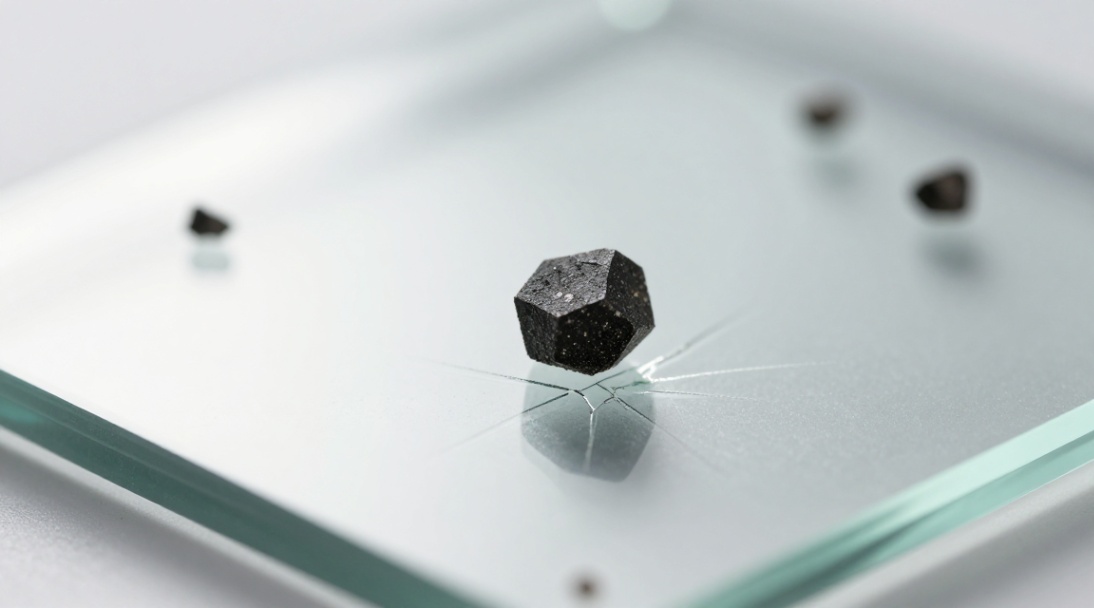
Silicon carbide abrasive powder is the definitive choice for grinding glass because of its unique, synergistic interaction with the material’s properties. Glass is a brittle, amorphous solid. Its structure lacks the ductility of metals. A silicon carbide grain acts as a precise micro-chisel. It initiates controlled, microscopic brittle fractures on the glass surface. This fracture mechanism is far more efficient than smearing or deforming the material. The extreme hardness of silicon carbide-second only to diamond and boron nitride-ensures the grains themselves do not dull prematurely. They stay sharp, maintaining a consistent cutting rate.
Key Material Properties That Drive Performance
Beyond pure hardness, three other intrinsic properties of silicon carbide define its success. First is friability. Grains are designed to fracture under pressure, creating new, sharp cutting edges. This self-sharpening action prevents glazing and maintains an aggressive surface. Second is excellent thermal conductivity. During grinding, heat dissipates quickly through the powder, reducing the risk of thermal stress and cracking in the glass workpiece. Third is chemical inertness. Silicon carbide does not react with water, common coolants, or the glass itself, ensuring a clean, predictable process free from contamination.
Comparison with Aluminium Oxide and Other Abrasives
Aluminium oxide, while excellent for steel, is a poor match for glass. Its hardness is significantly lower. When used on glass, aluminium oxide grains tend to wear down flat instead of fracturing sharply. This quickly leads to a loss of cutting power and generates excessive heat. Silicon carbide’s performance is not a marginal improvement. It is a fundamental shift to the correct abrasive for a brittle workpiece. For cost-sensitive operations, silicon carbide provides the optimal balance of cutting speed, surface control, and consumable life.
A Practical Guide to Grit Selection and Application
The progression of grit sizes follows a logical, non-negotiable path to achieve a desired finish.
- Rough Grinding & Shaping (60 – 220 grit): Coarse grits rapidly remove material and correct major contours. They leave a deeply fractured, opaque surface.
- Intermediate Grinding (320 – 600 grit): This stage begins to remove the deep scratches from the coarse grits, creating a uniform satin finish.
- Fine Lapping & Polishing Prep (800 – 1200+ grit): Fine silicon carbide powder produces a near-matte surface that is ready for the final polishing compound. This is the critical last step before a transparent polish.
Dry vs. Wet Grinding Methods
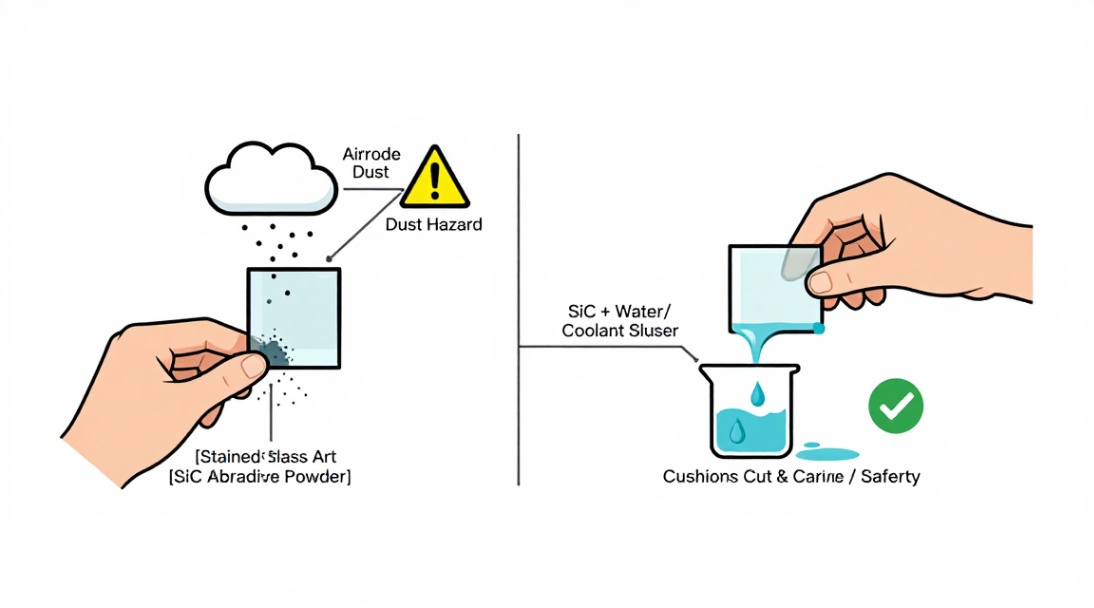
You must choose your method based on control and cleanliness. Dry grinding with loose silicon carbide powder offers maximum tactile feedback for hand work on stained glass or art pieces. However, it creates airborne dust. Wet grinding is the standard for precision and safety. Mixing the powder with water or coolant forms a slurry. This slurry cushions the cut, carries away debris, and virtually eliminates dust. It produces a finer, more consistent finish and is mandatory for machine lapping.
Equipment, Safety, and Best Practices
You can use silicon carbide powder with equipment ranging from simple hand laps and grinding wheels to sophisticated flat lapping machines. The principle remains the same: the abrasive slurry is the active cutting element. Regardless of setup, safety is paramount. Silicon carbide dust is a respiratory irritant. Always use wet methods or, if dry grinding is unavoidable, wear a NIOSH-approved respirator (N95 or better), safety glasses, and work in a well-ventilated area. Proper containment and disposal of used slurry are also essential environmental practices.
Surface Finish Progression Across Common Glass Types
The process from rough ground to pre-polish is universal, but the starting point varies. Soda-lime glass (window, bottle) is soft and grinds quickly. Borosilicate glass (laboratory, Pyrex) is harder and more thermally resistant, requiring a more patient approach. Fused silica and optical glasses demand the highest purity silicon carbide to avoid embedding contaminants. For artists, stained glass and dichroic glass grind beautifully with silicon carbide, but the final polishing stage is critical to restore full color transmission.
Making the Smart Choice for Your Operation
For the industrial shop, silicon carbide abrasive powder is the cost-effective workhorse for beveling, drilling, and surface prep before polishing. Its speed and consistency directly impact throughput. For the hobbyist or artist, it provides professional-grade results without the need for expensive diamond compounds in the early stages. The logic is clear. You need an abrasive harder than your workpiece that cuts via fracture, not deformation. You need a grain that stays sharp. You need a material that manages heat. Silicon carbide meets every requirement for glass.
Your Next Step to Flawless Glass Finishing
Theoretical understanding must lead to practical action. If you are still using the wrong abrasive or struggling with slow, hot, inconsistent glass grinding, the solution is straightforward. You need to test a high-quality silicon carbide abrasive powder. Do not compromise on purity or consistent grain sizing. I strongly recommend sourcing a sample kit with a grit progression (e.g., 100, 220, 600, 1200). Run a direct comparison on your specific glass type. Experience the difference in cutting speed, surface control, and final pre-polish quality firsthand. Contact a trusted abrasive supplier today and specify silicon carbide powder for your glass grinding application. Your process will immediately become more efficient, predictable, and professional.
eduloc founded on October 17, 2012, is a high-tech enterprise committed to the research and development, production, processing, sales and technical services of ceramic relative materials such as Why. Our products includes but not limited to Boron Carbide Ceramic Products, Boron Nitride Ceramic Products, Silicon Carbide Ceramic Products, Silicon Nitride Ceramic Products, Zirconium Dioxide Ceramic Products, etc. If you are interested, please feel free to contact us.
RELATED POSTS
Zinc Iodide (ZnI2)-Beads
Alumina Balls Contaminate Materials? Ultra-Pure Process Is The Key

Lithium Vanadate (Lithium Vanadium Oxide) (LiVO3)-Powder
Pre-Polish Stage 400 Grit Silicon Carbide Abrasive: The 35-Micron Sweet Spot for Flawless Finishes
