High-Density Grinding Media Balls for Industrial Applications

Silicon Carbide Ceramic

Purple Abrasive Ceramic Sanding Disc Silicon Carbide

Ceramic Desulfurization Nozzle Silicon Carbide

Boron Sand Blasting Nozzle Silicon Carbide Ceramic

Zirconia Alumina Sanding Ceramic Silicon Carbide

Grinding Wheel Ceramic Aluminum Silicon Carbide

Ceramic Corundum Flap Disc Silicon Carbide

Ceramic Igniter with Silicon Carbide Heater

Silicon Carbide Foam Ceramic Filter for Casting

Silicon Carbide Ceramic Bushing Mechanical Seal

High Temperature Silicon Carbide Ceramic Pipe Lining

China Manufacture Silicon Carbide Ceramic Membrane

Customize Silicon Carbide Ceramic Vacuum Furnace
Overview of Silicon Carbide Ceramic
Silicon Carbide (SiC) ceramic is an advanced engineering material synthesized through the high-temperature reaction of silica sand and carbon. Known for its exceptional hardness and stability, this technical ceramic combines the lightweight properties of ceramics with the thermal performance of metals. Silicon Carbide ceramics exist in various forms, including sintered SiC, reaction-bonded SiC (RBSC), and recrystallized SiC, each offering unique microstructures that deliver outstanding performance in the most demanding industrial environments. With its covalent bond structure, SiC provides remarkable durability that surpasses conventional ceramics and metals in extreme conditions.


Features of Silicon Carbide Ceramic
- Exceptional Hardness: Ranks 9.5 on the Mohs scale, second only to diamond, providing superior wear and abrasion resistance
- High-Temperature Stability: Maintains mechanical strength up to 1400°C (2550°F) in inert atmospheres and 1600°C in oxidizing environments
- Thermal Shock Resistance: Excellent thermal conductivity (120-170 W/m·K) combined with low thermal expansion ensures resistance to rapid temperature changes
- Chemical Inertness: Unaffected by most acids, alkalis, and corrosive substances; only attacked by strong oxidizing agents at high temperatures
- Outstanding Thermal Conductivity: Four times higher than stainless steel, enabling efficient heat transfer applications
- Lightweight Structure: Approximately one-third the density of steel while maintaining superior strength-to-weight ratio
Specifications of Silicon Carbide Ceramic
| Property | Typical Value | Unit |
|---|---|---|
| Density | 3.10 - 3.21 | g/cm³ |
| Hardness (Vickers) | 2500 - 2800 | HV |
| Flexural Strength (20°C) | 400 - 600 | MPa |
| Flexural Strength (1200°C) | 350 - 550 | MPa |
| Compressive Strength | >2000 | MPa |
| Fracture Toughness | 4.0 - 5.5 | MPa·m½ |
| Thermal Conductivity (20°C) | 120 - 170 | W/m·K |
| Coefficient of Thermal Expansion | 4.0 - 4.8 | ×10⁻⁶/K |
| Maximum Use Temperature (Air) | 1600 | °C |
| Electrical Resistivity (20°C) | 10² - 10⁶ | Ω·cm |
| Porosity (Sintered SiC) | <0.1 | % |
Note: Values may vary depending on specific grade (SSiC, RBSC, SiSiC) and manufacturing process.

Applications of Silicon Carbide Ceramic
- Mechanical Seals: Face seals, bushings, and bearings in pumps handling corrosive or abrasive fluids
- Kiln Furniture: Beams, rollers, setters, and plates for ceramic and powder metallurgy firing processes
- Wear Components: Nozzles, liners, cyclones, and wear plates in mining and material handling equipment
- Heat Exchangers: Tubes and recuperators for high-temperature waste heat recovery systems
- Semiconductor Equipment: Wafer handling components, susceptors, and chamber parts due to high purity options
- Automotive Components: Water pump seals, diesel particulate filters, and brake discs
- Defense & Aerospace: Armor plates, mirror substrates, and rocket nozzle components
Company Introduction
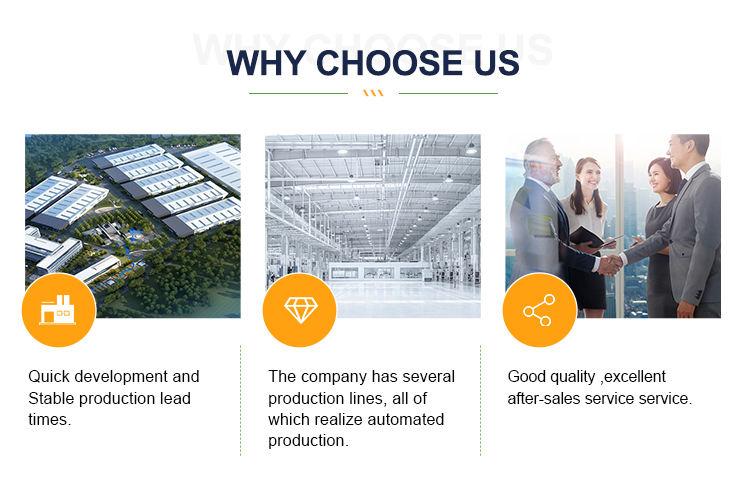
Welcome to Eduloc, a leading global supplier of high-quality ceramic grinding balls. Our product range includes,Mullite Ceramic, Quartz Ceramic, Aluminum Nitride Ceramic, Silicon Nitride Ceramic, Silicon Carbide Ceramic designed for industries such as mining, chemicals, coatings, electronics, and pharmaceuticals. We are committed to providing durable and efficient grinding solutions tailored to our customers' diverse needs. With advanced manufacturing technology and stringent quality control, our ceramic grinding balls excel in wear resistance, corrosion resistance, and thermal stability. Partner with us for reliable products and exceptional service that enhance your production efficiency and reliability.
If you have any questions, please feel free to contact us.
Payment Methods
T/T, Western Union, Paypal, Credit Card etc.
Shipment Methods
By air, by sea, by express, as customers request.

5 FAQs of Silicon Carbide Ceramic
Q1: What is the difference between reaction-bonded SiC (RBSC) and sintered SiC (SSiC)?
A1: RBSC contains some free silicon metal and is produced by infiltrating a SiC/carbon preform with molten silicon, making it slightly less hard but easier to form complex shapes. SSiC is fully densified without free silicon through solid-state sintering at extremely high temperatures (>2000°C), offering maximum purity, hardness, and corrosion resistance.
Q2: Can Silicon Carbide be machined or formed into complex shapes?
A2: Yes, but only in the "green" (pre-sintered) state using conventional tooling. After sintering, SiC can only be shaped with diamond grinding, EDM (for conductive grades), or laser machining. Near-net-shape forming techniques like slip casting, injection molding, and dry pressing are used for complex geometries.
Q3: How does Silicon Carbide perform in oxidizing atmospheres?
A3: SiC exhibits excellent oxidation resistance up to 1600°C due to the formation of a protective silica (SiO₂) layer on the surface. This passive layer seals the material and prevents further oxidation. However, in highly reducing or wet hydrogen environments, this layer may degrade.
Q4: Is Silicon Carbide ceramic electrically conductive?
A4: Pure SiC is a semiconductor with variable resistivity. Doped grades and specific manufacturing processes can produce SiC with controlled electrical conductivity, making it suitable for EDM machining or anti-static applications. Generally, it has higher conductivity than alumina but lower than metals.
Q5: What is the typical lead time and cost compared to other ceramics?
A5: SiC is generally more expensive than alumina but offers superior performance, often justifying the cost. Lead times vary from 4-12 weeks depending on complexity and sintering method. For high-wear applications, the extended service life of SiC frequently results in lower total cost of ownership compared to metals or other ceramics.