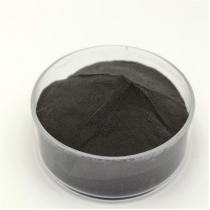
High-Density Grinding Media Balls for Industrial Applications

Abrasive blasting removes 0.5 to 2.5 mils of material per second. When time is money, the choice of media defines your bottom line. Black silicon carbide powder delivers the fastest theoretical cut rate of any common abrasive. Its extreme performance stems from fundamental physics, not marketing.

1. Defining Black Silicon Carbide Abrasive
Black silicon carbide is a synthetic ceramic material produced in an electric resistance furnace at temperatures exceeding 2200°C. For abrasive blasting, manufacturers crush and grade this material into a precise angular powder. It is a premium, high-performance media defined by two intrinsic properties.
- Extreme Hardness: At 9.5 on the Mohs scale (2600 Knoop), it is second only to diamond and cubic boron nitride. This hardness directly translates to minimal media breakdown.
- Sharp, Conchoidal Fracture: The crushed particles form razor-sharp, angular edges. These edges act like microscopic cutting tools, shearing material away with high efficiency.
2. Core Properties and Advantages Over Common Media
The data-driven comparison against standard media reveals why engineers specify black silicon carbide powder for critical tasks.
2.1. Performance Comparison Matrix
- vs. Aluminum Oxide (Brown): Silicon carbide is 30-40% harder. It cuts faster and creates a sharper, more defined surface profile. Aluminum oxide rounds off and dulls more quickly, increasing consumption.
- vs. Garnet: Garnet is a natural, softer mineral. It fractures into duller shapes, making it inefficient for cutting hard metals. Silicon carbide outperforms it in both cut rate and profile consistency.
- vs. Glass Bead: This is a finishing, peening media, not a cutting media. Silicon carbide aggressively removes material; glass beads only clean and polish.
2.2. Critical Technical Specifications
- Grit Size: Ranges from coarse (Grit 16) for aggressive stripping to fine (Grit 220) for delicate etching. Grit 80 is a common starting point for general surface preparation.
- Particle Shape: A consistent, blocky-angular geometry is non-negotiable. Rounded or irregular particles reduce cutting efficiency and increase air consumption.
- Chemical Purity: High-purity SiC (>98.5%) ensures no contaminant transfer, critical for sensitive substrates like aerospace alloys.
3. Ideal Applications and Material-Specific Use
Its properties dictate its best uses. Do not waste this premium media on simple rust removal.

- Aggressive Surface Preparation: Creating a deep, angular profile (up to 4+ mils) on hardened steel for thermal spray or bonding.
- Precision Etching: Texturing molds, dies, and surgical implants where pattern control is paramount.
- Hard Coating Removal: Stripping tungsten carbide, ceramics, or plasma-sprayed coatings without excessive base metal loss.
- Performance by Base Material: For tool steels and superalloys, it is the default choice. For softer aluminum or composites, a softer media like aluminium oxide often provides better cost control without sacrificing finish quality.
4. Operational Protocol: Pressure, Equipment, and Safety
Incorrect operation negates the media’s advantages and creates hazards.
4.1. Equipment and Parameters
- Blast Pressure: Operate between 80-100 psi for most applications. Higher pressures increase cut rate but also media fracture and dust generation.
- Nozzle Specification: Use long-venturi nozzles (e.g., #7, #8) made of tungsten carbide or boron carbide. Silicon carbide will destroy standard ceramic nozzles in minutes.
- System Requirements: A high-capacyity, dry air supply and a blast pot designed for fine, dense abrasives are mandatory.
4.2. Safety and Containment
- Dust Control: This media generates significant respirable crystalline silica dust from the substrate, not the media itself. A positive-pressure supplied-air respirator (SAR) and a dust-collection-equipped blast room are non-optional.
- Hearing and Impact Protection: Full-face shield, leather gloves, and apron, plus hearing protection, are mandatory personal protective equipment (PPE).
5. Cost-Benefit and Environmental Analysis
While the per-pound cost is higher than common media, the total cost per square foot prepared is often lower.
- Recycling Potential: Due to its high hardness and slow breakdown, black silicon carbide powder can be recycled 5-10 times in closed-loop systems with proper screening. This drastically reduces media cost and waste volume.
- Disposal and Handling: Spent media is chemically inert but classified as a hazardous waste if contaminated with heavy metals (e.g., lead, cadmium) from coated substrates. Always test waste streams. For uncontaminated media, landfill disposal following local regulations is typical.
- Finish Quality ROI: The superior, sharp anchor profile improves coating adhesion and service life, reducing future rework costs.
6. The Final Selection Criteria: Supplier Due Diligence
Inconsistent media is the most common point of failure. Your supplier determines your results.
- Require certified sieve analysis reports for each batch to guarantee grit distribution.
- Audit the manufacturer’s process control for hardness and chemical purity. A reputable supplier provides Material Safety Data Sheets (MSDS) and technical data sheets.
- Start with a small trial batch. Test it on your specific substrate under your standard conditions. Measure cut rate, profile, and consumption. This empirical data validates the logic.
For operations where surface integrity, speed, and long-term coating performance are critical, the logical choice becomes clear. The premium investment in high-quality black silicon carbide powder for sandblasting media translates directly to reduced labour time, lower total media consumption, and a superior, reproducible finish. Your next step is to source a certified sample and run a controlled comparison against your current media. The data will guide your final decision.
eduloc founded on October 17, 2012, is a high-tech enterprise committed to the research and development, production, processing, sales and technical services of ceramic relative materials such as Black. Our products includes but not limited to Boron Carbide Ceramic Products, Boron Nitride Ceramic Products, Silicon Carbide Ceramic Products, Silicon Nitride Ceramic Products, Zirconium Dioxide Ceramic Products, etc. If you are interested, please feel free to contact us.
RELATED POSTS
Defining High Purity Green Silicon Carbide: The Superior Engineered Ceramic Material
Bangladesh’s government has also been forced to cut back on electricity generation, which has had an impact on the market for control temperature
Why sodium silicate powder has good acid resistance and heat resistance
Selenide Manganese (MnSe)-Powder
Bismuth Iodide (BiI3)-Beads