High-Density Grinding Media Balls for Industrial Applications

Choosing Your Ultra Fine Submicron SiC Powder: A Practical Guide
Are you struggling to push the limits of your ceramic’s strength? Do you face inconsistent density after sintering? Many engineers find that conventional micron powders just can’t deliver the performance they need for cutting-edge applications. This is where ultra fine submicron silicon carbide nano powder changes everything. Let’s walk through the key questions to find the right solution for you.

1. What exactly is ‘ultra fine submicron’ SiC powder, and how is it different?
Think of particle size. Conventional SiC powder is like fine sand, measured in tens of micrometers. Ultra fine submicron silicon carbide powder is more like high-grade flour. Its primary particle size is typically below 500 nanometers, often between 50-200nm. This nano-scale difference isn’t just about being smaller. It dramatically increases the particle’s surface area and changes its fundamental behavior during processing. It drives denser sintering and creates a more uniform composite matrix.
- Conventional Micron Powder (1-50 µm): Good for general abrasives, standard refractories. Lower cost. Easier to handle.
- Ultra Fine Submicron/Nano Powder (<0.5 µm): Essential for high-density advanced ceramics, nanocomposite reinforcement, and precision surface finishes. Transforms sintering kinetics.
2. What are the main synthesis methods, and which one is best?
You have two primary paths, each with distinct pros and cons. On forums like Reddit, process engineers often debate this choice based on their specific needs for purity and agglomeration control.
Laser Pyrolysis
This method uses a high-power laser to decompose a silicon– and carbon-containing gas precursor. It’s fast and creates very fine, spherical primary particles. The main advantage? Excellent control over particle size distribution. However, it can be energy-intensive and the powder often forms hard agglomerates that are tough to break apart before dispersion.
Advanced Chemical Vapor Deposition (CVD)
Advanced CVD builds particles from a vapor phase in a controlled furnace. It wins on purity and crystallinity. You get a very consistent, high-quality powder perfect for semiconductor applications. The trade-off is typically a higher cost per kilogram and sometimes a slightly broader size distribution compared to the best laser pyrolysis outputs.
So, which is best? For maximum purity in electronics, choose CVD. For high-volume production of very fine, spherical powders where some post-processing de-agglomeration is acceptable, laser pyrolysis is a strong contender.
3. How does this powder improve advanced ceramics and composites?
This is where the magic happens. Adding just a few volume percent of this nano powder to a ceramic or composite matrix delivers outsized benefits. As one user shared in a materials science community, “Adding 5% nano SiC cut our sintering temperature by 150°C and boosted fracture toughness by 40%.”
- Superior Sintering: Nano particles fill voids between larger grains. This promotes densification at lower temperatures, saving energy and improving final product density.
- Reinforcement: They act as tiny, hard pins within the material’s structure. These pins deflect cracks and absorb energy, significantly enhancing toughness and wear resistance.
- Thermal Management: The refined, dense microstructure improves thermal conductivity. This makes components like heat spreaders and semiconductor wafer chucks far more effective.
4. What about handling and safety challenges?
This is a critical consideration many overlook until it’s too late. Nano powders are not just smaller versions of bulk materials. They require respect and proper protocols.
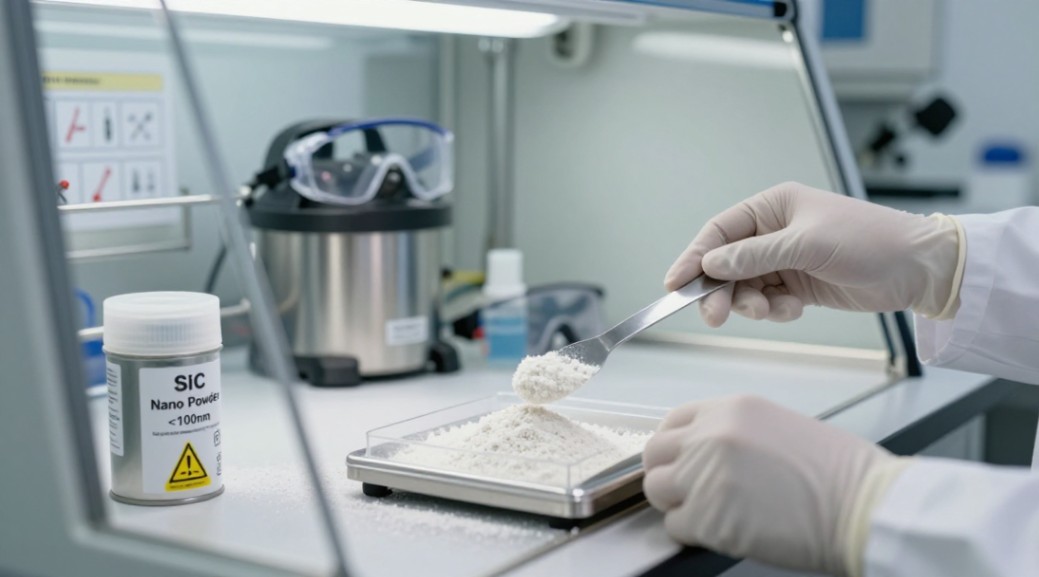
Key Challenges:
- Dispersion: The high surface energy causes particles to clump together. You’ll need specialized dispersants and high-shear mixing equipment.
- Health & Safety: Always treat this as a respirable hazard. A proper fume hood, sealed glove boxes, and PPE (respirators) are non-negotiable in the lab.
- Storage: Keep the powder in a dry, inert atmosphere. Moisture leads to oxidation and the formation of silica layers on the particle surfaces, which can ruin its sintering activity.
5. What are the top applications driving its use today?
The unique properties of ultra fine submicron silicon carbide nano powder solve problems in several high-stakes fields. Market drivers are clear.
Semiconductor Manufacturing: Used in critical components like electrostatic chucks (ESCs) and plasma-resistant chamber parts. The nano-scale finish ensures minimal particle generation and superior plasma erosion resistance.
Next-Generation Armor: Here, the goal is to absorb and dissipate immense kinetic energy. Incorporating this powder into ceramic-composite armor systems creates a harder, tougher, and more multi-hit capable material. Techniques like the ‘double continuous structure’ slurry infiltration use nano-SiC to achieve over 50% ceramic matrix content at much lower sintering temperatures, around 1300°C instead of 2000°C, while boosting fracture toughness dramatically.
High-Performance Automotive & Aerospace: You’ll find it in specialized, wear-resistant coatings for turbine blades and in high-end, fade-resistant brake pads for racing and aerospace applications.
6. Where is this technology heading next?
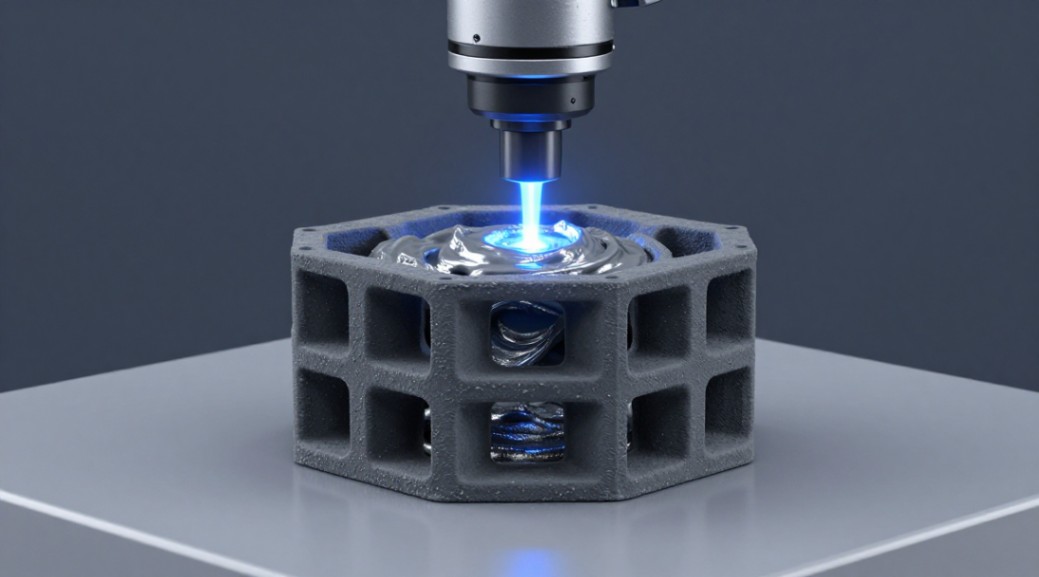
The future is about integration and precision. We’re moving beyond simple additives. The trend is towards additive manufacturing (3D printing) of intricate SiC ceramic parts directly from nano-powder slurries. This allows for geometries impossible to achieve with traditional molding. We’re also seeing a push towards designer nanostructured materials, where the powder isn’t just an additive but the primary engineered architecture of the component itself.
Your Next Step: How to Test and Select the Right Powder
Feeling overwhelmed? Start small and focused. Don’t buy a drum of powder for a full-scale trial. First, clearly define your primary performance goal: is it higher density? Better wear? Lower sintering temperature? Then, request 100-gram sample quantities from reputable suppliers. Evaluate them on three key points in your lab: dispersion behavior in your solvent/binder system, sintering activity (shrinkage vs. temperature), and the final microstructure and hardness of a test pellet. This hands-on, small-batch testing is the most reliable way to see if an ultra fine submicron silicon carbide nano powder is the key to unlocking your material’s potential. Trust the data from your own process.
eduloc founded on October 17, 2012, is a high-tech enterprise committed to the research and development, production, processing, sales and technical services of ceramic relative materials such as Ultra. Our products includes but not limited to Boron Carbide Ceramic Products, Boron Nitride Ceramic Products, Silicon Carbide Ceramic Products, Silicon Nitride Ceramic Products, Zirconium Dioxide Ceramic Products, etc. If you are interested, please feel free to contact us.
RELATED POSTS
Achieve a Mirror Finish on Stone: The Expert’s Guide to 600 Grit Silicon Carbide Powder
Europium Nitride powder EuN cas 12020-58-5
Cobalt Antimonide (CoSb)-Granules
Tungsten Oxide Insulation Material Can Make The Sun Room Cool in Winter and Cool in Summer
Explore fast neutron shielding materials: B4C Boron Carbide Polyethylene Sheet boron carbide t shirt