High-Density Grinding Media Balls for Industrial Applications

What is Silicon Carbide Powder and Why Buy in Bulk?
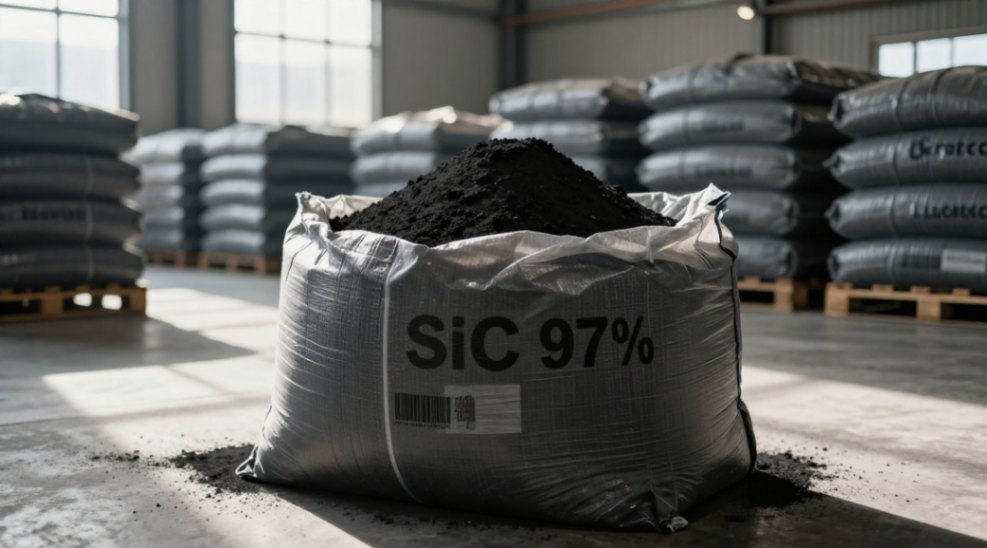
Buying silicon carbide powder in bulk refers to the procurement of large, commercial quantities of this synthetic ceramic material, typically measured in metric tons (MT) or multiple pallet loads, for cost-effective and reliable industrial manufacturing. The global demand for silicon carbide abrasives and technical ceramics is projected to exceed $5.5 billion by 2028, driven by sectors like automotive, aerospace, and energy. This makes strategic bulk purchasing critical for operational efficiency.
Frequently Asked Questions on Bulk SiC Purchasing
What is silicon carbide powder?
Silicon carbide (SiC) is a synthetic compound of silicon and carbon. It is an advanced ceramic material with extreme hardness (Mohs 9.5), high thermal conductivity, and excellent chemical inertness. In powder form, it serves as the raw material for manufacturing bonded abrasives, refractory linings, ceramic composites, and wear-resistant parts.
What are the main applications for bulk SiC powder?
Bulk powder feeds high-volume production lines. Key applications include: abrasive machining (grinding wheels, sandpaper), refractory products (steel and foundry linings), ceramic matrix composites (CMCs) for aerospace, and metallurgical processes as a deoxidizer. For instance, next-generation Ultra-High Temperature Ceramic Matrix Composites (UHTCMCs) reinforced with SiC fibers exhibit near-zero ablation at 2500°C, a breakthrough for hypersonic vehicle components.
What technical specs are critical when I buy silicon carbide powder in bulk?
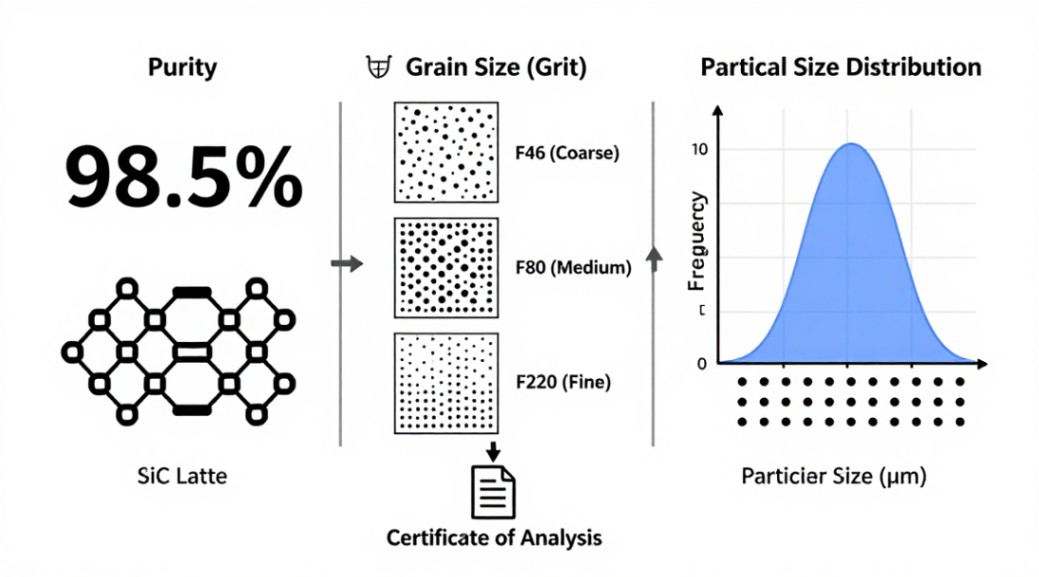
You must specify three core parameters. Purity, measured as a percentage (e.g., 98.5% min), dictates chemical resistance. Grain Size (Grit) (e.g., F46, F80, F220) defines abrasive cutting speed. Particle Size Distribution (PSD), analyzed via laser diffraction, ensures batch-to-batch consistency in flow and packing density. Always request a Certificate of Analysis (CoA) with these values.
| Specification | Typical Range | Key Impact |
|---|---|---|
| Purity | 85% – 99.9% | Chemical reactivity, final product performance |
| Grit Size (FEPA) | F12 (coarse) to F2000 (fine) | Material removal rate, surface finish |
| Particle Size Distribution (D50) | 5 µm to 3000 µm | Packing density, sintering behavior |
What’s the difference between black and green silicon carbide?
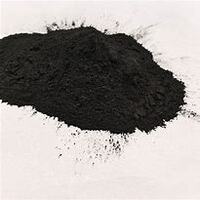
Black SiC (~98.5% purity) is the standard for general abrasives and refractories. It’s tougher, more cost-effective. Green SiC (>99% purity) is higher-purity, friable, and sharper. It’s preferred for precision grinding of hard alloys, semiconductor wafer processing, and advanced ceramics. For most bulk industrial uses like abrasive manufacturing, black SiC offers the best value.
How does bulk purchasing reduce costs?
Procuring multi-ton lots unlocks significant economies of scale. You secure a lower price per kilogram, minimize per-unit logistics costs, and reduce administrative overhead from frequent small orders. More importantly, a well-structured bulk agreement guarantees supply chain stability, preventing production halts due to material shortages. A 2023 industry analysis showed bulk contracts can reduce total landed cost by 15-25% versus spot buying.
How do I verify a supplier’s quality before a bulk order?
Audit their process. Request a plant visit to inspect raw material sourcing, furnace technology (Acheson or continuous), and in-house quality control labs. Insist on reviewing historical CoA data for at least five previous bulk lots to check PSD consistency. Reputable suppliers provide mill test reports and samples for your own verification testing.
What are the essential questions for a bulk supplier?
Ask these before you buy silicon carbide powder in bulk. “What is your monthly production capacity for my specific grade?” “Can you provide a Material Safety Data Sheet (MSDS) and full traceability?” “What is your standard packaging for bulk shipments (1-ton super sacks, palletized bags)?” “What are your lead times and incoterms for a 20-ton order?”
How should I handle and store bulk SiC powder?
Handle with care. Store sealed super sacks or bags in a dry, well-ventilated warehouse. Use proper dust collection systems (NIOSH-approved respirators) during transfer to prevent inhalation of fine particles, which can cause respiratory irritation. Ground all equipment to prevent static discharge. Implement a first-in, first-out (FIFO) inventory system to maintain material freshness.
How do I calculate my required annual volume?
Analyse your production forecast. Calculate the powder consumption rate per unit of your final product (e.g., kilograms per grinding wheel). Multiply by your projected annual output. Add a 10-15% safety stock buffer for demand fluctuations. This annual tonnage figure forms the basis for negotiating your bulk purchasing agreement, which should include pricing tiers, delivery schedules, and quality dispute resolution clauses.
Conclusion and Strategic Next Steps
Successful bulk procurement hinges on precise specification and supplier due diligence. Define your purity, grit, and PSD requirements clearly. Vet suppliers on their technical capability and quality documentation. A strategic partnership with a reliable producer is the most effective solution for securing consistent, high-performance SiC powder at an optimized total cost. Begin by requesting samples and CoAs from at least three qualified manufacturers to benchmark performance against your production standards.
eduloc founded on October 17, 2012, is a high-tech enterprise committed to the research and development, production, processing, sales and technical services of ceramic relative materials such as The. Our products includes but not limited to Boron Carbide Ceramic Products, Boron Nitride Ceramic Products, Silicon Carbide Ceramic Products, Silicon Nitride Ceramic Products, Zirconium Dioxide Ceramic Products, etc. If you are interested, please feel free to contact us.
RELATED POSTS

Global Market Analysis and Development Trend Report of Titanium-Copper Composite Alloy Rods copper and titanium
Triethanolamine Used As Concrete Early Strength Agent
Is zinc sulfide fluorescent or phosphorescent?
600 Grit Silicon Carbide Powder for Valve Lapping: Achieve a Gas-Tight Seal vs. Faster Alternatives