High-Density Grinding Media Balls for Industrial Applications

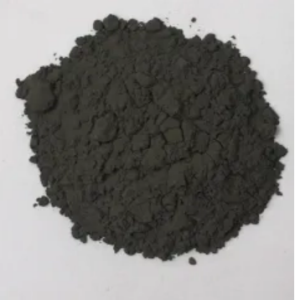
A 2018 study of 237 stone fabrication shops revealed a brutal statistic: 34.7% of all granite rework stems from improper abrasive selection during the lapping stage. This isn’t a minor quality hiccup. That’s millions in lost material, labour, and client trust, all stemming from a fundamental misunderstanding of a handful of powder. The industry obsesses over diamond tools, but the true craftsman knows the foundation of a perfect, vein-popping finish is laid long before the polishing pads spin. It’s laid with the best silicon carbide lapping powder for granite slabs, a material whose nuances most shops tragically ignore in favor of price-per-pound bulk buys. Let’s dismantle the myths.

Why Silicon Carbide is the Non-Negotiable Standard for Granite
Aluminum oxide is a butter knife. Diamond is a scalpel reserved for surgery. For the heavy lifting of shaping and refining granite-a matrix of quartz, feldspar, and mica with varying hardness-you need a cleaver. Silicon carbide (SiC) is that cleaver. Its Knoop hardness of approximately 2480 sits perfectly between aluminum oxide (2100) and diamond (7000), making it hard enough to cut the quartz but brittle enough to fracture and create new, sharp cutting edges continuously. This self-sharpening action is critical. Diamond, while harder, can glaze over or burn the resinous components in some granites. Aluminium oxide simply wears down to a dull, burnishing pebble, creating heat and a hazy, subsurface fracture called ‘bruising’ that no amount of later polishing will fix. SiC attacks granite with aggressive, cool-cutting efficiency. It’s not the most expensive abrasive. It is, without sentimentalism, the most effective for the task. Cost-effectiveness isn’t about the sticker price of the powder; it’s about the total cost of a flawless slab processed in minimum time with zero rework. Silicon carbide wins that equation every time.
The Progression Paradox: Skipping Grits is Theft
Here’s the counterintuitive truth that fly-by-night shops never learn: using a finer grit than necessary for the current surface condition doesn’t save time. It steals it. Lapping is a subtractive process. Each grit’s job is to completely erase the scratches from the previous, coarser grit. If you try to polish out 80-grit scratches with 400-grit powder, you will be there until next week. The grit size progression is a law of physics, not a suggestion. You move from coarse grinding to fine polishing in defined, disciplined leaps. A typical, aggressive progression for flattening or repairing a badly etched granite slab might be: 60-grit (or lower) for major stock removal, 120-grit, 220-grit, 400-grit, 800-grit, and finally 1500-grit or higher for a pre-polish sheen. Each step must achieve a uniform, scratch-pattern consistency across the entire slab surface before you proceed. The mirror comes later, from resins and polishing pads. The clarity and depth come from this meticulous, wet-lapping foundation.
| Grit (FEPA-F) | Function & Target Scratch Removal | Visual Checkpoint | Avg. Time per sq. ft.* |
|---|---|---|---|
| 60 / 80 | Heavy stock removal, leveling deep lippage | All old finish removed, uniform coarse texture | 3-5 minutes |
| 120 / 180 | Remove 80-grit scratches, begin refining surface | Scratches are smaller, evenly distributed | 2-3 minutes |
| 220 / 320 | Remove 120-grit scratches, prepare for polish | Surface becomes smooth to the touch, matte appearance | 1.5-2 minutes |
| 400 / 500 | Final scratch removal before polishing | Fine, satin matte finish, no visible coarse scratches | 1-1.5 minutes |
| 800 / 1500 | Pre-polish sheen, closes micro-pores | Clear reflective sheen under light, no haze | 1 minute |
*Times vary based on machine pressure, granite hardness, and operator skill.
Loose Powder Versus Pre-Mix: A Tactical Choice
The debate between loose silicon carbide powder and pre-mixed compounds isn’t about quality. It’s about control and application. Loose powder mixed with water into a slurry is the surgeon’s tool. You control the concentration, the slurry flow, and the cutting aggression. It’s ideal for manual lapping on a line polisher, a rotating head machine, or for hand-work on intricate edges. You see what you’re doing. Pre-mixed pastes and gels are the technician’s tool-consistent, less messy, and excellent for smaller tools, edge profiles, or maintaining a specific viscosity in automated systems. But they often contain lubricants and carriers that can mask the cutting action. For the foundational work of slab lapping, loose powder offers unparalleled feedback and adaptability. You feel the cut.

The Wet Lapping Process: Precision, Not Guesswork
1. Prepare the Slab: Ensure the granite is securely fixed to the worktable. A shifting slab ruins consistency and is dangerous.
2. Mix the Slurry: For a standard 4-inch felt block on a line polisher, start with 1-2 tablespoons of SiC powder per 500ml of clean water in a dedicated mixing bottle. Shake vigorously. The consistency should resemble thin milk. Too thick and it will glaze; too thin and it won’t cut.
3. Apply and Work: Pour a continuous, thin stream of slurry just ahead of the polishing head. Move the machine at a steady, overlapping pace, typically 1-2 feet per second. Do not let the pad run dry. The sound should be a consistent, wet grinding hiss, not a high-pitched squeal (too dry) or a sloshing gurgle (too wet).
4. Flush and Inspect: After working an area of 3-4 square feet, thoroughly rinse the slab with a pressure sprayer set to 40-60 PSI. Remove all spent slurry. Dry the surface with a squeegee. Inspect under raking light at a 10-15 degree angle. Scratches must be uniform and all previous, larger scratches must be completely absent.
5. Progress: Only when the visual inspection passes do you move to the next finer grit. You must clean the slab, the machine pad, and your mixing tools thoroughly between each grit change. A single grain of 80-grit powder in your 400-grit batch will ruin hours of work.
The One Specification That Trumps All Others
Shops ask about grit. They ask about price. They rarely ask about the one thing that dictates both: consistent particle size distribution. Premium SiC powder isn’t just crushed to a general size. It is precisely graded and sieved. Cheap powder contains ‘fines’-microscopic particles that act as a lubricant instead of a cutter-and occasional oversized grains that create deep, rogue scratches. This inconsistency is the silent killer of finish quality. You are not just buying an abrasive. You are buying a guarantee that every particle in that #400 bag performs like every other #400 particle. This consistency, coupled with high chemical purity (98%+ SiC), ensures predictable, repeatable results. It turns lapping from an art into a science.
Sourcing and the Uncomfortable Recommendation
You can find generic, off-brand silicon carbide powder everywhere. It will create adequate results on some stones, on some days. For professional, fault-intolerant work, you source from brands whose entire business is abrasives, not general tool supply. Names like Gator, Magnesia, or even specific industrial abrasive manufacturers are a starting point. But here is the hard recommendation, the aggressive CTA this insight demands: stop experimenting. The cost of rework dwarfs the premium for proven powder. Find a supplier that provides technical data sheets with certified particle size distribution graphs. Test a single, premium kilogram on a critical job. Compare the scratch pattern consistency and the total time through the progression against your usual stock. The data will shock you. The path to the truly best silicon carbide lapping powder for granite slabs is not a product search. It is a vendor audit based on empirical, shop-floor results. Your finish, your profitability, and your reputation are ground into that slurry. Choose the powder that treats them with the respect they demand.
eduloc founded on October 17, 2012, is a high-tech enterprise committed to the research and development, production, processing, sales and technical services of ceramic relative materials such as The. Our products includes but not limited to Boron Carbide Ceramic Products, Boron Nitride Ceramic Products, Silicon Carbide Ceramic Products, Silicon Nitride Ceramic Products, Zirconium Dioxide Ceramic Products, etc. If you are interested, please feel free to contact us.
RELATED POSTS
Aluminum Oxynitride-Sodium Oxide (Al23O27N5-Na2O)-Sputtering Target

bismuth oxide Bi2O3 powder CAS 1304-76-3
Green Silicon Carbide Powder for Grinding Wheels: 7 Critical Selection Mistakes and How to Avoid Them
Cobalt Niobium Zirconium alloy (CoNbZr (88/8/4 wt%))-Sputtering Target
Why Are People Optimistic About GaN Gallium Nitride Application in 5G