High-Density Grinding Media Balls for Industrial Applications

A Story That Shouldn’t Happen
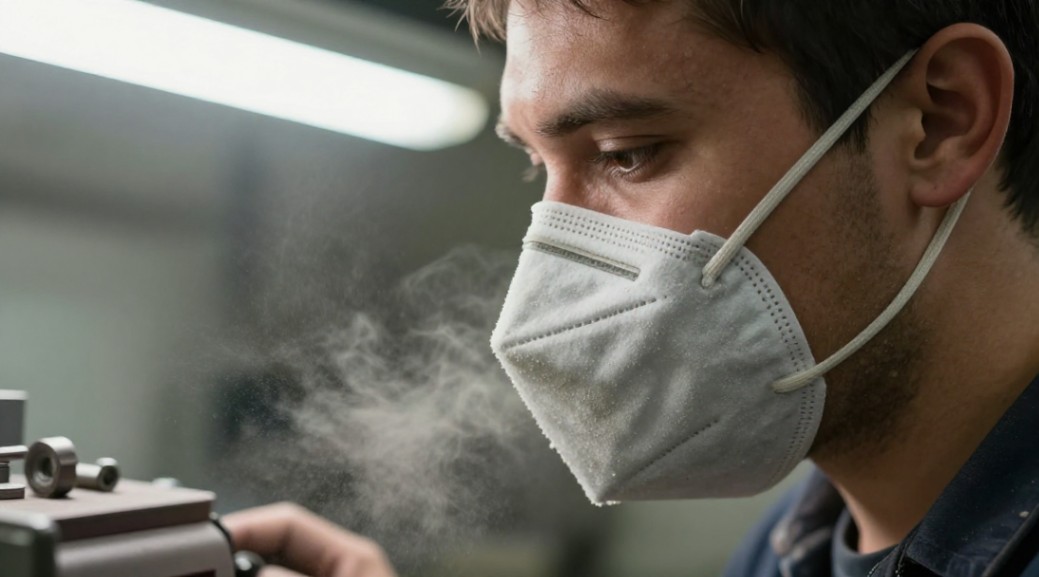
I once reviewed the safety logs for a small fabrication shop. They were grinding silicon carbide components. Their protocol was simple: a box of inexpensive, loose-fitting dust masks. One employee, a diligent worker with over a decade at the bench, developed a persistent cough and breathlessness. Medical evaluation revealed early-stage lung irritation consistent with chronic particulate exposure. The cause? That “dust mask” captured large chips but allowed the fine, respirable fraction of silicon carbide powder to leak around the seal with every breath. They were using the wrong tool for a deadly serious job. This is a common, costly error.
The Hidden Dangers of Silicon Carbide Dust
Silicon carbide (SiC) is an extraordinary ceramic. Its hardness and thermal properties make it indispensable for abrasives, refractory linings, and advanced semiconductors. But when fractured into dust, it becomes a potent respiratory hazard. The primary risks are not mythical. They are documented. Inhaling fine silicon carbide dust causes immediate respiratory tract irritation. More critically, chronic exposure can lead to pneumoconiosis-a serious, scarring lung disease. The 2017 case study published in the Journal of Occupational and Environmental Medicine by Dr. Robert Harrison’s team at UCSF explicitly links prolonged, unprotected SiC dust exposure to decreased lung function.
Warning #1: Confusing a Dust Mask with a Respirator
This is the single most frequent and hazardous misconception. A simple dust mask (a filtering facepiece, or FFR) is a passive filter held on by elastic bands. A respirator, in the regulatory sense, is part of a complete programme. On Reddit’s r/SafetyProfessionals, users frequently post images asking, “Is this okay for SiC grinding?” The answer is almost always a firm no if it’s a basic mask worn without fit testing. The table below clarifies the stark, non-negotiable differences.
| Feature | Dust Mask (Disposable FFR) | Tight-Fitting Elastomeric Respirator |
|---|---|---|
| Regulatory Context | Often used voluntarily, outside a formal programme. | Mandates full OSHA 1910.134 programme: medical clearance, fit test, training. |
| Protection Factor (APF) | APF of 10 (N95) reduces exposure to 1/10th. Limited. | APF of 50 (P100 filter) reduces exposure to 1/50th. Substantially higher. |
| Seal | Passive. Prone to leakage on most faces, especially with movement. | Active, engineered seal. Designed to conform and maintain seal during work. |
| Filter Options | Typically N95, N99, N100 for particulates only. | Interchangeable cartridges (P100 for particulates, multi-gas for combo hazards). |
| Suitability for SiC | Marginally acceptable ONLY for very short, low-dust tasks with verified fit. | The required standard for any sustained grinding, cutting, or blasting of SiC. |
Warning #2: Ignoring the Legal Exposure Limits
You cannot guess your protection needs. You must know the numbers. OSHA sets two critical limits. For particulates not otherwise regulated (PNOR), which includes non-fibrous, non-silica SiC dust, the PEL is 15 mg/m³ (total dust) and 5 mg/m³ (respirable fraction). However, if your silicon carbide material contains even trace crystalline silica-a common impurity-the far stricter silica standard (29 CFR 1926.1153) applies, with a PEL of 0.05 mg/m³. NIOSH is more conservative, recommending a exposure limit of 10 mg/m³ for total SiC dust. Your respirator selection must be based on an exposure assessment measuring dust levels against these limits.
The N95, N99, N100, and P100 Code
The letter and number are a performance code. ‘N’ means Not oil-resistant. ‘P’ means oil-Proof. ‘R’ is oil-Resistant. For dry silicon carbide dust, ‘N’ or ‘P’ is suitable. The number-95, 99, 100-indicates the filtration efficiency percentage for the most penetrating particle size (~0.3 microns). An N95 filters 95% of particles. An N100 or P100 filters 99.97%. For fine silicon carbide powder, do not settle for less than a 99-rated filter (N99, N100, P100). An N95 may be insufficient.
Warning #3: Skipping the Respiratory Protection Program
Buying a respirator is just step one. OSHA 1910.134 mandates a written, site-specific program. Omitting any element voids your protection and violates the law. The core components are non-negotiable:
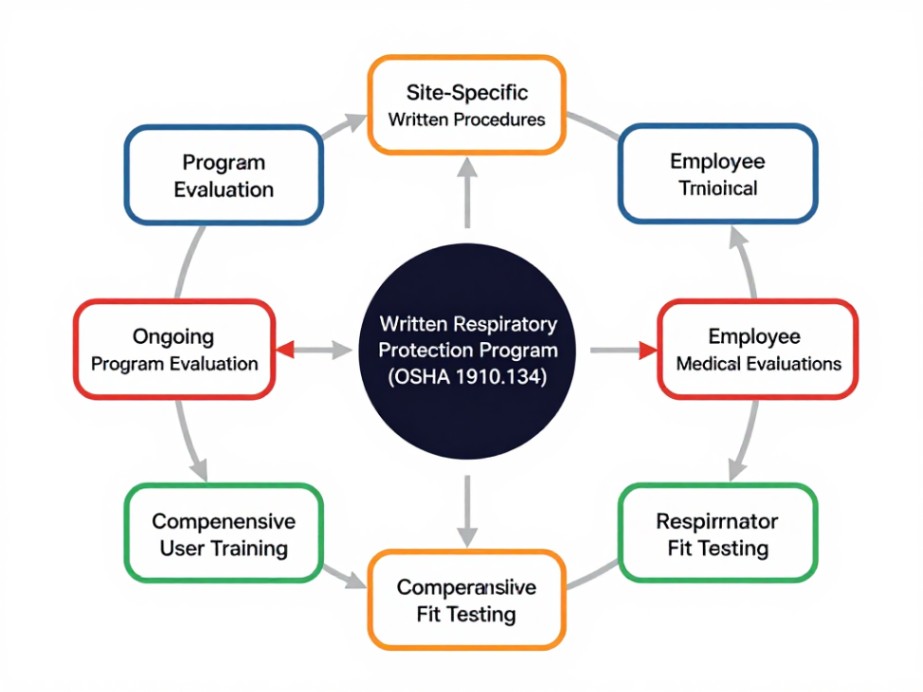
- Medical Evaluation: A questionnaire or exam by a physician to ensure the worker can wear a respirator without health risk.
- Fit Testing: Quantitative or qualitative testing before first use and annually to ensure no leakage. A user seal cheque (positive/negative pressure check) must be done every single time the respirator is donned.
- Training: Workers must be trained on the hazards, limitations, and proper use of their specific respirator.
- Cleaning & Maintenance: For reusable elastomeric respirators, a schedule for cleaning, disinfecting, and inspecting.
Warning #4: Misusing and Mismanaging Equipment
Even the correct respirator fails if used incorrectly. Never allow facial hair that interferes with the sealing surface. Store respirators and filters in a clean, sealed bag. Replace particulate filters when breathing becomes difficult, when they are physically damaged, or as per the manufacturer’s schedule. Dispose of contaminated filters as hazardous waste. For reusable respirators, follow the manufacturer’s cleaning protocol exactly to prevent microbial growth and seal degradation.
Warning #5: Not Knowing When to Escalate to a PAPR
For high-dust concentration operations, long-duration tasks, or workers who find negative-pressure respirators too fatiguing, a Powered Air-Purifying Respirator (PAPR) is the answer. A PAPR uses a battery-powered blower to push filtered air into a hood or facepiece. It provides a higher Assigned Protection Factor (APF of 25/1000), eliminates breathing resistance, and offers superior comfort and cooling. If exposure assessments approach or exceed the PEL even with a tight-fitting respirator, a PAPR is not an upgrade-it’s a necessity.
The Bottom Line: Your Action Plan
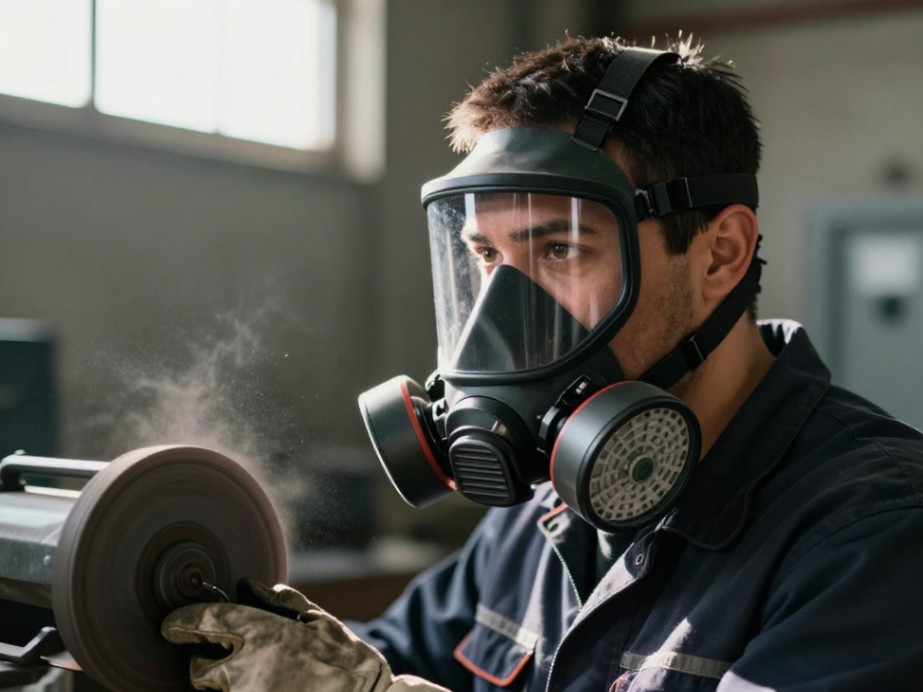
Do not gamble with silicon carbide. The requirements are clear, data-driven, and legally enforced. Stop using loose-fitting dust masks for serious SiC work. Immediately initiate an exposure assessment. Select a respirator with at least N99/P100 filtration. Implement the full OSHA respiratory protection program. For many operations dealing with powdered or ground silicon carbide, a half-face respirator with P100 filters, properly fit-tested, is the baseline starting point.
Your next step is critical. Consult with a Certified Industrial Hygienist (CIH) or a qualified safety professional to conduct a proper exposure assessment and build your program. Do not rely on guesswork. The cost of a professional assessment and compliant equipment is trivial compared to the human and financial cost of a single occupational lung disease claim. Protect your lungs. Protect your team. Do it right.
eduloc founded on October 17, 2012, is a high-tech enterprise committed to the research and development, production, processing, sales and technical services of ceramic relative materials such as Silicon. Our products includes but not limited to Boron Carbide Ceramic Products, Boron Nitride Ceramic Products, Silicon Carbide Ceramic Products, Silicon Nitride Ceramic Products, Zirconium Dioxide Ceramic Products, etc. If you are interested, please feel free to contact us.
RELATED POSTS
Silver Aluminum Alloy (AgAl (95:5 Wt%))-Granules
Precision Application Of Stainless Steel Balls In Micro-Robot Bearings
Lepidolite A pink to purple mica, a source of lithium, an ornamental stone, a gem material. Article by: Hobart M. King, PhD, RPG