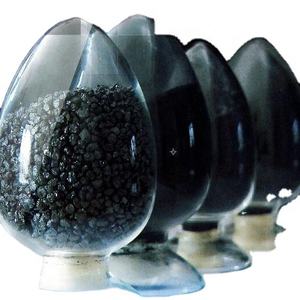
High-Density Grinding Media Balls for Industrial Applications

Understanding 220 Grit Silicon Carbide for Aggressive Work
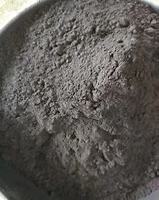
For the fastest, most aggressive stock removal, 220 grit silicon carbide powder is your best first choice. This material combines a sharp, hard abrasive with a medium-coarse grit size perfectly balanced for speed and control. Think of it as your heavy-duty workhorse. Silicon carbide particles are exceptionally sharp and brittle. They fracture under pressure to create new, sharp edges continuously. This self-sharpening action maintains a high cut rate far longer than softer abrasives. The 220 grit designation means the particles pass through a screen with about 74 microns of open space. It’s coarse enough to dig in and remove material fast, yet fine enough to leave a manageable surface for your next finishing step. You use it when time matters and you have a lot of material to take off.
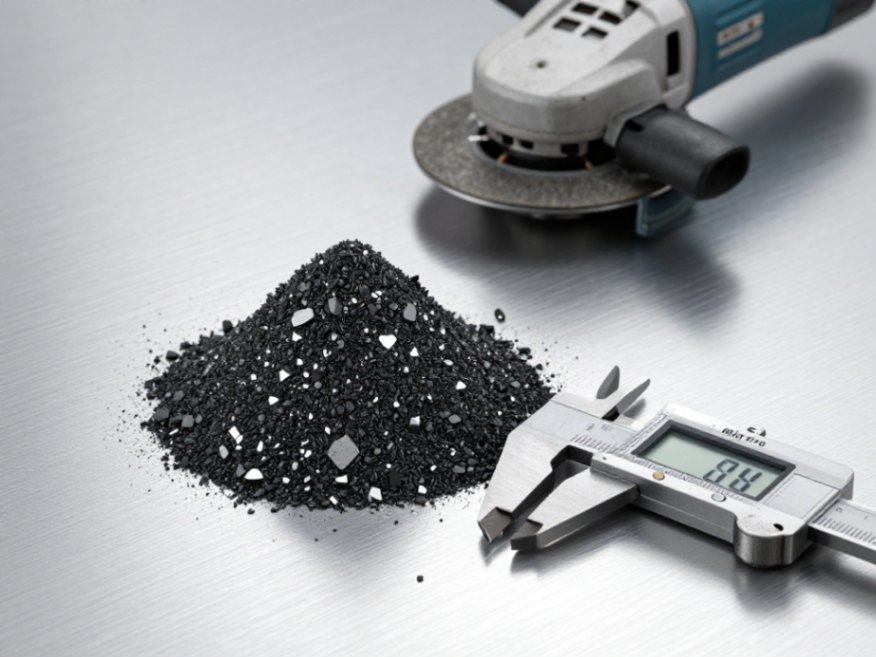
Silicon Carbide vs. Aluminum Oxide: The Stock Removal Showdown
Choosing the right abrasive defines your efficiency. For aggressive stock removal, you typically compare silicon carbide (SiC) to aluminum oxide (AlOx). The right pick depends on your workpiece material. Here’s a direct comparison to guide your decision.
Silicon Carbide (220 Grit)
- Best For: Hard, brittle, non-ferrous materials.
- Primary Applications: Glass, stone, ceramic, carbon fiber, tough plastics, aluminum, brass, copper.
- Key Advantage: Superior hardness and sharpness cut hard materials faster with less pressure.
- Consideration: Can be less durable on tough, high-tensile-strength steels.
Aluminium Oxide (36-80 Grit, for equivalent aggression)
- Best For: Ferrous metals and high-tensile-strength alloys.
- Primary Applications: Steel, iron, stainless steel, tough steel alloys.
- Key Advantage: Tougher grain withstands the stresses of grinding hard steels without breaking down too fast.
- Consideration: Softer than SiC, so it may glaze or dull faster on very hard materials.
The rule is simple. Use 220 grit silicon carbide powder on hard, low-ductility materials. It slices through them. Switch to a coarse aluminum oxide for tenacious, stringy metals like steel.
Essential Tools and Bond Types for Maximum Performance
Your abrasive powder needs a carrier. The bond type that holds the 220 grit silicon carbide grains determines the tool’s character and best use case.
- Resin Bond (Fibre Discs, Mounted Points): Flexible and forgiving. Excellent for portable angle grinders and contour work. They cut fast and run cooler but wear more quickly.
- Vitrified Bond (Grinding Wheels, Honing Stones): Rigid and porous. Ideal for bench grinders, surface grinders, and floor machines where precision and wheel life are critical. They maintain their shape under high pressure.
- Metal Bond (Diamond Wheels with SiC fill, Specialized Tools): Extremely durable. Used in lapidary or with diamond tooling where the SiC acts as a cutting aid or conditioner. Not common for primary stock removal.
Match your tool to the job. A resin-bonded fibre disc on a 4.5-inch (115mm) angle grinder is perfect for weld blending. A vitrified wheel on a 8-inch (200mm) bench grinder is best for squaring a steel bar.
Proper Technique: Pressure, Speed, and Heat Management
Aggressive removal requires smart technique. More pressure is not always better. Apply steady, firm pressure between 15-25 lbs (7-11 kg) for hand-held tools. Let the sharpness of the 220 grit silicon carbide do the work. If you hear the motor bog down or see burn marks, you’re pressing too hard. Move the tool steadily across the workpiece at about 1-2 inches (2.5-5 cm) per second. Never hold it in one spot. For angle grinders, maintain a 15-30 degree angle to the work surface. This presents the abrasive’s edge for a slicing cut, not a blunt scraping action.
Heat is your enemy. It ruins temper, warps thin metal, and loads your wheel with melted material. Use a wet grinding method when possible, especially on metals. A constant coolant flow keeps the workpiece below 150°F (65°C). For dry grinding, use brief, 5-10 second bursts of contact, then lift to allow air cooling. Dipping the workpiece in water frequently is a good practise. Always wear a face shield and heavy gloves. The high aggression of 220 grit powder can throw debris with significant force.
Substrate Guide: What You Can and Should Work On
220 grit silicon carbide powder is remarkably versatile, but it excels on specific materials.
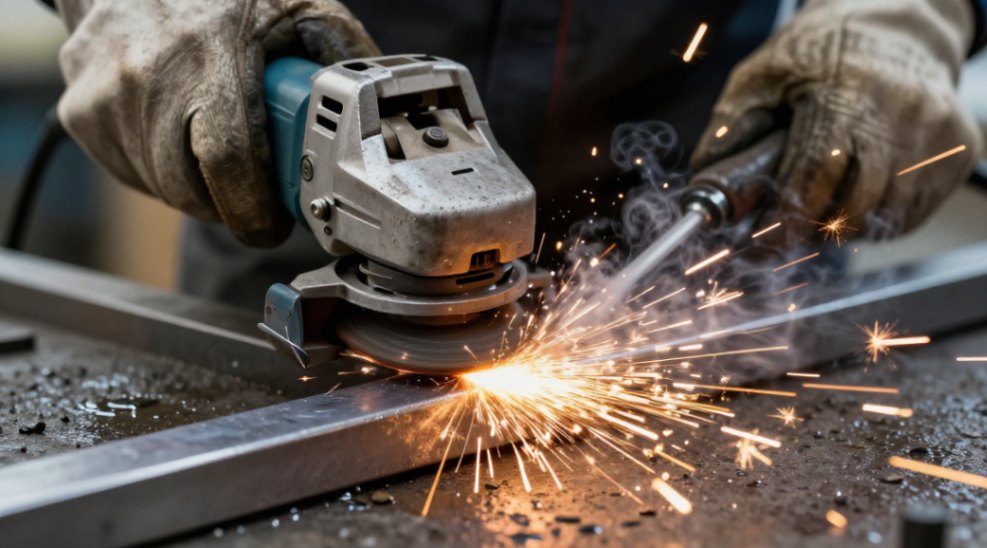
- Metals: Excellent on aluminum, bronze, and copper. Good for initial shaping of steel, but switch to aluminium oxide for the bulk of steel removal. Ideal for weld seam profiling.
- Stone & Concrete: Perfect for rough shaping granite, marble, or concrete slabs. It cuts quickly without excessive chipping.
- Glass & Ceramic: The premier choice. Its hardness and sharpness easily score and shape these brittle materials without causing catastrophic cracks if used with care.
- Composites (Carbon Fiber, Fiberglass): Cuts cleanly through tough fibers without excessive fraying. Always use dust extraction and a respirator.
Your Path to a Perfect Finish: The Progression Sequence
220 grit leaves a rough surface. Your finishing sequence depends on your final goal. Follow this logical progression.
For a Standard Machine Finish (Metal):
- 220 Grit Silicon Carbide: Aggressive stock removal and rough shaping.
- 400 Grit Aluminium Oxide or SiC: Removes the deep 220 grit scratches.
- 800 Grit: Further refines the surface for a uniform matte appearance.
- Polishing Compounds (e.g., 1200+ grit equivalent): Achieves a reflective shine if desired.
For a Honed Finish (Stone):
- 220 Grit Silicon Carbide (Wet): Levels the stone and removes major imperfections.
- 400 Grit Silicon Carbide (Wet): Begins to create a uniform, satin texture.
- 800 Grit Silicon Carbide (Wet): Produces a smooth, low-sheen honed finish.
- Optional 1500/3000 Grit: For a softer sheen without full polish.
Always completely eliminate the scratches from the previous grit before moving to the next one. This is non-negotiable for a flawless result. Clean the workpiece thoroughly between steps to avoid contaminating your finer abrasives with coarse grit.
Key Operational Steps for Success
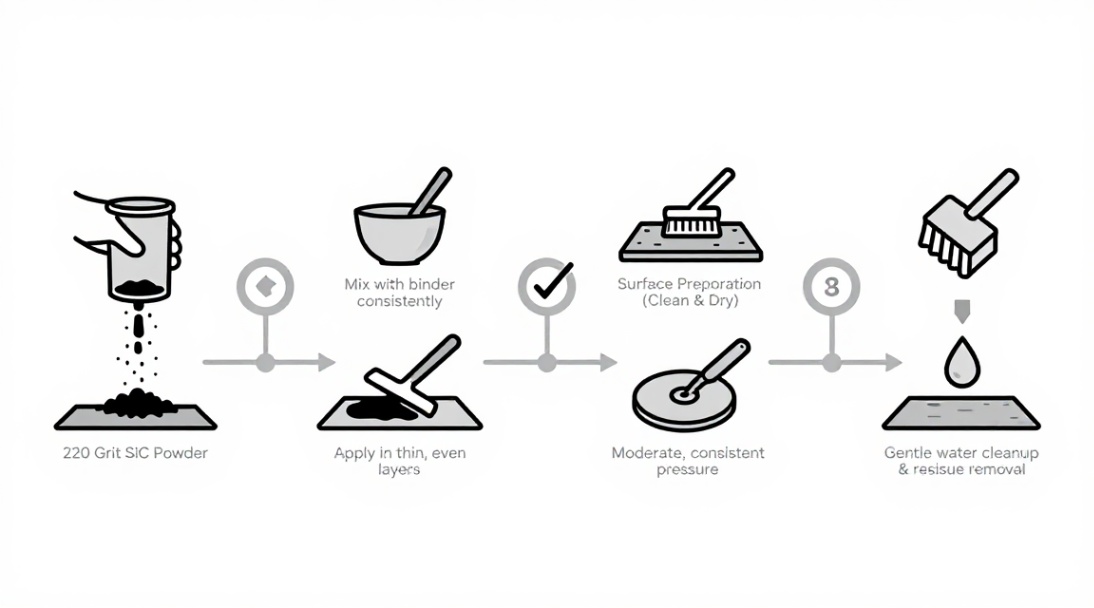
To summarise the critical process for using 220 grit silicon carbide powder effectively, follow this step-by-step guide. Precision in each step prevents damage and ensures efficiency.
| Step | Action | Key Parameters & Tips |
|---|---|---|
| 1. Setup | Select tool and bond. Secure workpiece. Don personal protective equipment (PPE). | Face shield, gloves, respirator, hearing protection. Clamp workpiece firmly. |
| 2. Test | Make a light initial pass to gauge cut rate and tool behavior. | Use light pressure (<10 lbs / 4.5 kg). Observe spark pattern and sound. |
| 3. Main Removal | Apply steady, controlled pressure. Use consistent, overlapping passes. | 15-25 lbs (7-11 kg) pressure. Move at 1-2 in/sec (2.5-5 cm/sec). Keep angle at 15-30°. |
| 4. Heat Check | Monitor workpiece temperature frequently. | Touch briefly (carefully). If too hot to touch (>150°F / 65°C), stop and cool. |
| 5. Cool | Use coolant or pause for air cooling. | For wet grinding, maintain flow. For dry, use 5-10 sec on, 10 sec off cycles. |
| 6. Inspect | Check for remaining defects and scratch pattern uniformity. | Clean surface. All scratches should run in the same, consistent direction. |
| 7. Proceed | Once stock removal is complete, clean and move to the next grit. | Thoroughly clean workpiece and work area to prevent grit contamination. |
Mastering 220 grit silicon carbide powder gives you control over the most demanding shaping tasks. Start with the right abrasive for your material, use a tool and bond that suit your machine, and let a disciplined technique protect your workpiece. Your path to a perfect finish always begins with a confident, aggressive start. Now you have the knowledge to make that start efficient and effective.
eduloc founded on October 17, 2012, is a high-tech enterprise committed to the research and development, production, processing, sales and technical services of ceramic relative materials such as Master. Our products includes but not limited to Boron Carbide Ceramic Products, Boron Nitride Ceramic Products, Silicon Carbide Ceramic Products, Silicon Nitride Ceramic Products, Zirconium Dioxide Ceramic Products, etc. If you are interested, please feel free to contact us.
RELATED POSTS
Cobalt Chromium Tin Alloy (CoCrSn (50/25/25 at%))-Sputtering Target
Global steel demand growth is expected to decline in 2022 will have an effect on the steel slitting line price
Tantalum Carbide Market Report and Outlook (2025-2030) tantalum hafnium carbide
The Practical Guide to Buying Silicon Carbide Powder in Bulk for Industry Professionals
Nickel tin oxide dihydrate (NiSnO3•2H2O)-Powder