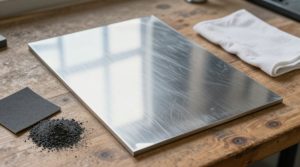
High-Density Grinding Media Balls for Industrial Applications

The 600 Grit Trap: A Shocking Reality
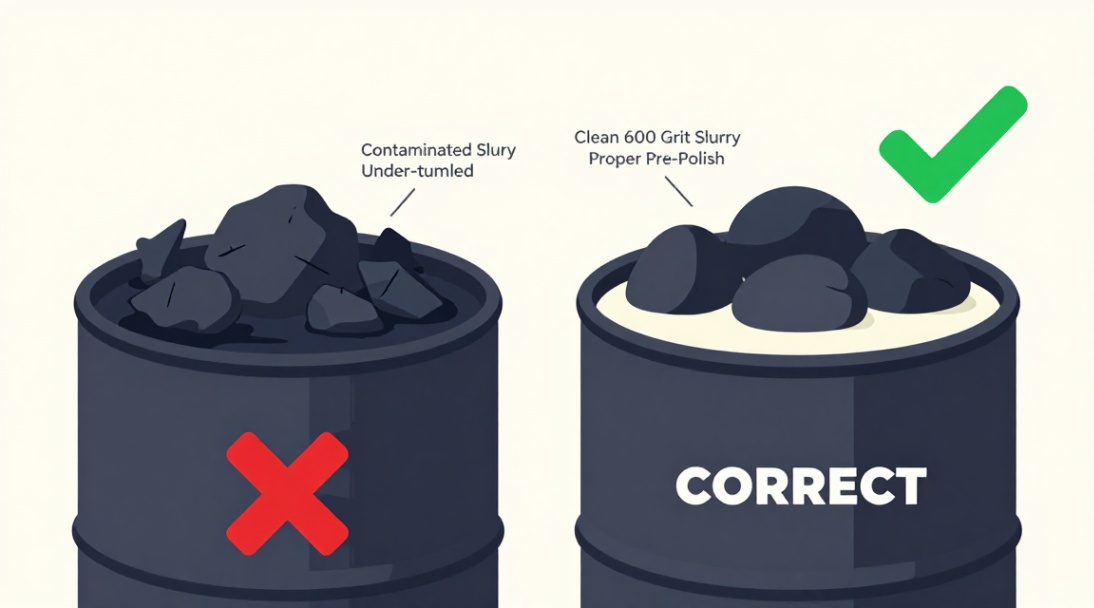
Industry chatter and user forums suggest a staggering 70% of hobbyists botch the pre-polish stage. They contaminate barrels, under-tumble, or create a useless slurry. Your hard work from coarse grits gets wasted right here. This isn’t a gentle suggestion; it’s a warning. Misusing silicon carbide powder 600 grit for rock tumbling supplies is the single fastest way to ruin a batch of stones. Let’s fix that.
Critical Q&A: The 600 Grit Silicon Carbide Survival Guide
1. What is 600 grit silicon carbide powder, and why is it non-negotiable?
Silicon carbide (SiC) is a synthetic abrasive harder than aluminium oxide. At 600 grit, it’s your pre-polish workhorse. Its job is brutally simple: eradicate every single scratch left by 220 or 320 grit. This stage creates the flawless foundation for a brilliant polish. Skip it, or do it poorly, and you’ll polish scratches right into your stones permanently.
2. Why choose silicon carbide over aluminum oxide for 600 grit?
Hardness and aggression. Silicon carbide particles are sharp and fracture into smaller, sharp fragments. They cut faster and more consistently on hard materials like agate, jasper, and petrified wood. Many users on rockhounding forums report aluminum oxide 600 grit “glazing over” or taking weeks to do what SiC does in days. For pre-polish, you need a cutter, not a smoother.
3. What is the biggest mistake people make with 600 grit?
Grit contamination. This is the cardinal sin. Failing to clean your barrel and rocks with surgical precision after coarse grit dooms you. I’ve seen more projects killed by embedded 60 grit particles than anything else. One stray coarse grain will carve deep furrows that 600 grit can’t remove, wasting the entire stage.
4. What is the exact, foolproof method for using 600 grit silicon carbide?
Precision beats guesswork. Follow this sequence religiously:
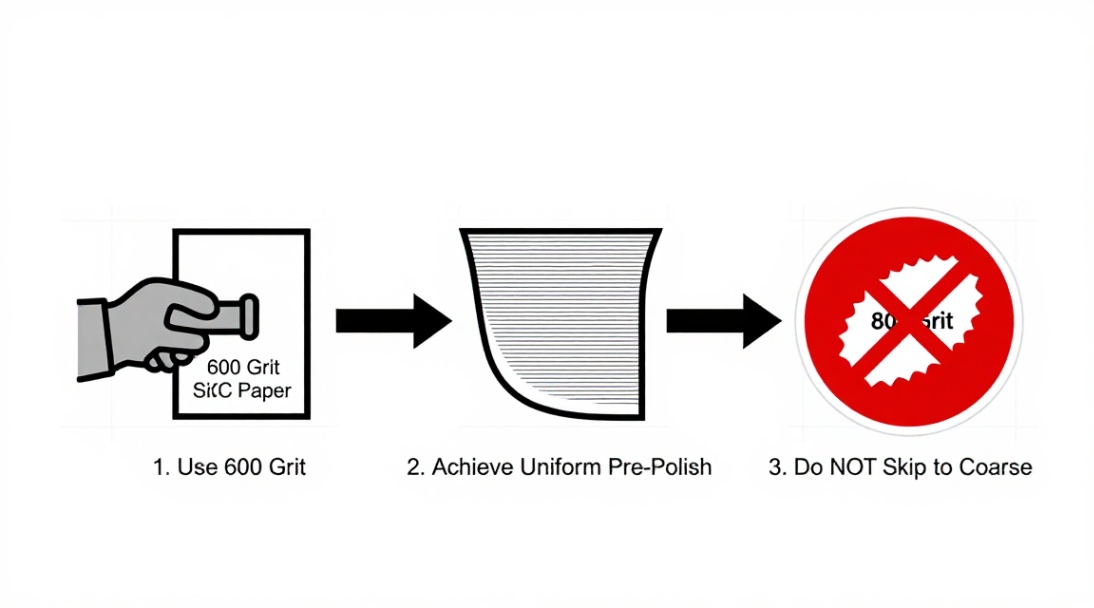
- Clean Like a Surgeon: After your last coarse grit (e.g., 220), empty the barrel. Scrub every rock with a toothbrush under running water. Scrub the inside of the barrel and lid with hot water and dish soap. Rinse until the water runs completely clear. No grit residue in the barrel seams.
- Measure the Grit: Use 2 to 3 level tablespoons of silicon carbide powder 600 grit per pound of rock weight. This is critical. More grit does not mean faster results; it creates a thick, ineffective paste.
- Measure the Water: Add just enough water to cover the rocks by about 1/4 inch (approx. 6 mm). For a standard 3 lb barrel, this is roughly 12-14 fluid ounces. The slurry should be thin and soupy, not a thick mud.
- Run Time: Tumble for 7-10 days. Cheque progress at day 7. The rocks should have a uniform, smooth, matte finish with no visible scratches under a bright LED light.
5. How do I know if my 600 grit stage is working or failing?
Inspect under strong, direct light. If you see any shiny reflective spots, you have under-tumbled. The entire surface must be a uniform matte. If you see new, deep scratches, you have contamination. Stop. Clean everything and restart the stage with fresh silicon carbide powder 600 grit for rock tumbling supplies.
| Step | Action | Key Metric |
|---|---|---|
| 1. Cleaning | Scrub rocks & barrel | Rinse water runs 100% clear |
| 2. Grit Measurement | Add SiC powder | 2-3 Tbsp per lb of rock |
| 3. Water Measurement | Add water | Cover rocks by 1/4 inch (6mm) |
| 4. Slurry Cheque | Mix and observe | Thin, soupy consistency |
| 5. Run Time | Tumble | 7-10 days minimum |
| 6. Inspection | Check under bright light | Uniform matte, zero scratches |
6. Where should I source my 600 grit silicon carbide powder?
Buy from dedicated rock tumbling or lapidary suppliers. Avoid generic industrial sources. You need a consistent, contaminant-free mesh size. Reputable suppliers screen their product. Cheap powder often contains rogue coarse particles that will sabotage your batch. This is one area where chasing the lowest price guarantees the highest frustration.
7. What about safety and disposal? This stuff is nasty.
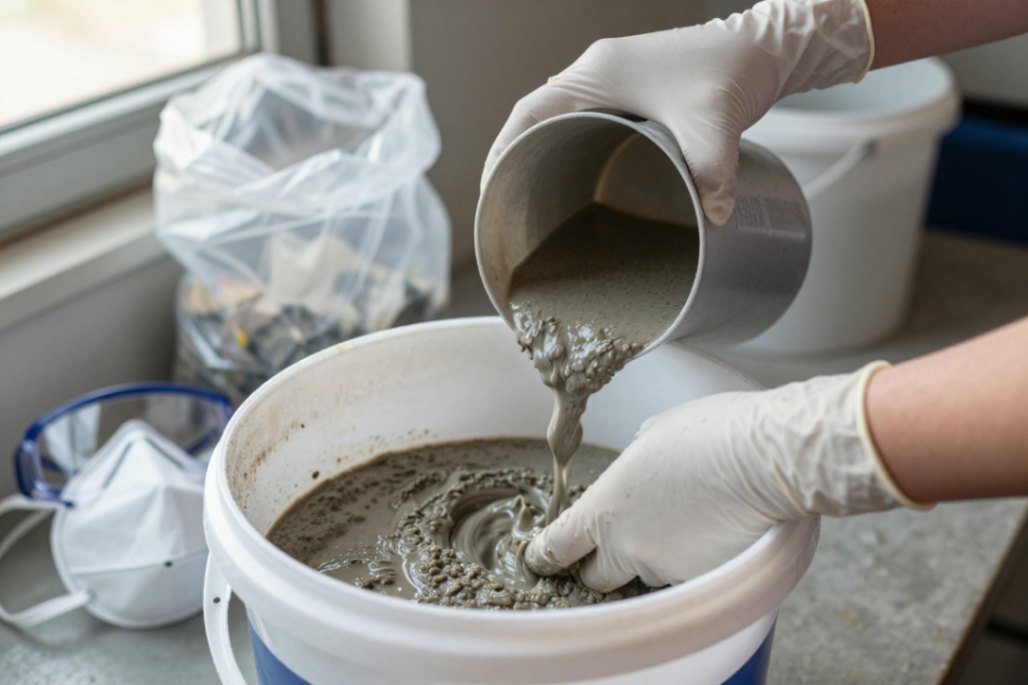
You’re handling a fine, crystalline silica dust when dry. Never pour or shake it without protection. Wear a rated dust mask (N95 minimum) and safety glasses. Work in a well-ventilated area. For disposal, let the used slurry settle in a bucket for a week. Decant the water carefully, then seal the sludge in a plastic bag and dispose of it with your regular solid waste. Do not pour it down the drain.
The Final Step: Your Path Forward
Mastering the 600 grit stage separates hobbyists from craftsmen. The process demands rigor. Measure precisely. Clean obsessively. Inspect ruthlessly. When done correctly, your rocks will emerge with a silky, scratch-free surface that accepts a final polish perfectly. This isn’t just a step; it’s the gatekeeper of quality. Treat it with the respect it demands. Now, go clean that barrel again.
eduloc founded on October 17, 2012, is a high-tech enterprise committed to the research and development, production, processing, sales and technical services of ceramic relative materials such as 600. Our products includes but not limited to Boron Carbide Ceramic Products, Boron Nitride Ceramic Products, Silicon Carbide Ceramic Products, Silicon Nitride Ceramic Products, Zirconium Dioxide Ceramic Products, etc. If you are interested, please feel free to contact us.
RELATED POSTS

Is Magnesium Diboride MgB2 a Superconductor?

Ultrafine Nano Copper Powder: Initiating a New Chapter in the Revolution of Advanced Materials ultrafine copper powder price
Review Of Cases Where Chinese Companies Won The Anti-Dumping Case Of Stainless Steel Balls
Innovative Application Of Stainless Steel Ball In Deep Sea Equipment Corrosion Protection
Suppliers of Nucleic Acid Extraction device are also being affected by the rapid deterioration of the global pandemic