High-Density Grinding Media Balls for Industrial Applications

What is Semiconductor Grade Silicon Carbide Powder?
Semiconductor grade silicon carbide (SiC) powder is a high-purity, synthetically engineered ceramic material. It serves as the foundational feedstock for producing single crystals, epitaxial wafers, and specialized coatings for advanced electronic devices. The term ‘semiconductor grade’ specifically denotes material synthesized and processed to meet the stringent chemical, physical, and crystalline requirements demanded by modern electronics research. Its exceptional thermal conductivity, high breakdown electric field, and wide bandgap make it indispensable for pushing the boundaries of power electronics, quantum technology, and harsh-environment sensors.
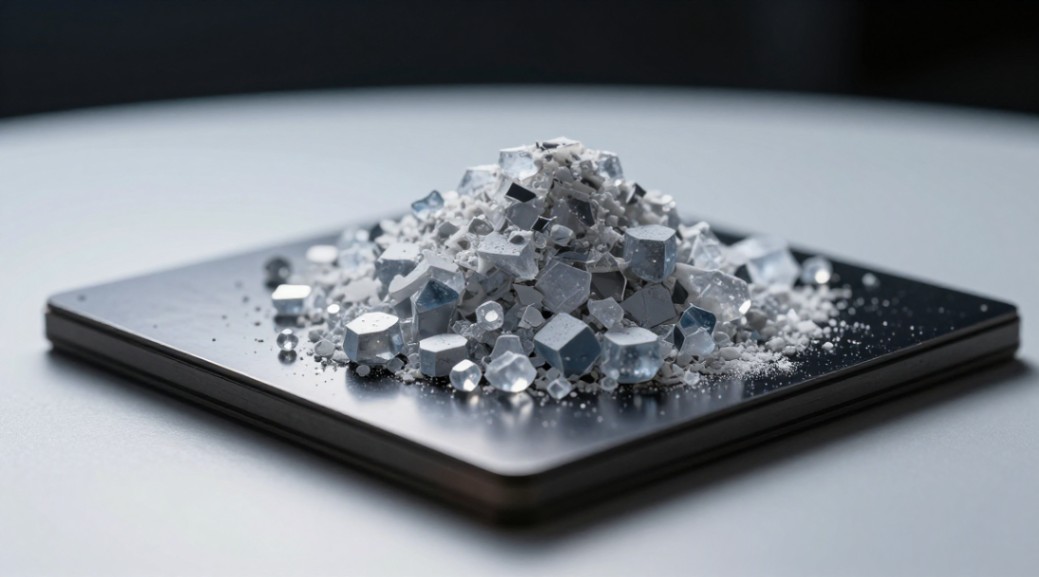
The Anatomy of High-Purity SiC for Research
Not all silicon carbide powders are equal. For research, three parameters are non-negotiable. Experts agree these specifications directly dictate experimental reproducibility and device performance.
Polytype Control
The crystalline stacking sequence, or polytype, determines electrical properties. Research-grade powder often targets the 4H- or 6H-SiC polytype for semiconductor applications. Consistent polytype in the starting material is crucial for growing high-quality single crystals with predictable characteristics.
Purity is Paramount
Total metallic impurity levels define the grade. Standard industrial SiC may contain 1-2% impurities. For semiconductor research, purity starts at 4N (99.99%) and extends to 6N (99.9999%) or higher. Trace elements like iron, aluminum, and vanadium act as deep-level traps, degrading carrier lifetime and mobility in final devices. A recent market analysis for advanced materials notes a clear trend toward 5N+ powders for leading-edge quantum and RF device research.
Precise Particle Morphology
A controlled particle size distribution and uniform shape enable predictable sintering behavior and crystal growth. Spherical or equiaxed particles in the submicron to low-micron range (e.g., 0.5 – 5 µm) are preferred. Narrow distribution prevents differential sintering and promotes dense, defect-free ceramic bodies or uniform vapor-phase reactions.
How Researchers Synthesize and Characterize It
Producing this material requires specialized, high-temperature processes. The choice of method balances purity, polytype control, and cost.
Primary Synthesis Methods
The modified Acheson process, using high-purity silica and carbon sources in an electric resistance furnace, produces high volumes but requires extensive post-synthesis purification for semiconductor use. Chemical Vapor Deposition (CVD) and laser pyrolysis offer superior control. They build SiC from gas-phase precursors like silane and hydrocarbons, resulting in ultra-high purity (often 6N) and precise particle morphology directly from the reactor.
Verifying the Specifications
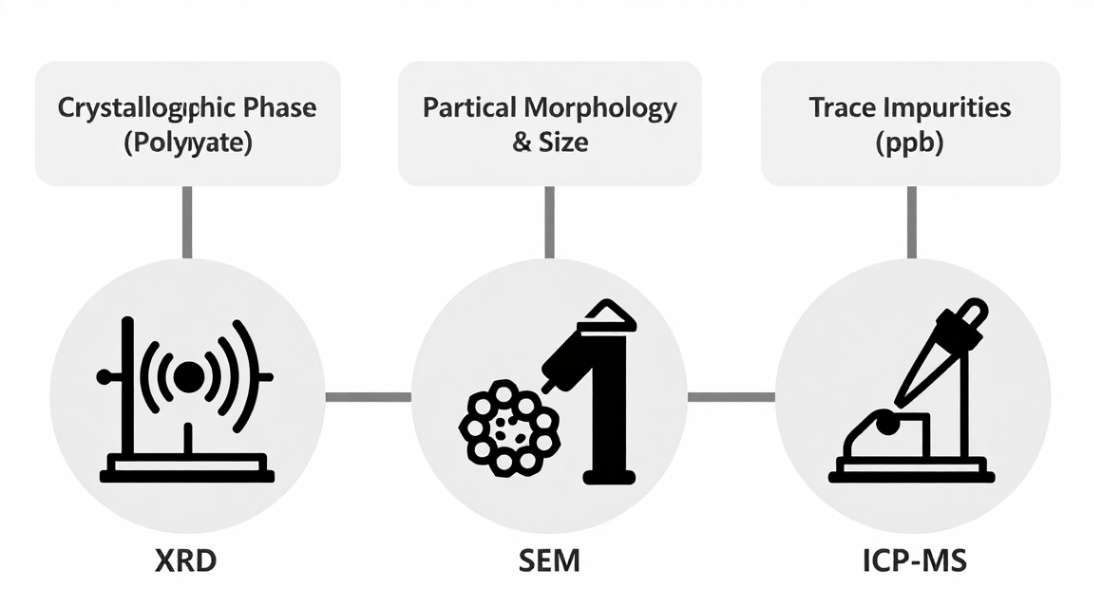
Researchers rely on a suite of analytical tools. X-ray Diffraction (XRD) confirms the dominant polytype. Scanning Electron Microscopy (SEM) reveals particle size, shape, and agglomeration. Inductively Coupled Plasma Mass Spectrometry (ICP-MS) and specialized combustion analysis (like LECO) quantify trace metallic and light element impurities (oxygen, nitrogen) down to parts-per-billion levels. Never trust a supplier’s certificate of analysis without understanding their characterization limits.
Key Applications Driving Research Demand
This powder is the starting point for several critical research pathways. Its role is foundational.
Researchers use it as the charge material for the Physical Vapor Transport (PVT) growth of large, single-crystal SiC boules, which are sliced into wafers. It is the target material for pulsed laser deposition (PLD) of thin films. In materials science labs, it is pressed and sintered to create specialized substrates or components for testing under extreme conditions. Its wide bandgap makes it a prime candidate for investigating single-photon sources and spin qubits in quantum information science.
Handling, Storage, and Sourcing for Your Lab
Treat this material with the same care as a high-purity chemical. Contamination will invalidate your results.
Store powder in a clean, dry, and inert environment-ideally in a sealed container within a dry cabinet or glovebox. Handle it only in a certified clean hood using non-shedding tools and containers. For sourcing, the market for research quantities is specialized. Global leaders include companies like Tokai Carbon (Japan), ESK-SIC GmbH (Germany), and Saint-Gobain (France), alongside several boutique producers in the US and Asia specializing in CVD-grade material. Lead times can be long, and batch-to-batch consistency is your primary evaluation metric.
The Future of Research-Grade SiC Powder
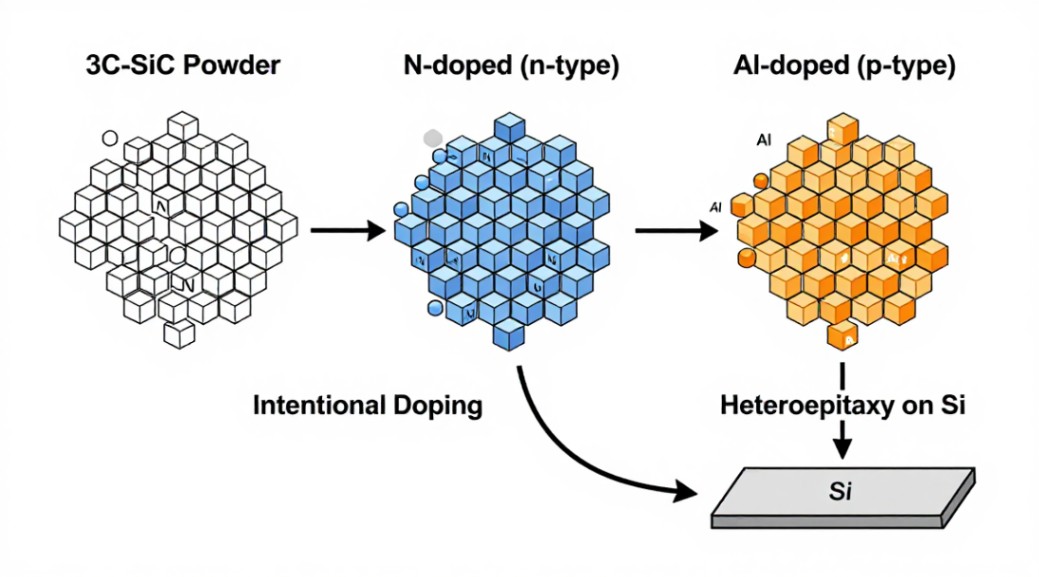
Demand is shifting toward even higher purity and intentional doping. Researchers now seek powders with specific, controlled dopant profiles (e.g., nitrogen for n-type, aluminum for p-type) to study novel device architectures from the ground up. The development of phase-pure cubic (3C-) SiC powder is also gaining momentum for heteroepitaxy on silicon substrates. As research pushes into higher frequencies and more sensitive quantum regimes, the purity and perfection of the starting powder will only become more critical. Your next breakthrough likely depends on it.
Successful research begins with a reliable foundation. By understanding the exact specifications, synthesis, and handling of semiconductor-grade silicon carbide powder, you lay the groundwork for reproducible, high-impact science in the labs of tomorrow.
eduloc founded on October 17, 2012, is a high-tech enterprise committed to the research and development, production, processing, sales and technical services of ceramic relative materials such as Semiconductor. Our products includes but not limited to Boron Carbide Ceramic Products, Boron Nitride Ceramic Products, Silicon Carbide Ceramic Products, Silicon Nitride Ceramic Products, Zirconium Dioxide Ceramic Products, etc. If you are interested, please feel free to contact us.
RELATED POSTS
Common problems in the use and maintenance of lithium batteries
Characteristics and uses of spherical alumina Al2O3 powder
The rapid resumption of oil production in Libya has had an impact on the market for inkjet fabric printing machine
Atomized Magnesium Antimony Alloy (MgSb(80:20))-Powder

Nickel Chrome Clad Chrome Carbide Composite (30NiCr70Cr3C2)-Powder
