High-Density Grinding Media Balls for Industrial Applications

Are Your Brake Pads Letting You Down? You’re Not Alone.
Do you hear that high-pitched squeal every time you stop? Does your brake pedal feel inconsistent, going from firm to soft on a long descent? Have you replaced brake pads far sooner than you expected? If you answered yes, you’re experiencing the limitations of traditional friction materials. For years, the industry has wrestled with balancing performance, durability, and comfort. That struggle is now being reshaped by a superior abrasive: silicon carbide powder for brake pad manufacturing. Let’s examine why.
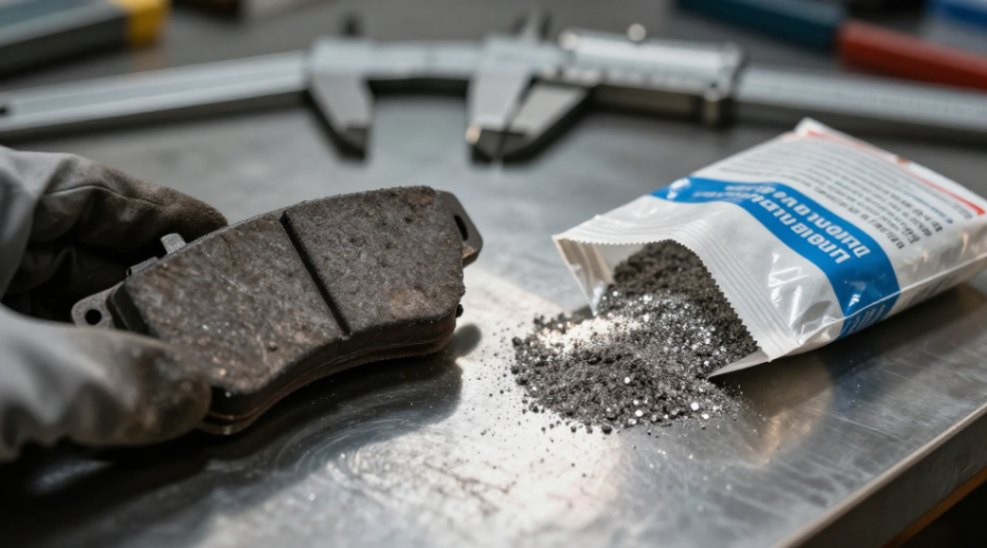
1. The Core Advantages of Silicon Carbide Over Traditional Materials
Before silicon carbide, brake formulators primarily used materials like quartz or alumina as abrasives. They work, but with significant compromises. Silicon carbide (SiC) changes the game. Its unique crystal structure gives it a set of properties traditional materials can’t match.
- Unmatched Hardness: SiC sits near diamond on the Mohs scale. This translates directly to incredible wear resistance.
- Exceptional Thermal Conductivity: Unlike insulating materials, SiC pulls heat away from the friction surface, stabilizing the pad.
- Chemical Inertness: It resists oxidation and maintains integrity even at extreme temperatures where other materials break down.
One Reddit user on a performance automotive forum put it bluntly: “Switching to pads with quality SiC was a revelation. The initial bite was strong, but the real magic was on track. No more ‘green fade’ on the second lap. They just worked, lap after lap.” This is the direct result of these fundamental properties.
2. The Data-Backed Benefits for Brake Pad Performance
These properties aren’t just theoretical. They manifest as measurable, real-world improvements that every engineer and driver cares about.
2.1. Enhanced Friction Stability at High Temperatures
This is the headline. Friction fade occurs when the pad’s coefficient of friction drops as temperatures rise. Quartz can degrade; organic materials can gasify. Silicon carbide powder maintains its structure. It acts as a stable, consistent ‘bed of nails’ that cleans the rotor and provides a predictable shear force. The result? A flatter, more stable mu-temperature curve. Your brakes feel the same at 300°C as they do at 30°C.
2.2. Dramatically Improved Wear Resistance
Harder materials wear down slower. It’s simple physics. By incorporating silicon carbide powder, the entire composite matrix gains durability. We see pad life extensions of 20-40% in demanding applications. This isn’t just a cost win. It reduces downtime in industrial settings and increases safety margins for high-performance vehicles.
2.3. Significant Reduction of Noise and Vibration (NVH)
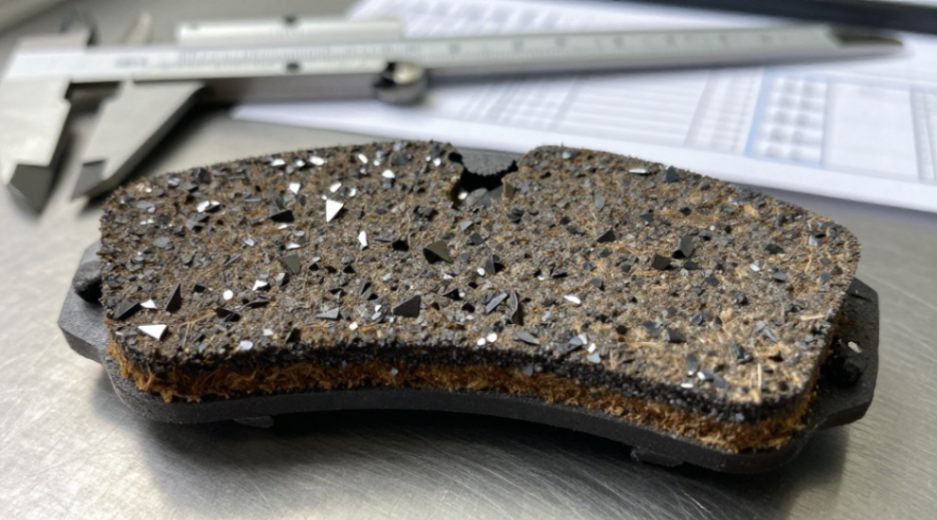
Brake squeal is a complex phenomenon, often linked to stick-slip vibration at the friction interface. The consistent, sharp edges of SiC particles help create a more uniform transfer film on the rotor. This smooths out the engagement, damping the vibrations that cause noise. For passenger vehicles, this is a major comfort and quality win.
3. The Critical Details: Particle Size and Manufacturing
Simply adding SiC isn’t enough. Its effectiveness hinges on precision. Getting these details wrong can do more harm than good.
- Particle Size & Distribution: A broad, uncontrolled mix is a recipe for poor performance. Optimal formulations use a tightly controlled, multi-modal distribution. Fine particles (5-20 microns) support the friction film. Coarser particles (50-150 microns) provide primary abrasion and heat management. This optimization is non-negotiable for maximum effectiveness.
- Key Manufacturing Processes: Incorporating SiC requires thoughtful process design. The powder must be uniformly dispersed within the resin and fiber matrix. Techniques like high-shear mixing and pre-blending with other fillers are standard. Advanced methods, like slurry infiltration strategies inspired by ceramic matrix composites, ensure the powder integrates without clumping or segregating.
4. Quality Control and the Future of SiC Friction Materials
With a premium material like silicon carbide powder, consistent quality is the barrier to entry. Reputable suppliers provide certified analysis including:
- Chemical Purity (SiC content >98.5%)
- Precise Particle Size Distribution (PSD) curves
- Morphology analysis (angular vs. rounded grains)
- Bulk density and flow characteristics
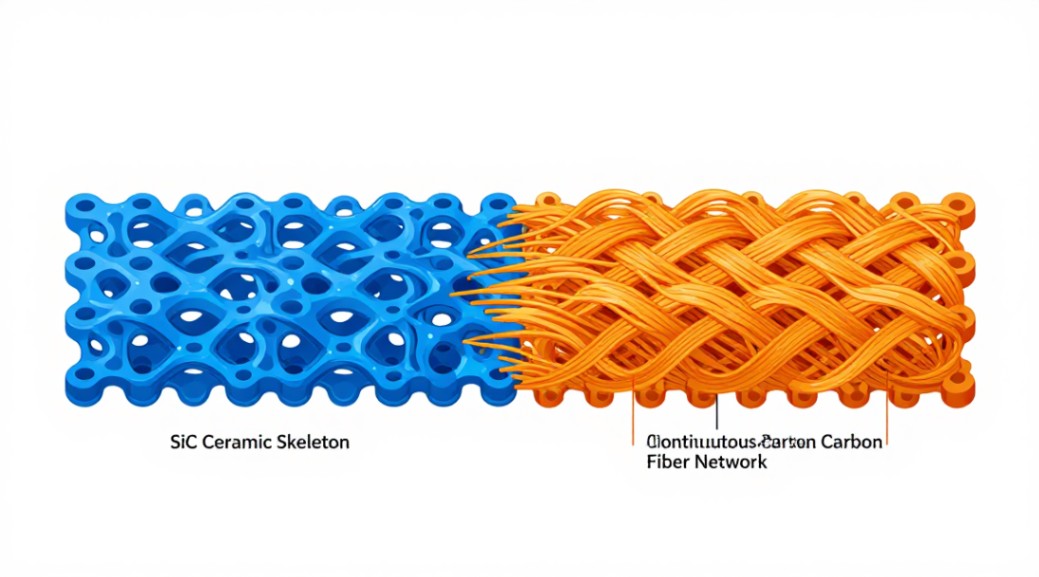
The future is bright. We’re moving beyond simply using SiC as an additive. Research into double continuous structures-where both the ceramic phase and the reinforcing fiber network are interconnected-promises a leap in fracture toughness and thermal management. Imagine a brake pad where the silicon carbide isn’t just a powder, but an integral, load-bearing skeleton. This could drop required sintering temperatures and create the next generation of ultra-durable, fade-proof friction materials.
Your Next Step: Look Beyond the Spec Sheet
The data is clear. Silicon carbide powder for brake pad manufacturing solves persistent problems with fade, wear, and noise. But not all SiC is created equal. Your move is to dig deeper. When evaluating a silicon carbide powder for brake pad manufacturing, don’t just ask for the price. Demand the PSD report. Inquire about the crystal morphology. Discuss your specific application-high-speed automotive, heavy-duty trucking, or industrial machinery-with your supplier. The right partner will help you tailor the particle characteristics to your exact formulation. Start a conversation focused on these technical details. Your next generation of brake pads will thank you for it.
eduloc founded on October 17, 2012, is a high-tech enterprise committed to the research and development, production, processing, sales and technical services of ceramic relative materials such as 7. Our products includes but not limited to Boron Carbide Ceramic Products, Boron Nitride Ceramic Products, Silicon Carbide Ceramic Products, Silicon Nitride Ceramic Products, Zirconium Dioxide Ceramic Products, etc. If you are interested, please feel free to contact us.
RELATED POSTS
Iron-based Alloy (Fe17Cr20Ni4Mo1Mn)-Powder
How strong is the bactericidal effect of nano silver
Nano-Technology and New Material Industries ca3n2 molar mass Influence Factor
What is the market impact of Brazil declining trade surplus on worldwide tracking
Why aluminum silicon carbide can guarantee the high thermal conductivity of materials