High-Density Grinding Media Balls for Industrial Applications

The Precision Tool Hiding in Plain Sight
I watched a master polisher prepare to finish a hardened steel injection mold core. The part demanded a mirror finish, flawless and free of directional scratches. He reached not for a fancy liquid compound, but for a small jar of dark grey powder. He mixed it with oil on a cast iron plate. This was micron size silicon carbide lapping powder. Fifteen minutes later, the steel core reflected like glass. That moment captured its essence: a raw, potent abrasive engineered for controlled, predictable destruction to achieve perfection. This is the definitive guide to understanding it.
Defining Micron Size Silicon Carbide Lapping Powder
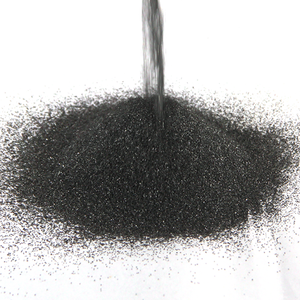
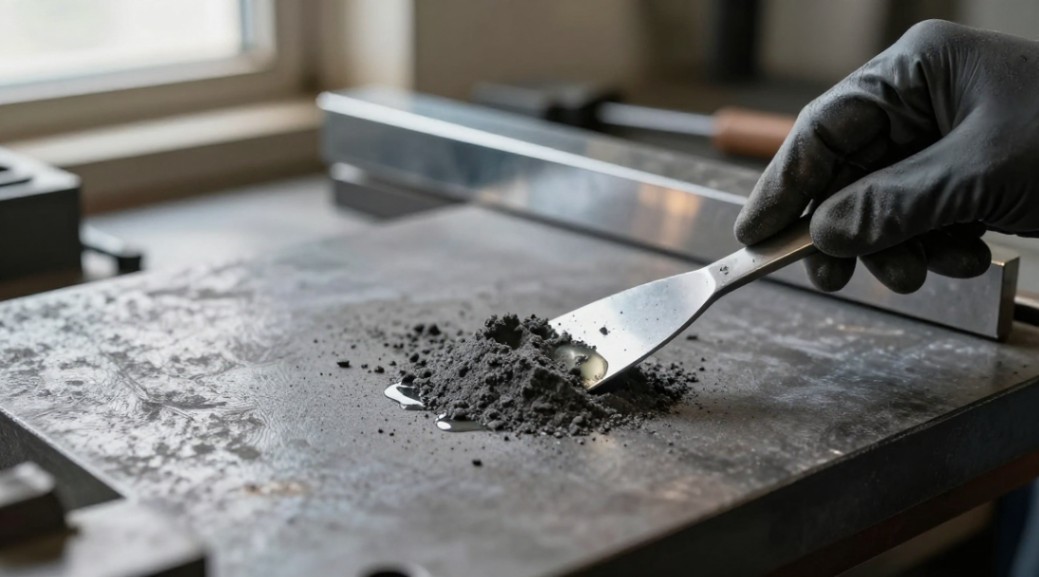
Micron size silicon carbide lapping powder is a synthetically produced, granular abrasive. Its particles are precisely graded to sizes measured in micrometers (µm). Manufacturers design it for a specific finishing process: lapping. In lapping, a slurry of this powder and a fluid is applied between a workpiece and a lap plate. The abrasive grains roll and micro-fracture, removing material through a three-body abrasion mechanism. The goal is not rapid stock removal but achieving extreme dimensional accuracy, surface flatness, and a refined finish on metals.
Key Properties and Characteristics
1. Unmatched Hardness and Sharpness
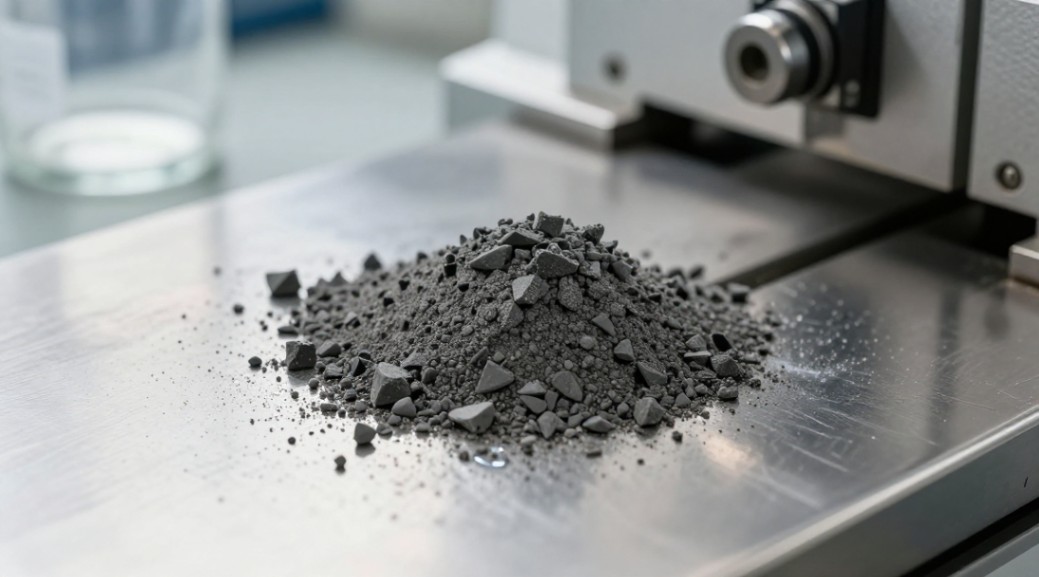
Silicon carbide (SiC) crystals rank 9.2-9.5 on the Mohs scale. Only diamond and boron carbide are harder. Each particle presents razor-sharp, angular edges. This allows SiC to cut effectively into even the toughest metals: hardened tool steels, carbides, and superalloys.
2. Controlled Particle Size Distribution
This is the critical ‘micron size’ specification. It is not a single size, but a tightly controlled range.
- Coarse Lapping (e.g., FEPA 220-500 / ~60-30 µm): For initial flattening and correcting geometry.
- Fine Lapping (e.g., F800-F1200 / ~15-3 µm): For improving surface finish and removing previous grind marks.
- Ultra-Fine Polishing (e.g., 3 µm, 1 µm, 0.5 µm): For achieving near-optical finishes, often as a final step after finer diamond compounds.
A narrow distribution within each grade ensures consistent cut rate and finish. Wide distributions cause unpredictable scratching.
3. Friability: The Self-Sharpening Mechanism
Silicon carbide is friable. Under pressure, particles fracture, revealing new, sharp cutting edges. This self-sharpening action maintains a consistent cutting rate and prevents glazing of the lap plate. It contrasts with aluminium oxide, which can dull and round over, leading to burnishing instead of cutting.
Why Choose SiC for Metal Lapping?
Engineers select silicon carbide over other abrasives for specific advantages in metal finishing.
Comparison to Common Abrasives
- vs. Aluminium Oxide (Al2O3): Alumina is softer and tougher. It wears by attrition, often producing a smoother but less aggressive cut. SiC cuts faster and cooler on hardened metals due to its sharper, friable nature. SiC excels for stock removal and rough lapping; alumina often suits final finishing of softer metals.
- vs. Boron Carbide (B4C): Boron carbide is slightly harder but significantly more expensive. Its use is typically reserved for specialized, high-value applications where its extreme hardness justifies cost. SiC offers the best balance of performance and economics for most industrial metal lapping.
- vs. Diamond: Diamond is the ultimate abrasive for hardness. However, diamond can embed in softer ferrous metals, causing ‘diamond drag’ and contamination. SiC does not embed in steel, making it a cleaner, safer choice for ferrous alloys. Diamond remains king for ceramics and carbides.
The Lapping Process: A Practical Guide
Effective use requires methodical procedure. Here is a standard operational sequence for flat lapping.
- Surface Preparation: The metal workpiece must be ground or machined to within 0.025-0.050 mm (0.001-0.002″) of final dimension. The initial surface finish should be better than 1.6 µm Ra.
- Lap Plate Conditioning: Ensure the lap plate (cast iron, bronze, or glass) is clean, flat, and free of embedded abrasive from previous runs.
- Slurry Mixing: Combine the selected micron size silicon carbide powder with a carrier fluid. Use approximately 0.5-1.5 grams of powder per 10 ml of fluid.
- Carrier Fluids: Water-soluble oils (for general use), kerosene (for non-ferrous metals), or specialty lapping oils. The fluid cools, carries debris, and prevents particle agglomeration.
- Application & Lapping: Apply slurry evenly to the plate. Use a figure-eight or planetary motion under controlled pressure (typically 0.01-0.05 MPa). The workpiece must rotate within its path to ensure even wear.
- Cleaning & Progression: Between grits, clean the workpiece and lap plate ultrasonically to prevent cross-contamination. Progress through grits sequentially (e.g., 30µm -> 9µm -> 3µm). Skipping grades wastes time.
Selecting the Right Powder for the Metal
Material science dictates the choice. The wrong abrasive can damage the part.
- Hardened Tool Steels, Die Steels (HRC 50+): Use medium to fine grades (e.g., 30µm down to 3µm). SiC’s sharpness efficiently cuts the hard matrix without excessive heat generation.
- Stainless Steels, Alloy Steels: A versatile range. Start with FEPA 400 (~35 µm) for flattening, finish with 9µm or 3µm for a pre-polish surface.
- Aluminum, Copper, Brass: Use lighter pressures and finer grades (9µm and finer) to minimize embedding. Kerosene-based carriers often work better to prevent oxidation.
- Nickel-based Superalloys (Inconel, Waspaloy): These work-harden rapidly. Use sharp, friable SiC with a consistent, moderate pressure. A progression ending at 1µm is common for critical aerospace surfaces.
Industry Applications and Results
This powder is not a lab curiosity. It solves real-world manufacturing challenges.
- Automotive: Finishing high-pressure fuel injection components and valve plates to achieve leak-proof flatness below 0.001 mm.
- Aerospace: Preparing sealing surfaces on turbine cases and creating fatigue-resistant finishes on landing gear components.
- Tool & Die Manufacturing: The foundational step for mold cores, stamping dies, and gauge blocks before final polishing. It establishes the critical flatness and geometry.
- Hydraulics & Pneumatics: Lapping pump bodies, manifold blocks, and compressor valve plates to ensure efficient, reliable operation.
Typical achievable results on steel with a proper grit progression: Surface flatness within 0.0005 mm (0.00002″), and a surface finish (Ra) of 0.1 – 0.05 µm.
Safety and Handling: Non-Negotiable Protocol
Respect this material. Micron-sized particles are a respiratory hazard.
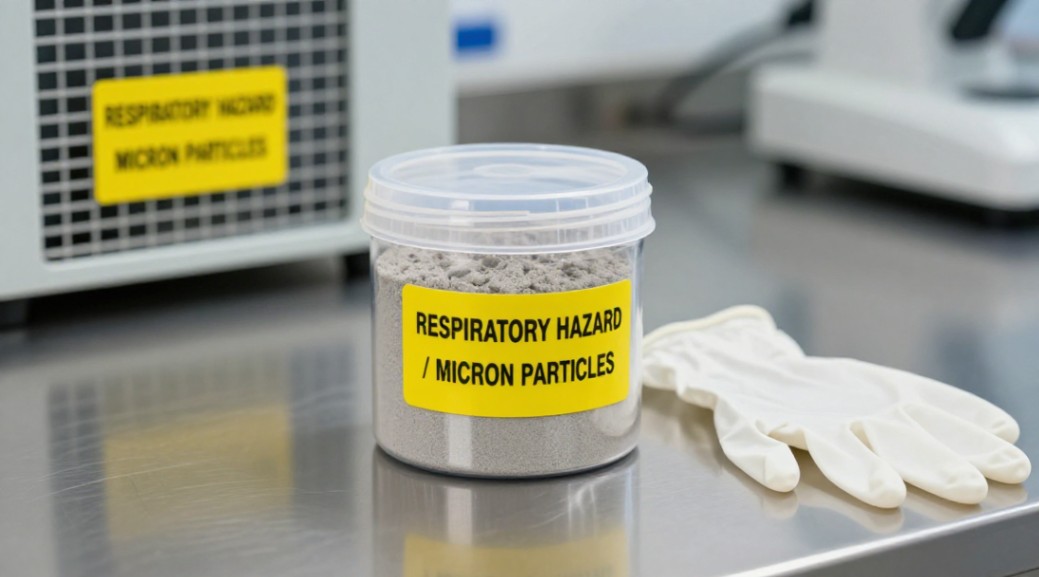
- Always wear NIOSH-approved N95 or P100 respirators when handling dry powder.
- Use local exhaust ventilation (LEV) or conduct operations within a downdraft booth.
- Wear nitrile or rubber gloves to prevent skin irritation and contamination.
- Store in sealed, labeled containers away from moisture and incompatible chemicals.
- Dispose of spent slurry and contaminated wipes as regulated industrial waste.
The Essential Takeaway
Micron size silicon carbide lapping powder is a precision abrasive system. Its value lies in the combination of extreme hardness, controlled particle geometry, and predictable friability. For the metallurgist or finishing engineer, it is the most effective tool to transition a metal component from a machined state to a precision-finished one. It bridges the gap between grinding and polishing. Success depends on selecting the correct micron size for your metal alloy, using a disciplined process, and respecting the material through stringent safety practices. The mirror finish on that mold core wasn’t magic. It was applied materials science.
eduloc founded on October 17, 2012, is a high-tech enterprise committed to the research and development, production, processing, sales and technical services of ceramic relative materials such as What. Our products includes but not limited to Boron Carbide Ceramic Products, Boron Nitride Ceramic Products, Silicon Carbide Ceramic Products, Silicon Nitride Ceramic Products, Zirconium Dioxide Ceramic Products, etc. If you are interested, please feel free to contact us.
RELATED POSTS
Global CLC Foaming Agent Market Report and Future Outlook (2025-2030): Trends, Drivers, Challenges, and Regional Analysis foam concrete mix
The decision by major producers to maintain production cuts has had an impact on sand casting tooling price

can ball joints grind when braking
Is titanium dioxide harmful to the body?