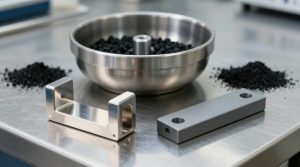
High-Density Grinding Media Balls for Industrial Applications

A Slurry Mistake That Cost $15,000
Two decades ago, I watched a senior technician mix a lapping slurry for a set of hardened steel bearing races. He used the wrong micron size silicon carbide lapping powder for metal. The result wasn’t just a poor finish. It was a catastrophic lapping burn that warped the entire batch. The loss was five figures. That day taught me a brutal lesson: in precision lapping, details are everything. The micron size of your abrasive isn’t just a number. It’s the primary control dial for material removal rate and final surface integrity.
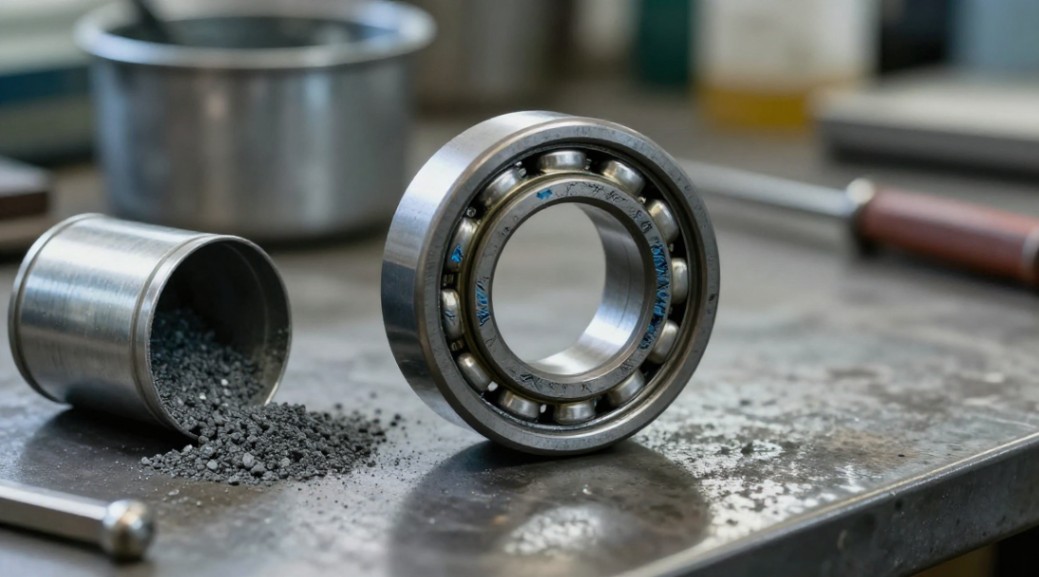
Why Silicon Carbide for Metal Lapping?
Silicon carbide (SiC) is a synthetic ceramic abrasive. Engineers choose it for metal lapping because it fractures predictably. As it works, it breaks down into smaller, sharp fragments. This self-sharpening action provides consistent cutting performance. Aluminum oxide wears down dull. Diamond is prohibitively expensive for many metal applications. SiC offers an optimal balance of extreme hardness (9.5 on the Mohs scale) and controlled friability. Its thermal conductivity also helps dissipate heat, reducing the risk of thermal damage to the metal substrate.
The Micron Size Dictates the Finish
Micron size refers to the abrasive particle’s diameter. In lapping powders, this is a controlled distribution, not a single value. A 30-micron powder will contain particles clustered around that average size. The rule is simple: larger microns remove stock quickly but leave deep scratches. Smaller microns refine the surface to a mirror-like finish but cut slowly.
For metals, the progression typically follows this path:
- Rough Stock Removal (60-30 micron): Used for initial flattening and correcting geometry on cast iron or steel.
- Intermediate Finishing (15-9 micron): Removes the scratches from the previous stage. This is the workhorse range for achieving a uniform matte finish on components like hydraulic rods or valve plates.
- Precision Finishing (5-1 micron and below): For final surface preparation before plating or to achieve specific Ra (Roughness Average) values, often below 0.2 microns. Critical for aerospace components in aluminum or titanium.
How to Use It: Building Your Slurry
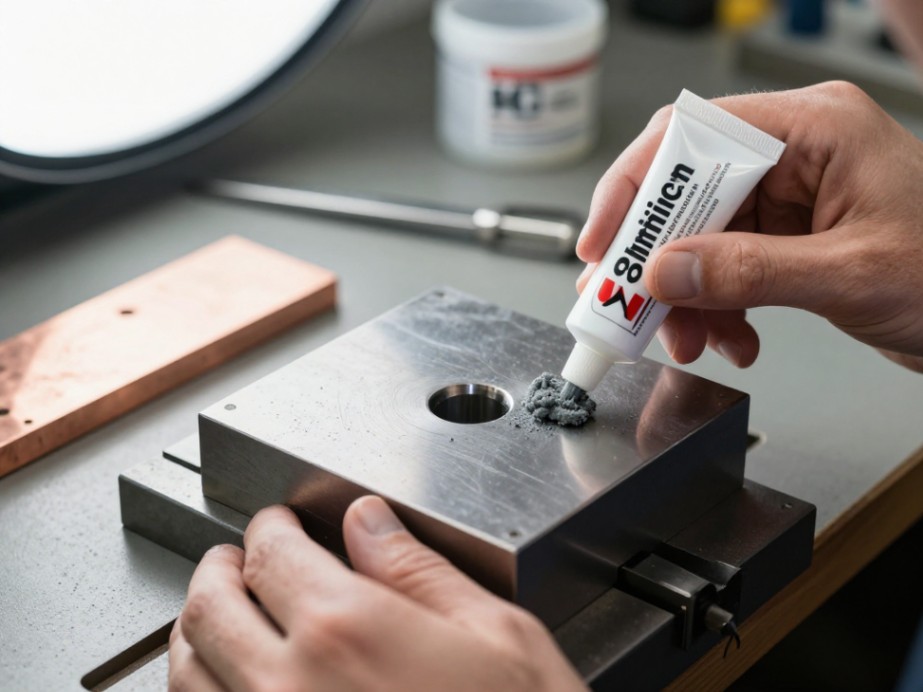
The powder doesn’t work alone. You create a lapping slurry. The standard ratio is 1 part silicon carbide lapping powder to 3-4 parts water or a light mineral oil by weight. Mix thoroughly. The carrier fluid acts as a coolant and a debris transporter. For manual lapping, you apply the slurry to a cast iron or hardened steel lapping plate. The plate’s surface must be trued and conditioned. In machine lapping, a pump system continuously feeds and filters the slurry.
Process Parameters You Must Control
Applying the slurry is just the start. Three factors determine success.
- Pressure: Lower pressure (1-5 psi) with a fine micron powder yields a fine finish. High pressure accelerates cutting but risks embedding abrasive and creating subsurface damage.
- Speed: Plate or part speed should be moderate. Too fast, and you throw the slurry off. Too slow, and you get inconsistent cutting.
- Slurry Concentration: A thicker slurry cuts more aggressively but can lead to loading. A thin, milky slurry is better for final finishing. Monitor and refresh it as the abrasive breaks down.
| Metal Type | Typical Starting Micron | Target Finish Goal | Key Consideration |
|---|---|---|---|
| Tool Steel / Bearing Steel | 30 micron | Fine Matte (Ra 0.4-0.8 µm) | Excellent for achieving flatness; progress through 15, 9, 3 microns. |
| Aluminum & Copper Alloys | 15 micron | Bright, Scratch-Free (Ra 0.1-0.3 µm) | Use lighter pressure to prevent grain pull-out. SiC is preferred over harder alumina for softer metals. |
| Cast Iron | 60 micron | Uniform Sealing Surface | Ideal for lapping engine blocks or pump housings. The graphite structure laps well with SiC. |
| Titanium & Nickel Alloys | 9 micron | Pre-plate or bond prep | Control heat generation. Use ample coolant and a steady, moderate feed rate. |
The Voice of Experience: Community Feedback
On industry forums like Practical Machinist, the consensus is clear. One user working on hydraulic spools stated, “Switching from aluminum oxide to a 9-micron SiC powder doubled my plate life and gave me a more consistent finish on 4140 steel.” Another common refrain from mold makers: “For polishing EDM surfaces on P20 steel, I start with 30 micron SiC on a copper lap. It’s the only way to get the stiction out without creating waves.” These are not isolated opinions. They reflect the material science: silicon carbide’s fracture characteristic provides a forgiving, consistent cut that experienced hands trust.
Selecting Your Grade: A Practical Framework
Forget vague advice. Use this decision tree.
Scenario A: Removing >0.001″ of stock for flatness. Start with F60 (250 micron) or F120 (125 micron) SiC. Move to F220 (63 micron) for intermediate planishing.
Scenario B: Achieving a specific surface roughness (Ra) for a seal. If your spec is Ra 0.5 µm, finish with F600 (15 micron) SiC. For Ra 0.2 µm, you will likely need a final pass with F1200 (3 micron).
Scenario C: Preparing a surface for coating or bonding. A final lap with F1500 (1 micron) SiC creates a perfectly matte, activated surface with massive surface area for superior adhesion. This is critical for thermal spray or brazing operations.
Handling and Safety: Non-Negotiable Practices
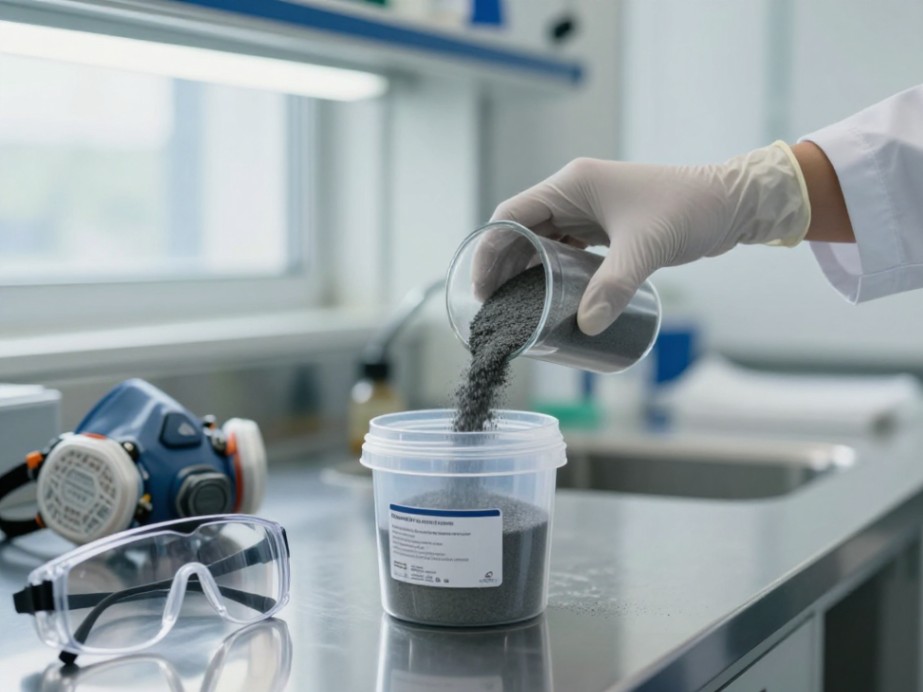
This powder is fine, hard, and a respiratory irritant. Never handle it without PPE. Use a NIOSH-approved N95/P100 dust mask or a respirator for large quantities. Safety glasses are mandatory. Work in a well-ventilated area or use local exhaust ventilation. Contain spills immediately. Store in sealed, labeled containers away from moisture. Treat it with the same respect you would any fine silica-based particulate.
The Final Pass: Your Next Step
The science of lapping is predictable. Your results should be, too. If you’re dealing with inconsistent finishes, excessive plate wear, or uncertainty about your micron progression, the issue is almost always rooted in abrasive selection or slurry management. Audit your current process against the parameters outlined here. Test a small batch with a tighter micron distribution. The difference in surface integrity and part performance is not subtle. It is the difference between a component that passes QC and one that defines the standard.
eduloc founded on October 17, 2012, is a high-tech enterprise committed to the research and development, production, processing, sales and technical services of ceramic relative materials such as The. Our products includes but not limited to Boron Carbide Ceramic Products, Boron Nitride Ceramic Products, Silicon Carbide Ceramic Products, Silicon Nitride Ceramic Products, Zirconium Dioxide Ceramic Products, etc. If you are interested, please feel free to contact us.
RELATED POSTS
Aqueous calcium stearate market analysis report released: Looking forward to future development trends faci calcium stearate
Titanium Alloy (Ti-5Al-2.5Sn)-Spherical powder
Diester-based Magnetic Fluid
Aluminum Nitride (AlN)-Sputtering Target
Medium Fine 1200 Grit SiC Powder: The Honest Pros and Cons for a Flawless Wood Finish