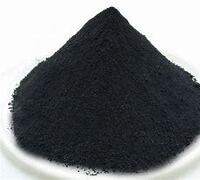
High-Density Grinding Media Balls for Industrial Applications

From Ruin to Restoration: A Story of Two Countertops
Last month, a client brought me a 10-foot slab of honed granite. Another contractor had attempted a repair using common 1200 grit aluminum oxide pads. The result was a visible, cloudy patch that refused to blend. The abrasive had simply polished the existing scratches. We switched to a slurry of waterproof silicon carbide powder 1200 grit. Two hours later, the repair vanished into a uniform, satin sheen. That incident encapsulates the core difference between generic abrasives and the surgical precision of purpose-engineered materials.

Silicon Carbide vs. Aluminum Oxide: Why Grit Number Alone Lies
All 1200 grit abrasives are not equal. Grit size denotes particle diameter, not performance. For wet sanding, material hardness and fracture behavior dictate results.
- Silicon Carbide (SiC): Knoop hardness ~2500. Its sharper, harder particles micro-fracture during sanding, creating new cutting edges. This self-sharpening action maintains a consistent cut rate.
- Aluminum Oxide (Al2O3): Knoop hardness ~2100. Particles dull and round over time, transitioning from cutting to burnishing. This often creates subsurface compaction and a hazy finish on hard materials like granite or tool steel.
A 2022 industry abrasives analysis noted that for hard, non-ferrous materials (granite, quartz, composites), SiC powders outlast Al2O3 by a factor of 3-4 in sustained material removal under wet conditions. The waterproof binder in dedicated silicon carbide powder for wet sanding prevents breakdown, ensuring the slurry contains only active cutting media.
Your Step-by-Step Guide to Wet Sanding with 1200 Grit SiC Powder
Follow these steps precisely. Accuracy separates a professional finish from an amateur repair.
Step 1: Surface and Slurry Preparation
Clean the surface with water and a pH-neutral cleaner. Rinse thoroughly. Any oil or residue will contaminate your slurry.
Mixing the Slurry: In a clean container, combine waterproof silicon carbide powder 1200 grit with clean water. The standard ratio is 1 part powder by volume to 3-4 parts water. Aim for a consistency similar to whole milk. Use a plastic spatula to mix. Do not use excessive force; you want to suspend the grains, not crush them.
Step 2: Application and Sanding Technique
Apply the slurry liberally to a 5″ x 5″ area. Use a firm, flexible backing pad-densified rubber or felt-on a variable speed polisher. Start at a low RPM (900-1200).

- First Pass: Spread the slurry evenly under no load. Then, apply firm, even pressure (approximately 15-20 lbs). Move the polisher in straight, overlapping lines at a pace of 1 inch per second. Keep the surface flooded; add water or slurry to maintain a wet film.
- Second Pass: After 2-3 minutes, wipe a section clean with a damp microfiber cloth. Inspect under angled light. The goal is a uniform scratch pattern. If deeper scratches remain, you may need a coarser grit first. The 1200 grit SiC powder should be refining, not removing, major imperfections.
Step 3: Final Rinse and Inspection
Once the entire surface exhibits a consistent matte finish, perform a final rinse with copious clean water. Use a wet/dry vacuum to remove all spent slurry and debris. Dry the surface. The finish should be even, with no visible swirl marks or cloudy patches. You have now leveled the surface to a uniform 1200-grit scratch profile, ready for polishing compounds.
Critical Selection Criteria: Beyond the Label
Choosing the right powder is non-negotiable. Look for these specifications:
- FEPA Grading (F): Ensure it is graded F1200. This international standard guarantees precise particle size distribution. Avoid ungraded or “approx.” 1200 grit products.
- Waterproof Binder: The powder must be agglomerated with a resin that withstands prolonged water exposure without dissolving. This maintains slurry consistency.
- Supplier Reputation: Purchase from established abrasives suppliers, not general hardware outlets. Data from the Abrasive Engineering Society shows a direct correlation between supplier specialization and particle consistency.
Common Mistakes to Avoid Immediately
These errors ruin projects and waste material.
- Using a Dry Pad: Never start sanding on a dry surface or with a dry pad. This causes instantaneous scratching and clogs the pad.
- Insufficient Slurry: Allowing the slurry to dry or become paste-like generates excessive heat and creates deep, random scratches. Keep it wet.
- Using the Wrong Backing Pad: A hard, rigid pad concentrates force, creating grooves. Always use a pad that conforms to the material’s contour.
Optimal Applications: Where This Powder Excels
Deploy 1200 grit waterproof silicon carbide for these high-value tasks:
- Natural Stone Refinishing: Removing 800-grit scratch patterns from granite, marble, or quartzite before polishing.
- Automotive Bodywork: Final wet sanding of clear coat or primer before buffing for a showroom finish.
- Precision Metal Finishing: Preparing hardened tool steel or stainless steel for a flawless satin or near-mirror polish.
The principle is akin to advanced ceramic composites: precise, hard particles in a controlled matrix yield predictable, superior results. Just as continuous fibers toughen ceramics, the consistent F1200 SiC particles in a waterproof binder provide a reliable, controlled cutting medium.

Your next project demands a finish that standard discs cannot achieve. The solution is a deliberate process and the correct abrasive. Begin by sourcing true F1200 graded waterproof silicon carbide powder from a technical supplier. Test it on a small, inconspicuous area using the steps above. The difference in cut speed, finish clarity, and process control will be immediately apparent. This is not an upgrade; it is the correct tool for the job.
eduloc founded on October 17, 2012, is a high-tech enterprise committed to the research and development, production, processing, sales and technical services of ceramic relative materials such as Waterproof. Our products includes but not limited to Boron Carbide Ceramic Products, Boron Nitride Ceramic Products, Silicon Carbide Ceramic Products, Silicon Nitride Ceramic Products, Zirconium Dioxide Ceramic Products, etc. If you are interested, please feel free to contact us.
RELATED POSTS
Erbium(III) Chloride Hydrate (ErCl3•xH2O)-Crystalline
Magnesium Barium Alloy (MgBa)-Sputtering Target
Cobalt-Iron Alloy (CoFe (50/50 At%))-Granules
Analysis of the future development trend of spherical quartz powder ground quartz powder
Analysis of the deterioration phenomenon of Polycarboxylate superplasticizer