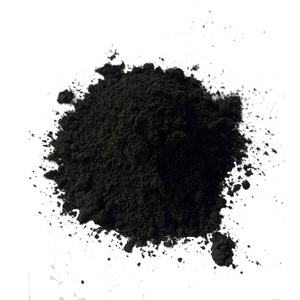
High-Density Grinding Media Balls for Industrial Applications

The Verdict on 600 Grit Silicon Carbide
For the critical final step in valve and seat lapping, 600 grit silicon carbide abrasive powder is your best choice. It provides the perfect balance of speed and finish. This specific grit size efficiently removes the deeper scratches left by coarser compounds while creating a smooth, uniform mating surface that ensures a gas-tight seal. Many mechanics consider it the finishing sweet spot.

Why 600 Grit is the Workhorse for Finishing
You don’t start with 600 grit. We use it as the final abrasive in a progression. Its optimal particle size is around 15-20 microns. This is fine enough to polish but still has enough bite to cut. The goal is to remove the 300-400 grit scratch pattern and replace it with a consistent, fine cross-hatch. This micro-texture is essential. It holds a thin film of oil for lubrication while allowing the valve and seat to conform perfectly under heat and pressure.
Key Properties That Matter
Silicon carbide is harder than aluminum oxide and most valve materials. Its friability-the way particles fracture to reveal new sharp edges-prevents the abrasive from glazing or loading up. You get consistent cutting action throughout the job. Consistent particle distribution is non-negotiable. A wide size range in your 600 grit powder means some larger particles will dig in, ruining your finish. Good suppliers guarantee a tight, uniform spread.
600 Grit vs. Other Common Grades: A Side-by-Side
Let’s break down how 600 grit compares to the grades we often have on the bench. The choice directly impacts your final result.
220-280 Grit (Coarse): This is for initial cutting and removing pitting. It cuts fast but leaves deep, visible scratches. Never stop here. The surface is too rough for a reliable seal.
400 Grit (Medium): The logical step before 600. It removes the coarse scratches and establishes the basic seat angle and width. It prepares the surface for the final finish.
600 Grit (Fine Finishing): This is our primary focus. It erases the 400 grit pattern and creates the final sealing surface. It’s fine enough for a great seal but still cuts efficiently. This is the last abrasive used for most street and performance engines.
800-1200 Grit (Ultra-Fine/Polishing): Used for absolute final polishing on racing engines or specific materials like stainless steel. It creates a near-mirror finish. A common mistake is polishing too much; you can create a surface so smooth it won’t hold the necessary oil film, leading to galling.

Tools, Materials, and a Foolproof Procedure
Gather your gear first. You’ll need genuine 600 grit silicon carbide abrasive powder, a light mixing oil (automatic transmission fluid or dedicated lapping oil), a lapping stick with a quality suction cup, and a valve spring compressor.
Step-by-Step Valve Grinding & Lapping
- Clean Everything. Degrease the valve head, stem, and seat. Any old grit will contaminate your new compound.
- Mix the Compound. Place a small pile of 600 grit powder-about the size of a pea-on a clean surface. Add 2-3 drops of mixing oil. Stir with a stick until it forms a smooth, thin paste. The consistency should be like heavy cream.
- Apply Sparingly. Using a small brush or the stick, apply a thin, even film to the valve seat in the head. Do not apply it to the valve. A little goes a very long way.
- Lap with Precision. Place the valve into its guide. Attach the lapping stick to the valve head. Use a back-and-forth rotating motion. Apply light, downward pressure. Rotate the valve 1/4 to 1/2 turn, lift, and rotate to a new position. Repeat. We aim for 10-20 full rotations total. Over-lapping is a common error.
- Inspect and Clean. Carefully remove the valve and wipe both the valve face and seat completely clean with a lint-free rag and solvent. You must remove all abrasive. Inspect the pattern. A uniform, dull grey matte finish around the entire seat and valve face indicates success.
| Step | Key Action | Critical Detail |
|---|---|---|
| 1. Clean | Degrease all surfaces | Eliminate cross-contamination |
| 2. Mix | Combine powder & oil | Consistency of heavy cream |
| 3. Apply | Thin film to seat only | A pea-sized amount is enough |
| 4. Lap | Rotate & lift valve | 10-20 rotations, light pressure |
| 5. Inspect | Clean & check pattern | Uniform dull gray matte finish |
Safety and Selection: Non-Negotiables
Silicon carbide dust is harmful. Wear a NIOSH-approved N95 mask or a respirator with P100 filters. Safety glasses are mandatory. We also recommend nitrile gloves. Work in a well-ventilated area or use a local exhaust to control dust during mixing. When selecting powder, grit purity is paramount. Look for suppliers that cater to the engine machining trade. Reputation matters. For street engines with cast iron or stellite seats, standard 600 grit silicon carbide works perfectly. For very hard materials like Inconel, you might need a specialized boron carbide or diamond compound, but 600 grit SiC handles 95% of our work.
Common Pitfalls and How to Avoid Them
We’ve all seen these mistakes. Using too much compound creates a cushioned, ineffective cut and makes a mess. Applying compound to the valve instead of the seat causes it to sling off, wasting material and giving uneven results. Over-lapping removes too much material, widening the seat and changing the contact point. The worst error? Not cleaning thoroughly between grits. A single piece of 220 grit trapped in your 600 grit paste will ruin hours of work.
The Finish Line: What You Should Expect
A proper 600 grit finish isn’t shiny. It should be a consistent, dull gray with a fine cross-hatch texture visible under a magnifying glass. This surface, when mated with a valve finished the same way, creates multiple concentric sealing rings. It seats quickly, transfers heat efficiently, and prevents compression loss and burnt valves. On forums like Reddit and engine builder communities, users consistently report that skipping from 400 to a finer polish often leads to sealing issues, while the 400-to-600 progression yields reliable, leak-free results.
Storage, Handling, and Disposal
Keep your 600 grit silicon carbide powder in its original, sealed container. Store it in a dry place. Moisture causes clumping. For disposal, never pour used abrasive slurry down the drain. The heavy silicon carbide powder and metal particles will settle and cause blockages. Let the slurry settle in a container, decant the oil for proper recycling, and dispose of the solid sludge as hazardous waste according to your local regulations. It’s part of doing the job right.

Final Recommendation and Next Steps
After two decades on the bench, I specify 600 grit silicon carbide abrasive powder for nearly every valve lapping job. Its consistency and results are unmatched for the price. Don’t compromise on an unknown brand to save a few dollars. Invest in a quality powder from a reputable engine tool supplier. Your engine’s performance and longevity depend on this final, critical step. Get your hands on a reliable 600 grit compound, follow the steps above, and you’ll achieve a professional-grade valve seal every time.
eduloc founded on October 17, 2012, is a high-tech enterprise committed to the research and development, production, processing, sales and technical services of ceramic relative materials such as 600. Our products includes but not limited to Boron Carbide Ceramic Products, Boron Nitride Ceramic Products, Silicon Carbide Ceramic Products, Silicon Nitride Ceramic Products, Zirconium Dioxide Ceramic Products, etc. If you are interested, please feel free to contact us.
RELATED POSTS
The Application Of Zirconium Dioxide Balls In The Medical Field Has Increased By 30% Year-On-Year
Laser cutting to manufacture self-expansive support – Ni-Ti-N alloy

Exploring Nano Nickel Oxide: From Fundamental Research to Diverse Applications nickel oxide nio
What are the factors that affect the thermal conductivity of PCB aluminum nitride (AlN) ceramic substrate? aln electrical conductivity
What is Bulk Silicon Carbide Powder for Thermal Spray Coating? The Engineer’s Guide to Superior Wear Protection