High-Density Grinding Media Balls for Industrial Applications

Frustrated with Fading Brakes?
Does your brake pedal feel spongy after a long downhill drive? Do you worry about losing stopping power when your vehicle is fully loaded? You’re not alone. Brake fade and inconsistent performance are common frustrations for drivers who demand reliability. The solution to this problem often lies not in a flashy new caliper, but in the microscopic world of the brake pad’s friction material. Today, we’re examining the unsung hero that provides that consistent bite: silicon carbide powder.
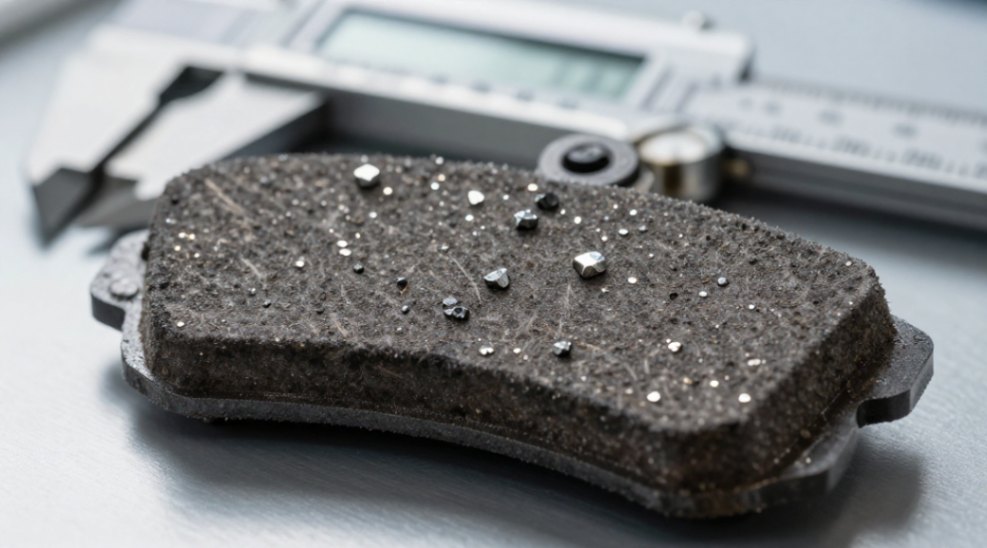
Why Silicon Carbide Powder Reigns Supreme in Modern Friction
For decades, brake pad formulations relied on asbestos for its heat resistance. Its ban forced innovation. Engineers experimented with various metallic and ceramic solutions, seeking the right balance of friction, wear, and noise. Silicon carbide (SiC) emerged as a superior additive. Its extreme hardness-second only to diamond and boron carbide-and its exceptional thermal stability make it uniquely suited for the brutal environment inside a braking system. Unlike softer materials that can smear or glaze, silicon carbide maintains its abrasive character at temperatures that cause others to fail.
The Science of Stopping: Silicon Carbide at Work
Silicon carbide powder doesn’t just sit in the pad. It performs three critical, active functions.
1. Consistent Friction, No Compromise
Silicon carbide particles are harder than the cast iron of your brake rotor. As the pad presses against the rotor, these hard particles gently scour the surface. This action removes glazing, micro-welds, and transfer layers that cause a loss of friction. The result is a consistent coefficient of friction (μ) from cold to red-hot operating temperatures. Industry tests show pads formulated with optimized SiC can maintain friction levels within ±10% across a 500°C range, while non-ceramic formulations may vary by 30% or more.
2. Built to Endure the Heat
Heat is the enemy of braking. When traditional organic pads overheat, they outgas, leaving a carbon deposit on the rotor that reduces grip. Silicon carbide withstands temperatures exceeding 1600°C without decomposing. It also improves the pad’s overall thermal conductivity, pulling heat away from the friction surface and distributing it through the pad’s backing plate. This thermal management is the key to defeating brake fade.
3. A Modern Friction Cocktail
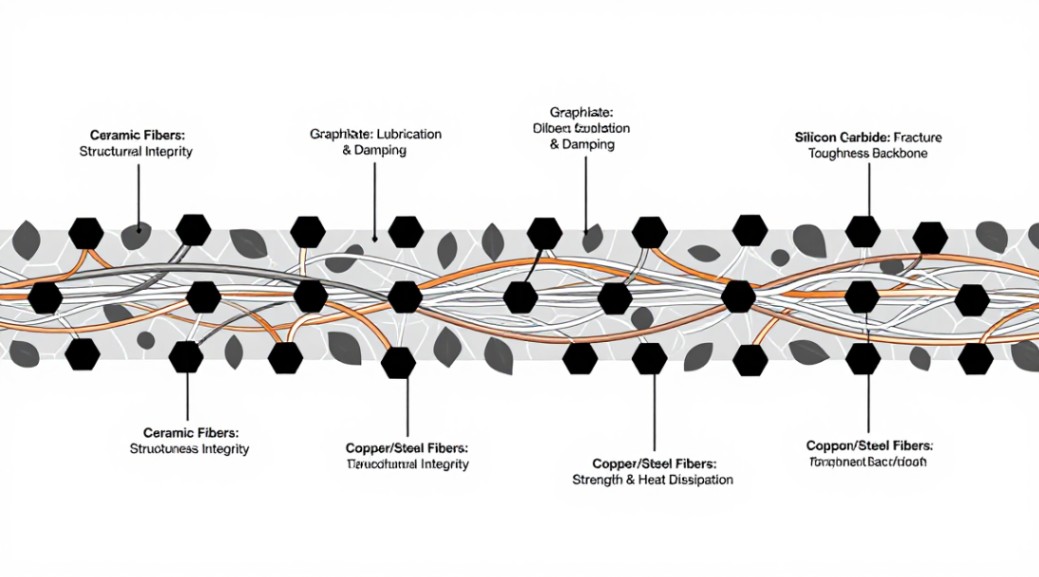
Silicon carbide rarely works alone. Modern premium and performance pads use it as part of a sophisticated matrix. It partners with graphite for lubrication and noise dampening, with ceramic fibers for structural integrity, and with copper or steel fibers for strength and heat dissipation. This composite approach, where hard SiC particles are bound within a resilient matrix, directly improves fracture toughness-a ceramic’s resistance to chipping or cracking. Think of silicon carbide as the backbone of a high-performance team.
Performance vs. Practicality: A Balanced View
Every engineering choice involves trade-offs. The very hardness that makes silicon carbide so effective also means it can increase wear on the brake rotor. This isn’t inherently bad; it’s a controlled, predictable wear that maintains optimal surface conditions. The key lies in expert formulation. Leading manufacturers carefully control the particle size, shape, and concentration of SiC to deliver aggressive bite without excessive rotor degradation. In contrast, older semi-metallic pads often use softer, larger steel fibers that can gouge rotors and generate more heat.
| Property | Benefit | Typical Application |
|---|---|---|
| Extreme Hardness (9.5 Mohs) | Consistent rotor cleaning, stable friction coefficient | Performance Street, Track Day Pads |
| High Thermal Conductivity (~120 W/m·K) | Reduced brake fade, better heat dissipation | Towing, Heavy-Duty, Racing Pads |
| Oxidation Resistance | Long-term stability at high temperatures | All Premium Ceramic Formulations |
| Abrasive Nature | Prevents glazing, maintains bite | OEM & Aftermarket Pads for SUVs/Trucks |
The Manufacturing Edge: How It Gets In There
Incorporating silicon carbide is a precise process. Manufacturers start with fine, graded SiC powder, often between 20 and 200 microns in size. They meticulously blend this powder with other raw materials-binders, fibers, lubricants-in industrial mixers. This homogeneous dry mix is then poured into a mold and subjected to intense heat and pressure in a process called hot compression molding. This bonds the materials into a solid, dense friction composite. The exact recipe-the “secret sauce”-determines whether the final pad is suited for a quiet family sedan or a heavyweight track monster.
The Bottom Line: Is a Silicon Carbide Pad Right For You?
If you prioritize safety, consistency, and performance under pressure, the answer is a resounding yes. Silicon carbide is no longer an exotic material; it’s a cornerstone of modern braking technology. For the driver who tows a trailer, enjoys spirited mountain drives, or simply wants unwavering brake response, pads engineered with silicon carbide offer a tangible advantage. They translate into shorter, more predictable stopping distances and confidence that your brakes will perform when you need them most.

Stop Guessing, Start Stopping with Confidence
Don’t settle for generic brake pads that can’t handle your real-world demands. The inclusion of silicon carbide powder is a hallmark of a seriously engineered friction material. When you’re ready for your next brake service, demand this higher standard. Ask your mechanic or parts specialist for brake pads that utilize advanced ceramic formulations with silicon carbide. Specify performance from the inside out. Your safety is worth the investment. Upgrade your brakes today and experience the difference true engineering makes.
eduloc founded on October 17, 2012, is a high-tech enterprise committed to the research and development, production, processing, sales and technical services of ceramic relative materials such as The. Our products includes but not limited to Boron Carbide Ceramic Products, Boron Nitride Ceramic Products, Silicon Carbide Ceramic Products, Silicon Nitride Ceramic Products, Zirconium Dioxide Ceramic Products, etc. If you are interested, please feel free to contact us.
RELATED POSTS

Uraninite A radioactive mineral and the most important source of uranium. Article by: Hobart M. King, PhD, RPG
Potassium dihydrogen phosphate (KH2PO4)-Powder

Sodium dodecamolybdophosphate hydrate (Na3PO4•12MoO3•xH2O)-Powder
The Recycling Of Stainless Steel Balls Has Been Included In The Green Manufacturing Catalog Of The Ministry Of Industry And Information Technology
Sodium tin(IV) oxide trihydrate (Na2SnO3•3H2O)-Powder
