High-Density Grinding Media Balls for Industrial Applications

The One Material That’s Never the Weakest Link
We’ve all been there. Your prototype ceramic component looks perfect, but fails prematurely under thermal shock. The armor plate passes the initial test, but cracks spread from unseen impurities under repeat impact. The crucible warps after a few cycles. It’s frustrating. Often, the root cause isn’t the design or the kiln schedule. It’s the foundation: the silicon carbide powder.
Beyond Grit: The Science of High Purity Silicon Carbide
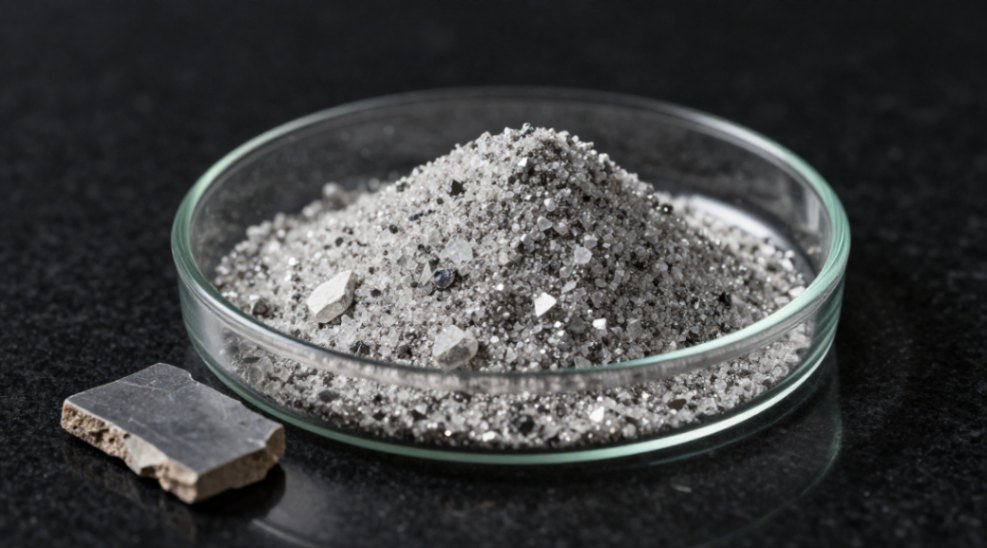
Think of high purity SiC powder as more than just an abrasive or a filler. It’s the engineered raw material that dictates the final properties of your ceramic. Purity directly controls performance. A 99.9% pure powder behaves fundamentally differently from a 99.99% grade, especially in electrical and extreme thermal applications.
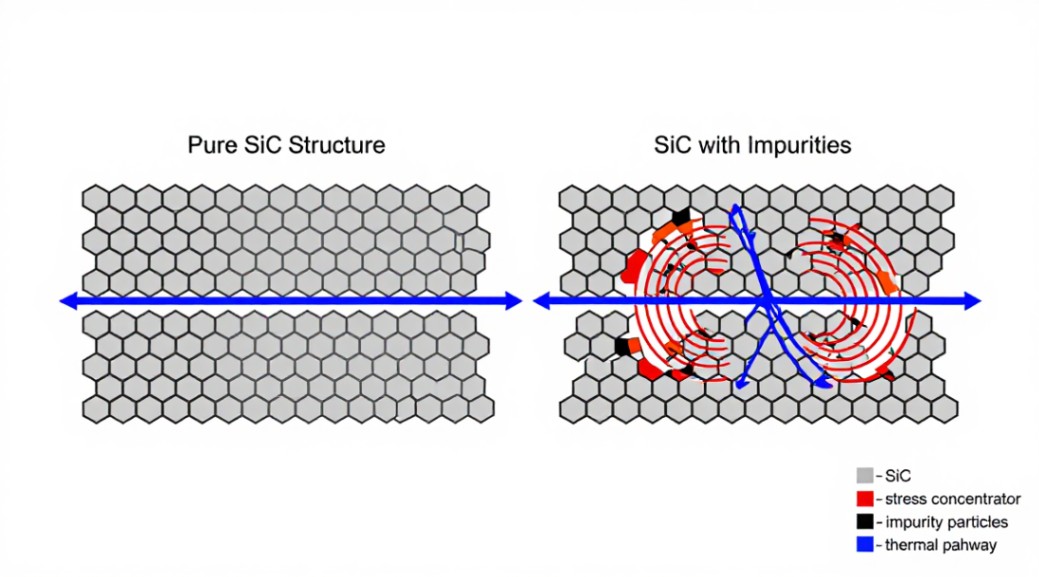
The difference lies in trace elements. Metallic impurities like iron or aluminum, even at parts-per-million levels, can become failure initiation points. They lower creep resistance and degrade high-temperature strength. For functional ceramics requiring specific electrical properties, these impurities are deal-breakers.
Production Pathways: Choosing the Right Tool for the Job
How we make the powder matters as much as what’s in it. The century-old Acheson process produces large, coarse crystals suitable for abrasives and refractories. But for advanced ceramics? We need finer control.
Advanced chemical synthesis methods, like carbothermal reduction of silica or gas-phase reactions, give us that control. These processes allow precise manipulation of particle size distribution and morphology. We can engineer sub-micron, spherical powders that pack densely and sinter uniformly, creating ceramics with near-theoretical density.
Frequently Asked Questions on SiC Powder for Ceramics
What is high purity silicon carbide powder for ceramics?
It’s the ultra-refined, synthetic raw material used as the primary constituent in silicon carbide technical ceramics. Its purity, typically 99.9% or higher, ensures final components achieve their intended mechanical, thermal, and chemical properties without being compromised by impurities.
Why does purity matter so much in silicon carbide ceramics?
Impurities act like tiny flaws. They concentrate stress, lower thermal conductivity, and can cause catastrophic failure under load or thermal cycling. High purity is the prerequisite for reliability in applications like semiconductor wafer handling, ballistic armor, and aerospace seals.
How does powder quality affect sintering silicon carbide (SSiC)?
You cannot sinter a poor powder into a premium ceramic. For pressureless sintering of SSiC, the powder must have a consistent, fine particle size and contain sintering aids like boron and carbon in precise amounts. Inconsistent powder leads to variable shrinkage, warping, and internal porosity.
Is this the same powder used for reaction-bonded silicon carbide (RBSC)?
Similar, but with different priorities. RBSC uses a porous SiC preform. The purity of this initial powder skeleton is still critical, but the process also relies on the infiltration of molten silicon. Here, particle size and packing density are paramount to control the final silicon phase content and mechanical strength.
Building the Future, One Grain at a Time
The conversation in forums and among engineers is shifting. It’s less about "can we make it?" and more about "how reliably can we make it?" Users consistently report that specifying a high-grade, well-characterized powder from the start eliminates downstream variables. It turns ceramic fabrication from an art into a predictable engineering discipline.
This material enables systems others can’t. Its exceptional hardness and wear resistance create industrial seals and bearings that last for years, not months. Its high thermal conductivity and stability make it the only choice for advanced heat exchangers and fusion reactor components. In armor ceramics, a well-sintered SiC plate offers a superior strength-to-weight ratio, a fact repeatedly validated in both lab tests and field data.
The path forward is clear. Success in advanced ceramics starts with a conscious decision about the powder. It’s the first and most critical specification on your list. Get that right, and everything that follows-forming, sintering, machining-becomes more controllable. You build confidence into the component from the very first grain.
Your next step isn’t to buy a product. It’s to re-evaluate your raw material specifications against the actual demands of your application. Start by requesting the material data sheet for any silicon carbide powder you consider. Scrutinize the certified chemical analysis, the particle size distribution graph, and the reported morphology. That sheet tells the real story. Your finished ceramic will simply reflect what that sheet promises.
eduloc founded on October 17, 2012, is a high-tech enterprise committed to the research and development, production, processing, sales and technical services of ceramic relative materials such as High. Our products includes but not limited to Boron Carbide Ceramic Products, Boron Nitride Ceramic Products, Silicon Carbide Ceramic Products, Silicon Nitride Ceramic Products, Zirconium Dioxide Ceramic Products, etc. If you are interested, please feel free to contact us.
RELATED POSTS
The Application Of Zirconium Dioxide Balls In High-End Watch Ceramic Bezels
Stop Wasting Money on Generic SiC Powder: A Brutal Comparison of Custom Sizing Suppliers
Iron(II) sulfate heptahydrate (FeSO4•7H2O)- Crystalline

Spherical Casting Tungsten Carbide Powder CAS 12070-12-1 WC Powder
Gradient Structured Silicon Carbide Balls Achieve Both Crack Resistance And Wear Resistance