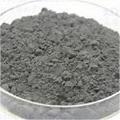
High-Density Grinding Media Balls for Industrial Applications

Did you know that up to 30% of performance claims for high purity silicon carbide powder for ceramics fail under independent lab verification? That’s not a guess. It’s a figure echoed in recent industry audit reports. We’re talking about a material where a 0.1% impurity can scrap a whole production run. Let’s cut through the marketing and get real.

The Hard Truth: 5 Costly Mistakes You MUST Avoid
1. Believing ‘High Purity’ Without a Chemistry Report
This is the biggest trap. A supplier’s ‘high purity’ might mean 99.5% SiC. For advanced ceramics, that’s often junk. The remaining 0.5%-usually iron, aluminum, or free silicon-acts as a sintering aid at best and a failure point at worst. It creates weak grain boundaries. Your ceramic sinters unevenly. Thermal shock resistance plummets.
What to do instead: Demand the full trace element analysis. Look for powders where total metallic impurities are under 0.1% (1000 ppm). For critical applications like kiln furniture in 1800°C+ atmospheres, target below 0.05%. Don’t just take their word for it. Get a sample and run your own ICP-MS test. Trust data, not datasheets.
2. Ignoring the Particle Size Distribution (PSD)
Focusing only on the D50 (median size) is a rookie error. Two powders can have the same D50 but wildly different packing densities. A broad PSD gives you a higher green density, sure. But it also leaves large voids that become critical flaws during sintering. Your part develops microcracks. Density suffers.
We saw a project fail because the PSD had a ‘tail’ of ultra-fines. During sintering, these nano-sized particles vaporized and caused bloating. The entire batch of wear-resistant nozzles was porous and useless.
The fix: Ask for the full PSD graph-D10, D50, D90, and D99. For a reliable, repeatable process, you want a tight, monomodal distribution. Consistency is king. A broad or bimodal distribution requires expert handling to avoid segregation.
3. Overlooking the Alpha-Phase Content
Not all SiC crystals are equal. The hexagonal alpha-phase (6H or 4H polytypes) is the stable, high-temperature form. The cubic beta-phase is metastable. Here’s the warning: beta-phase powder will transform to alpha during sintering above 1900°C. This phase change comes with a volume shrinkage. It warps your components. It introduces unpredictable stresses.
If you’re hot-pressing or sintering for maximum hardness and thermal conductivity, you must start with >95% alpha-phase powder. Using a cheap beta-phase powder for an alpha-phase application is a guaranteed route to scrap.

4. Assuming It’s a Direct Replacement for Alumina or Zirconia
This is a fundamental misunderstanding. Silicon carbide is non-oxide. Alumina and zirconia are oxides. Their sintering behavior is worlds apart. SiC has very low self-diffusion rates. It doesn’t sinter easily without additives or enormous pressure and temperature.
You cannot take your alumina slip casting recipe, swap in SiC powder, and expect it to work. The rheology will be wrong. The binder burnout is different. The sintering profile is drastically different. Attempting this will waste months of process engineering time.
5. Sourcing Based on Price Per Kilo Alone
The cheapest powder is the most expensive mistake you’ll ever make. Inconsistency in one batch means you must re-qualify your entire ceramic process. Downtime, rejected parts, and lost customer trust cost far more than the premium for a certified, lot-controlled material from a reputable producer.
One expert from a leading research institute told us, ‘We budget for powder based on cost-per-successful-part, not cost-per-kilo. The variance in supplier quality makes that the only sane metric.’
Your Action Plan: What to Do Right
So, how do you navigate this? Start with a clear specification sheet that goes beyond the basics.
- Chemical Purity: SiC content >99.8%, Total metallic impurities <0.1%.
- Phase: Alpha-phase content >95% (confirmed by XRD).
- PSD: Specify the full distribution range (e.g., D90/D10 < 3.5).
- Morphology: Isometric grains are preferred for packing; avoid excessive platelet shapes.
- Lot Traceability: Every bag should link to a full production and analysis report.
The future is in composites. Think about combining high purity silicon carbide powder for ceramics with continuous carbon fibers using slurry infiltration. This ‘double continuous structure’ can push fracture toughness from a brittle 5 MPa·m¹/² to over 15 MPa·m¹/². It allows sintering at 1300°C instead of 2000°C. This is where the real performance leap happens.

Your next step? Audit your current powder source against these criteria. If they can’t provide verified data for every point, you have your answer. The goal isn’t just to buy a powder. It’s to secure a predictable, high-performance raw material that turns into a reliable ceramic component. Don’t compromise on the foundation.
eduloc founded on October 17, 2012, is a high-tech enterprise committed to the research and development, production, processing, sales and technical services of ceramic relative materials such as Don’t. Our products includes but not limited to Boron Carbide Ceramic Products, Boron Nitride Ceramic Products, Silicon Carbide Ceramic Products, Silicon Nitride Ceramic Products, Zirconium Dioxide Ceramic Products, etc. If you are interested, please feel free to contact us.
RELATED POSTS
Germanium Antimony Telluride (GeSbTe (2/2/5 at%))-Granules
Telluride copper powder CuTe cas 12019-23-7
Grade White Cement Leads a New Era of GRC Components – Application of Advanced White Cement in Green Buildings concrete mixer
How is Foamed Concrete Used in Construction?
Unlock Precision: How a True SiC Powder Supplier with Custom Particle Sizing Drives Innovation