High-Density Grinding Media Balls for Industrial Applications

Your Grinding Wheel Is Failing, and It Might Be Your Fault
You specify green silicon carbide powder for grinding wheels expecting aggressive stock removal on tough alloys. But the wheel wears down in minutes. It burns the workpiece. It costs a fortune. You question the material’s reputation. The problem is rarely the abrasive itself. It is how it gets selected and applied. Misusing this specialist tool is a costly industry-wide pitfall. This guide serves as a corrective warning.
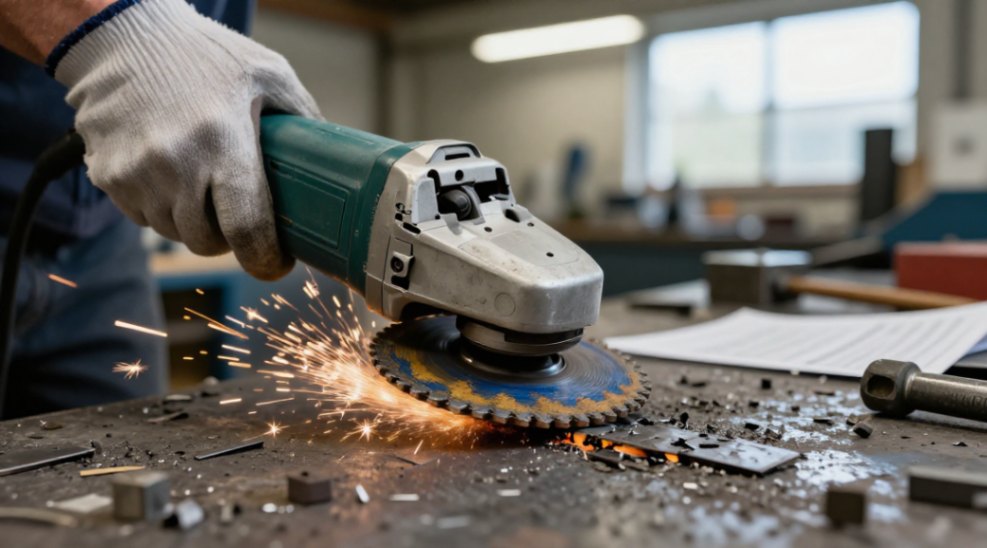
The Golden Rule: Green SiC is Not for Steel
Green silicon carbide (GC) has a fundamental limitation. Its chemical composition reacts with ferrous metals. The intense heat of grinding creates a weak, soft iron silicate layer at the grit-workpiece interface. This layer acts like a lubricant, drastically reducing cutting efficiency. The wheel glazes, the workpiece burns, and you waste material and time. This is the single most expensive mistake you can make.
What Green Silicon Carbide Powder Actually Does (and Does Best)
GC excels where other abrasives fail. Its sharp, brittle, hexagonal crystals fracture continuously under pressure, revealing fresh, sharp cutting points. This friability is its superpower for specific, demanding tasks.
Ideal Applications: The GC Sweet Spot
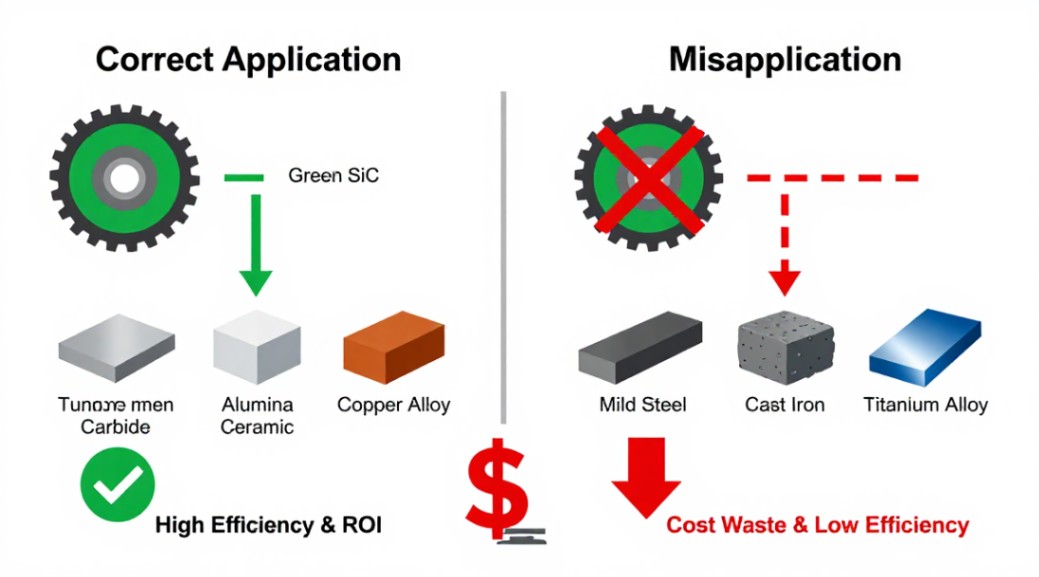
Use GC wheels for materials with low tensile strength but high hardness or abrasiveness. Its primary battlefield is non-ferrous and non-metallic materials.
- Tungsten Carbide (Cemented Carbide): The quintessential application. GC grits effectively grind carbide tips, inserts, and tools without causing thermal damage that degrades the binder (cobalt).
- Ceramics, Glass, and Stone: Its hardness (9.5 on the Mohs scale) and sharpness allow for precise shaping and finishing of brittle materials.
- Non-Ferrous Metals: Aluminum, brass, copper, and titanium alloys. GC provides clean cuts without loading the wheel with soft, gummy metal.
- Gray Cast Iron: An exception among ferrous materials. The graphite flakes in the microstructure help prevent the problematic chemical reaction.
The Costly Consequences: Choosing the Wrong Abrasive
Selecting an abrasive based on habit or vague recommendation destroys budgets and timelines. The following comparison highlights critical, often overlooked, performance differences.
| Criteria | Green Silicon Carbide (GC) | Brown Aluminum Oxide (A) | White Aluminum Oxide (WA) |
|---|---|---|---|
| Primary Use Case | Hard, low-tensile materials (carbide, ceramic) | General-purpose ferrous metals (steel, iron) | Tool steels, HSS, precision grinding |
| Grit Friability | Very High (self-sharpening) | Moderate (tough, durable) | High (sharp, cool-cutting) |
| Risk of Workpiece Burning | High if used on steel; Low on correct materials | Low on steel with proper technique | Lowest among common abrasives |
| Cost per Kilogram | Highest | Lowest | Moderate to High |
| Wheel Life on Steel | Extremely Poor (chemical wear) | Excellent | Good |
| Key Performance Metric | Material removal rate on carbide/ceramic | Cost-per-part on bulk steel removal | Surface finish integrity on hardened steel |
Data from the Grinding Wheel Institute confirms: using GC on carbon steel reduces effective wheel life by over 70% compared to aluminum oxide, representing pure economic waste.
Technical Pitfalls: Beyond Material Selection
Even with the correct workpiece, poor execution sabotages results.
Grit Size and Grade Mismatch
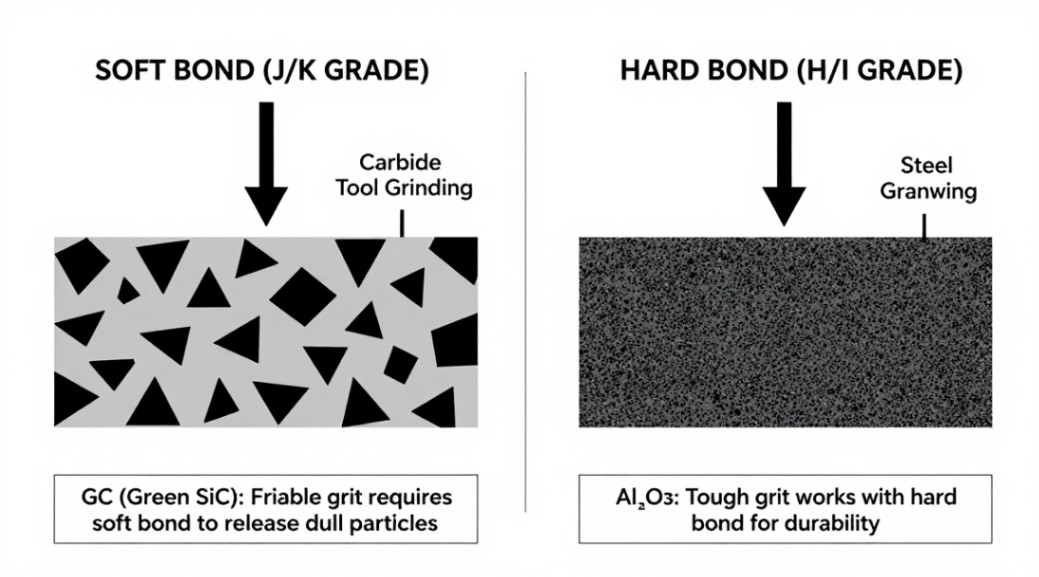
GC's friability demands a softer grade wheel than you would use with aluminium oxide. A common error is specifying too hard a bond. The bond must release the dulled grits to allow new, sharp points to emerge. For carbide tool grinding, a J or K grade vitrified bond is often a starting point, not the H or I grade used for steel with aluminium oxide.
Coolant is Non-Negotiable
Dry grinding with GC is a recipe for thermal shock and micro-cracks in both the wheel and a carbide workpiece. You must use a copious flow of coolant. It serves three critical functions: dissipating heat, flushing swarf to prevent loading, and providing lubrication. A 2018 study in the International Journal of Abrasive Technology showed a 40% improvement in GC wheel life and a 15% improvement in surface finish on carbide with optimized high-pressure coolant delivery.
The Dressing Discipline
GC wheels require frequent, light dressing to maintain their open, sharp cutting face. A single-point diamond dresser set at a 10-15 degree angle is standard. Dressing too aggressively wastes expensive abrasive. Neglecting to dress leads to glazing, increased grinding forces, and burn.
The Sourcing Warning: Not All GC Powder is Equal
Manufacturing high-purity green silicon carbide powder for grinding wheels is a precise process. Inconsistent grain shape, impurity levels (like free silicon or carbon), and poor size distribution directly translate to inconsistent grinding performance, vibration, and poor finishes.
You must source from suppliers who provide certified chemical and physical analysis sheets. Demand data on:
- SiC content (should exceed 99%)
- Grain size distribution (FEPA or JIS standards)
- Magnetic material content (low is critical)
Do not buy on price alone. A 10% cheaper powder that causes vibration will increase your total cost through rejected parts, longer cycle times, and machine spindle wear.
The Corrective Action Plan
- Audit Your Current Use: Immediately check if any GC wheels are running on carbon or alloy steel. Cease that operation.
- Consult Your Wheel Manufacturer: For your specific workpiece material (e.g., P20 mold steel vs. tungsten carbide), request their formal grade and grit recommendation. Do not guess.
- Validate Your Process: Ensure your coolant system is delivering clean, filtered fluid at the wheel-workpiece interface. Calibrate your dressing routine.
- Demand Data from Your Supplier: For your next purchase of green silicon carbide powder for grinding wheels, require the material certificate. Verify the specifications.
Stop Wasting Money on Misapplication
The high cost of green silicon carbide powder for grinding wheels is justified only by its unique performance on specific materials. Using it elsewhere is flushing capital down the drain. The path to superior results on carbide, ceramics, and non-ferrous metals is clear: respect the material's boundaries, master its requirements, and source it wisely. Your bottom line depends on it.
Do not gamble with your grinding process. For a definitive specification review and a quote on certified, high-performance green silicon carbide grinding wheels, contact our abrasives engineering team today. We provide the technical validation your operation requires.
eduloc founded on October 17, 2012, is a high-tech enterprise committed to the research and development, production, processing, sales and technical services of ceramic relative materials such as Green. Our products includes but not limited to Boron Carbide Ceramic Products, Boron Nitride Ceramic Products, Silicon Carbide Ceramic Products, Silicon Nitride Ceramic Products, Zirconium Dioxide Ceramic Products, etc. If you are interested, please feel free to contact us.
RELATED POSTS
High Purity 3D Metal Printing Cobalt Chromium Molybdenum CoCrMo Powder
Gallium (III) Chloride (GaCl3)-Crystalline
Whats so unique about glass microspheres
Manganese silicide powder MnSi2 cas 12032-86-9
The oil prices have fallen but the extent of the boat trailer accessories market also has a great impact