High-Density Grinding Media Balls for Industrial Applications

The 1200 Grit Silicon Carbide Imperative
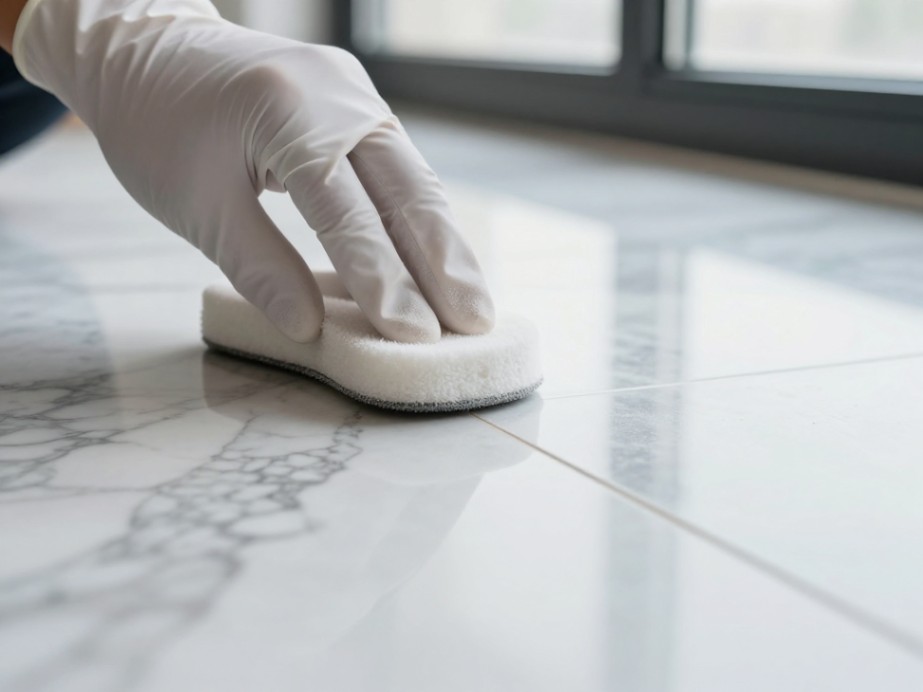
Forget everything you think you know about marble polishing. The final, transformative step that separates a good floor from a flawless one isn’t a chemical or a sealant; it’s 1200 grit silicon carbide. This isn’t a suggestion; it’s a critical, non-negotiable process. Coarser grits grind and shape. This fine abrasive refines. It systematically removes the microscopic scratches left by previous 800 or 1000 grit steps, creating the optically flat surface needed for a true, deep-gloss reflection. Most crews stop too early. You shouldn’t.
Why Coarser Grits Fail at the Finish Line
Using 400 or 800 grit diamond pads for your final polish is a professional error. These abrasives cut too aggressively. They leave a network of scratches, however fine, that diffuse light. Your marble will look hazy, dull, and “almost” shiny. 1200 grit silicon carbide works differently. Its particle size (approximately 12.6 microns) is engineered for refinement, not removal. It gently abrades the peaks of these micro-scratches without creating new, deeper ones. The result is a transition from a honed, matte surface to a specular, reflective finish. It answers the “why” behind persistent haziness.
The Logical Pre-Polish Sequence: A Non-Negotiable Protocol
You cannot jump to 1200 grit. The surface must be perfectly prepared through a strict, escalating grit sequence. Any scratch deeper than 12.6 microns will remain visible after your final polish. The logic chain is absolute.
- Grinding (50-200 grit metal-bond diamonds): Remove lippage, deep stains, and old coatings. This is heavy correction.
- Honing (200-800 grit resin diamonds): Eliminate the scratches from grinding. Each step must completely remove the scratches from the previous grit. This is critical.
- Intermediate Polish (800-1000 grit): Establish the base gloss. The surface should already have a significant shine before you touch the 1200 grit silicon carbide.
Only a floor that is uniformly shiny after a 1000 grit step is ready for the final 1200 grit refinement.
Wet Polishing: The Only Method for 1200 Grit
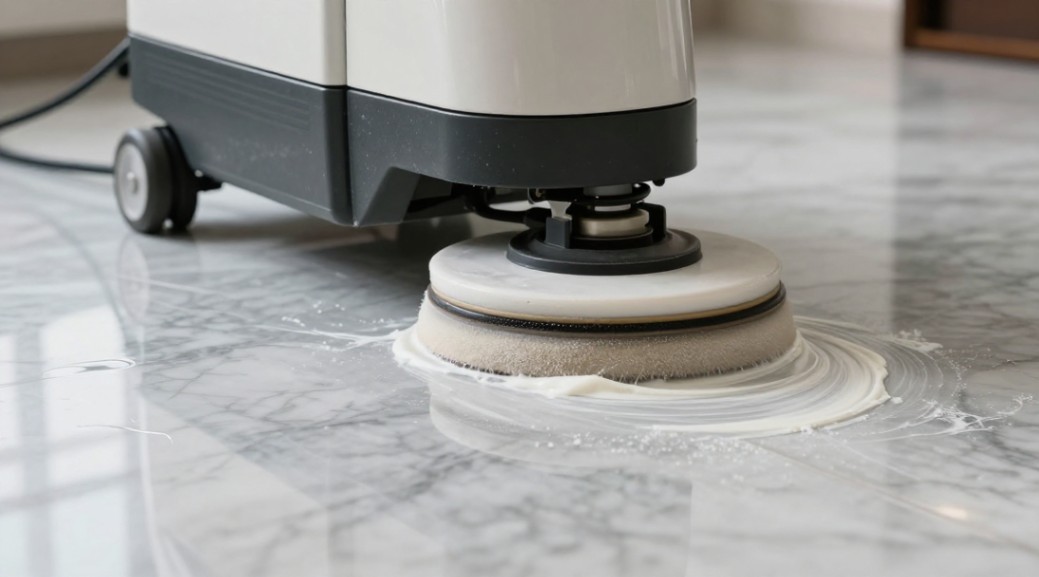
Dry polishing with this fine grit is ineffective and dangerous. You need water. The water serves three essential functions: it cools the abrasive to prevent burning the marble’s crystalline structure, it suspends the removed particles to prevent them from re-scratching the surface, and it creates a slurry that aids in the polishing action. Use a variable-speed floor machine (175-300 RPM) fitted with a Velcro-backed holder and a flexible backing pad. Attach a dedicated polishing pad designed for fine abrasives-typically a white or blue pad. Mix the 1200 grit silicon carbide powder with clean water to a creamy consistency. Apply it sparingly to a 3×3 foot section. Keep the pad flat. Overloading the area with powder wastes material and creates an inconsistent slurry.
Operational Parameters for Precision
| Parameter | Specification | Purpose |
|---|---|---|
| Abrasive Grit | 1200 grit Silicon Carbide | Final scratch removal for optical clarity |
| Machine Speed | 175-250 RPM | Balances cutting efficiency with heat control |
| Water Volume | Enough to maintain a creamy slurry, ~500ml per 10 sq. m. | Cools, lubricates, and removes swarf |
| Section Size | 3 ft. x 3 ft. (0.9 m x 0.9 m) | Ensures consistent slurry management and pressure |
| Passes | 3-4 overlapping figure-8 patterns | Guarantees uniform coverage and scratch pattern elimination |
The Result: Honed Perfection vs. Liquid Reflection
Your choice with 1200 grit silicon carbide defines the final aesthetic. For a honed finish, you stop here. The surface will be perfectly smooth, satiny, and scratch-free, but not mirror-like. For a full polish, you continue. After a thorough water rinse and dry, you apply a crystallization powder or a high-speed burnishing pad. This step fuses the microscopic calcium crystals on the surface, leveraging the flawless base you created. The 1200 grit stage is what makes this fusion possible. Without it, you’re just polishing over scratches.
Critical Safety and Cost Logic
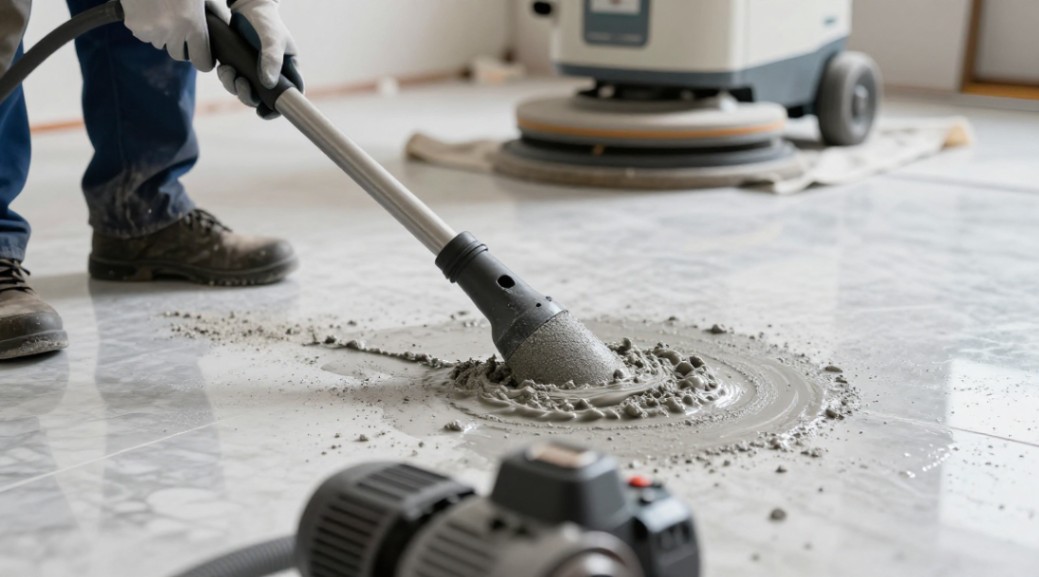
The slurry you create contains fine silica dust from the marble and abrasive. You must use a wet vacuum to remove all slurry immediately. Letting it dry creates airborne crystalline silica, a serious respiratory hazard. From a cost perspective, 1200 grit silicon carbide is inexpensive material but demands expensive labor time. Rushing wastes both. Coverage is high-a one-pound container can polish over 500 square feet of properly prepared marble. The cost is in the machine time and expertise, not the powder. This makes it a high-value step.
Common Myths and Final Instructions
Myth: “Diamond pads are always better.” For final polishing on marble, they often aren’t. Diamond abrasives can glaze or burnish a surface closed without truly refining the scratch pattern. Silicon carbide cuts more precisely at this grit level. Myth: “More powder equals faster results.” It causes gumming, inconsistent slurry, and wasted material. Use less. The final step is clean-up. Remove all residual slurry with a wet vacuum and clean water. Let the floor dry completely. Now you can assess the true, deep shine you’ve created. If you see haze, you skipped a step in the sequence. Go back to 800 grit. Do it right. Your floor’s final appearance depends entirely on this last, critical, and logical step.
eduloc founded on October 17, 2012, is a high-tech enterprise committed to the research and development, production, processing, sales and technical services of ceramic relative materials such as Stop. Our products includes but not limited to Boron Carbide Ceramic Products, Boron Nitride Ceramic Products, Silicon Carbide Ceramic Products, Silicon Nitride Ceramic Products, Zirconium Dioxide Ceramic Products, etc. If you are interested, please feel free to contact us.
RELATED POSTS
Introduction to the characteristics of tungsten carbide
Indium(III) chloride hydrate (InCl3•xH2O)-Crystalline
Iron(II) sulfate heptahydrate (FeSO4•7H2O)- Crystalline
High Purity 3D Printing Nickel Alloy IN718 Powder

The increased infectivity of each novel coronavirus variant may also affect the use of dna is a nucleic acid
