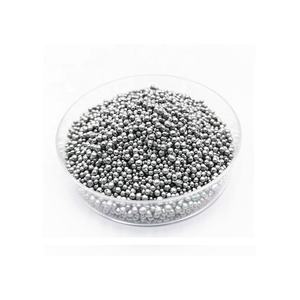
High-Density Grinding Media Balls for Industrial Applications

Abrasive Choice Isn’t About Grit, It’s About Hardness
Most people think rust removal starts with picking a grit number. They’re wrong. The critical first choice is the abrasive mineral itself. While aluminium oxide is common, its Mohs hardness of 9 pales next to silicon carbide’s rating of 9.5. That half-point difference is monumental. Silicon carbide crystals fracture to create sharper, longer-lasting cutting edges. For tackling hard, tenacious rust scale, this means less pressure, less heat, and a significantly faster cut. A heavy duty 220 grit silicon carbide disc isn’t just sandpaper; it’s a precision cutting tool for oxidation.

Why 220 Grit is the Rust Removal Sweet Spot
Grit size dictates your finish and your speed. Coarse grits (40-80) dig deep but leave gouges you’ll fight to remove later. Fine grits (400+) polish but will glaze over and clog on heavy rust. 220 grit silicon carbide finds the perfect balance. It’s aggressive enough to strip rust and old paint efficiently, yet fine enough to leave a uniform anchor pattern ideal for primer adhesion. This medium-coarse finish provides the mechanical ‘tooth’ that primers and paints need to grip, preventing future peeling. It’s the one-step preparation workhorse.
Silicon Carbide vs. The Alternatives: A Clear Winner
Let’s compare methods. Chemical removers work slowly, create hazardous waste, and can etch metal if left too long. Wire wheels tend to burnish rust into the surface or spread contaminants. A heavy duty 220 grit silicon carbide disc on a grinder or sander removes material cleanly. It doesn’t just push rust around; it evacuates it. The open coat construction of quality discs prevents loading, so you spend more time sanding and less time changing discs.
The Professional’s Step-by-Step Process
Success depends on sequence. Skipping steps leads to rework.
1. Surface Preparation and Safety
Never start abrasive work on a dirty surface. Degrease thoroughly with a solvent like mineral spirits. This prevents grinding grease into the pores of the metal. Your personal safety is non-negotiable. Wear a NIOSH-approved N95 respirator or better to protect against silica dust. Safety glasses and gloves are mandatory. Connect a shop vacuum with a dust extraction shroud to your tool if possible.
2. Tool Setup and Technique
Mount the silicon carbide disc on a 4.5-inch or 5-inch angle grinder using a firm backing pad. A soft pad can cause the disc to dish and cut unevenly. Hold the grinder at a 5 to 15-degree angle to the work surface. Use the flat of the disc, not the edge. Apply light, consistent pressure and move the tool steadily in a controlled, overlapping pattern. Let the abrasive do the work. Forcing it generates heat, which can warp thin metal and ruin the abrasive’s temper.

Many users on forums like Reddit and garage journals report a specific breakthrough: “Switching to a dedicated heavy duty 220 grit silicon carbide disc for rust removal cut my prep time in half compared to my old aluminum oxide sheets. The disc just didn’t load up as fast.”
3. Finishing and Priming
After rust removal, wipe the surface with a clean, lint-free cloth dampened with a final cleaning solvent (like a dedicated wax and grease remover). This removes residual dust and fingerprints. The surface should feel uniformly rough to the touch, like fine sandpaper. Apply a direct-to-metal rust-inhibitive primer within the specified recoat window, usually within a few hours, to prevent flash rust.
Common Mistakes and How to Avoid Them
- Using a Worn-Out Disc: A glazed or loaded disc generates friction, not cutting action. It heats the metal and tires your arm. Change discs when performance drops.
- Ignoring Dust Control: Silicon carbide dust is an inhalation hazard and can contaminate your work. Extract it at the source.
- Skipping the Degrease: Sanding over grease creates a gritty paste that embeds in the metal, ruining paint adhesion later.
- Applying Too Much Pressure: This is the most common error. Heavy pressure causes deep, random scratches and creates heat. Use a feather touch and multiple passes.
The Economic Argument for Quality Abrasives
It seems counterintuitive. A premium heavy duty 220 grit silicon carbide disc costs more than a basic aluminum oxide one. Yet, the silicon carbide disc lasts 3-5 times longer on hard materials like rust and mill scale. You use fewer discs, change them less often, and complete the job faster. The total project cost and time are lower. This is why professional shops standardize on silicon carbide for metalwork-it’s cheaper in the long run.

The trend in industrial abrasives is toward specialized, longer-lasting products. The goal is reducing total process time, not the sticker price of a single consumable. For your next rust removal project, follow that industrial logic. Start with the right mineral-silicon carbide. Choose the efficient grit-220. Use the proper technique. You’ll find the job isn’t a chore, but a swift, satisfying process of restoration.
eduloc founded on October 17, 2012, is a high-tech enterprise committed to the research and development, production, processing, sales and technical services of ceramic relative materials such as 220. Our products includes but not limited to Boron Carbide Ceramic Products, Boron Nitride Ceramic Products, Silicon Carbide Ceramic Products, Silicon Nitride Ceramic Products, Zirconium Dioxide Ceramic Products, etc. If you are interested, please feel free to contact us.