High-Density Grinding Media Balls for Industrial Applications

The Wake-Up Call: How a 600-Grit Mistake Cost Me $20,000
Twenty-three years ago, I watched a trainee create a permanent, swirling haze on a client’s $20k Fantasy Brown slab. His error? Skipping from 400 grit resin diamonds straight to a 1500 grit polishing pad. The culprit was the lack of a proper 600 grit silicon carbide bridge step. He tried to rush the process. The floor was granite, unforgiving. That single mistake taught me everything about the non-negotiable role of 600 grit silicon carbide for polishing granite. It’s not a suggestion; it’s a law of physics for stone.

Direct Q&A: Your Hard Questions, Straight Answers
1. What exactly is 600 grit silicon carbide, and why use it on granite?
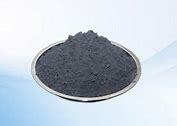
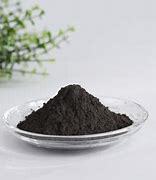
600 grit silicon carbide (SiC) is a synthetic abrasive. It’s crushed to a specific particle size and graded as ‘600’. Its key properties are why it’s essential for granite.
- Hardness (9.5 on Mohs): Harder than the minerals in granite (feldspar, quartz). It cuts, not just rubs.
- Friability: Grains fracture under pressure, creating sharp new cutting edges. This prevents glazing and keeps the scratch pattern uniform.
- Particle Size (~15.3 microns): This is the magic number. It creates a consistent, fine scratch pattern that you can later refine to a polish. It bridges the gap between coarse grinding and fine polishing.
Granite is a heterogeneous, crystalline rock. You need an abrasive that can level all minerals evenly without creating differential wear. SiC does that.
2. How does 600 grit compare to 400 and 800 grit in the sequence?
This is the core of your polishing logic. Get this wrong, you waste time or ruin the slab.
| Grit | Primary Role | Finish Produced | Common Mistake |
|---|---|---|---|
| 400 Grit Diamond | Removes deep scratches, flattening. Aggressive. | Uniform, matte, visibly scratched surface. | Expecting a polish here. It’s only preparation. |
| 600 Grit Silicon Carbide | CRITICAL TRANSITION. Removes 400-grit scratches, creates a uniform fine scratch foundation. | “Honed” finish. Or a perfect pre-polish. Smooth, uniform, no deep scratches visible. | Skipping it. This causes a hazy, unfixable “grit-jump” later. |
| 800 Grit Diamond/Polish | Begins the actual polishing phase, refining the 600-grit scratches. | First hint of gloss (pre-polish or light polish). | Jumping to 800 before 600’s job is done. You’ll just polish in scratches. |
Takeaway: Think of 600 grit silicon carbide as the mandatory bridge. You cannot build a house without a foundation.
3. What tools and what’s the exact step-by-step method?
Tools: Variable-speed angle grinder (or polisher), Velcro backing pad, hard plastic/resin bond polishing pads (for holding the SiC), or dedicated SiC hand pads. For loose powder, a felt pad. Never use soft pads here.
Wet Polishing Technique (The Only Safe Way):
- Clean & Inspect: The surface must be free of debris. All 400-grit scratches must be uniform.
- Mix Slurry (if using powder): Mix 600 grit silicon carbide powder with water to a creamy paste consistency. Approx. 1 part powder to 3 parts water by volume.
- Apply & Work: Apply slurry to a 4×4 foot area. Use a clean, hard polishing pad. Set grinder to 1500-2000 RPM. Apply moderate, even pressure (approx. 15-20 lbs).
- Motion is Key: Use overlapping, consistent passes. Work the area for 3-5 minutes per 4 sq. ft. Keep the surface flooded with water.
- Rinse & Inspect: Rinse the entire area thoroughly with clean water. Dry with a squeegee. Examine under angled light. You should see a uniform, consistent honed finish with zero visible scratches from the previous 400-grit step. If scratches remain, repeat step 3.
- Clean Up: Before moving to 800 grit, clean the stone and your tools meticulously. Any 600-grit residue will cause catastrophic scratching.
4. What finish can I realistically expect from 600 grit?
A perfect honed finish. If you’re proceeding to a polish, you must achieve a flawless, scratch-free matte surface. As industry veteran Marco Bertoli stated in a 2021 Stone Fabricator’s Alliance report, “The gloss you achieve at the end is only a reflection of the uniformity you create at 600.” The 600 grit step does not create gloss. It creates the potential for gloss.

5. What are the biggest mistakes and how do I fix them?
- Swirl Scratches: Caused by dried slurry or contaminated pads. Fix: Stop. Clean everything. Re-wet and re-work the area with fresh 600 grit slurry.
- Uneven, Patchy Finish: Inconsistent pressure or dry polishing. Fix: Re-flood the area and work it uniformly again. You may need to drop back to 400 grit to re-level if it’s severe.
- Haze Under Polish: The classic “grit-jump” haze. You skipped proper 600 grit work. Fix: This is serious. You must drop back to 600 grit and re-do the entire sequence. There is no shortcut.
6. Is it compatible with all granites and sealers?
Granite: Yes, for all true granites. Use caution on very soft, resin-treated granites or some quartzites-test in an inconspicuous area first.
Sealers: Never apply 600 grit silicon carbide over a sealer. You will gum up your pads and ruin the surface. Sealing is always the final step, after all polishing is complete and the stone is bone dry.
7. How do I buy it and dispose of the waste?
Buying: Loose powder offers the most control for large areas. Pre-impregnated hand pads (like 4″ x 9″ pads) are excellent for edges and detail work. Discs are less common for SiC at this grit.
Disposal (CRITICAL): The slurry waste contains fine silica dust, a known health hazard. Never wash it down a drain. Let the slurry settle in a bucket. Decant the water carefully. Dispose of the solid sludge as hazardous construction waste according to your local regulations. This isn’t optional.

The Final Verdict: What You Should Do Next
Forget the marketing hype. Your path is clear. If you’re polishing granite, 600 grit silicon carbide is not an option. It’s a mandatory checkpoint. Master its use. Respect the step-by-step sequence. Your stone’s final appearance is dictated by the quality of work you do at this specific stage. Now, go test this on a scrap piece. See the transition from a 400-grit scratch pattern to a uniform honed surface with your own eyes. That experience is worth more than any product catalog.
eduloc founded on October 17, 2012, is a high-tech enterprise committed to the research and development, production, processing, sales and technical services of ceramic relative materials such as 600. Our products includes but not limited to Boron Carbide Ceramic Products, Boron Nitride Ceramic Products, Silicon Carbide Ceramic Products, Silicon Nitride Ceramic Products, Zirconium Dioxide Ceramic Products, etc. If you are interested, please feel free to contact us.