High-Density Grinding Media Balls for Industrial Applications

Key takeaways
- Alumina grinding balls are ceramic media made mainly from aluminium oxide, used to grind and disperse materials in mills.
- Alumina content, density and porosity are more useful selection criteria than the alumina percentage alone.
- Alumina media are often chosen where metallic contamination must be avoided, but they still wear and introduce ceramic debris.
- Ball size, fill level and media density interact, so changing media grade usually requires re-tuning mill settings.
- Media life is process-specific; trials measuring consumption per tonne of product are more reliable than quoted lifetimes.
- Alumina sits between steel and zirconia media in density and cost, and the best choice depends on the product and mill duty.
What Are Alumina Grinding Balls?
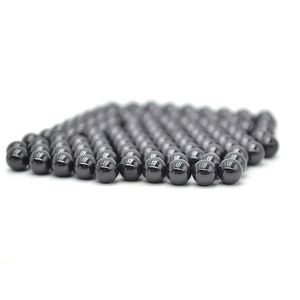
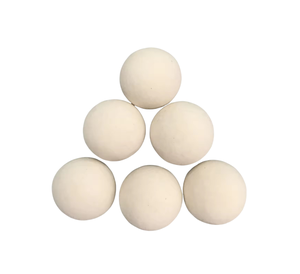
Alumina grinding balls are spherical grinding media made primarily from aluminium oxide (Al2O3). Mills use them to crush, disperse and refine materials by transferring impact and shear energy to the product being processed. The term covers a family of media that differ in alumina content, density, hardness and porosity, so two products sold under the same name can behave quite differently in a mill.
The defining feature of alumina grinding balls is the ceramic body rather than a metal or plastic one. That body is typically formed from alumina powder with binders and sintering aids, shaped into spheres, and then fired at high temperature so the particles bond into a dense ceramic. The result is a hard, chemically stable ball that resists wear and contamination better than many alternative media in abrasive or corrosive service.
Because the material is ceramic, alumina balls are usually chosen where contamination control, wear resistance or chemical inertness matter more than the lowest possible media cost. They are not a universal replacement for steel or zirconia media; the right choice depends on the mill type, the target particle size, the chemistry of the slurry and the acceptable level of wear debris.
What Alumina Content Do Alumina Grinding Balls Typically Have?
Alumina grinding balls are commonly described by their alumina content, and that figure is one of the main ways buyers compare products. Higher-alumina bodies generally contain less glassy or silicate phase, which tends to raise hardness and wear resistance while reducing the amount of non-alumina material that could enter the product. Lower-alumina bodies retain more of the secondary phase and are usually positioned as more economical media.
The practical consequence is that alumina content should be read together with density and wear rate rather than on its own. A ball with a high alumina figure but poor sintering may not outperform a well-made lower-alumina ball in a given mill. Buyers should ask for the property data that matters for their process, such as bulk density, apparent porosity and wear loss under a defined test, instead of relying on the headline percentage alone.
Content also affects how the ball behaves in service. Denser, higher-alumina media are generally preferred for fine grinding and for applications where a small amount of media wear could change product chemistry. Where the mill duty is coarse or the slurry is highly abrasive, the decision may shift toward toughness and cost rather than maximum purity.
How Hard and How Dense Are Alumina Grinding Balls?
Hardness and density are the two properties most often used to predict how alumina grinding balls will perform. Ceramic alumina is a hard material, and within the alumina family, higher-alumina, well-sintered bodies are generally harder and denser than lower-alumina or more porous ones. Density matters because heavier media carry more kinetic energy per ball, which can improve breakage rates but also increases mill load and power draw.
These properties are not independent of ball size. A large ball has more mass and delivers stronger impacts, while a small ball provides more contact points and suits finer grinding. Mill operators therefore tune the size distribution as well as the material grade. A charge made only of large balls may crush coarse feed efficiently but leave fine particles under-ground; a charge of very small balls may struggle with coarse feed.
Porosity is the property that often separates a durable ball from a short-lived one. Porous bodies have less solid material per unit volume, so they tend to wear faster and can absorb liquid into the ball. Dense, low-porosity alumina media are generally the better choice for continuous wet milling where media life and product consistency matter.
What Are Alumina Grinding Balls Used For?
Alumina grinding balls are used wherever a hard, chemically stable medium is needed to reduce particle size or disperse solids. Typical settings include ceramic raw material preparation, glaze and pigment milling, mineral processing, and the milling of battery and electronic materials where metallic contamination is a concern. In these applications the ball is a consumable, so its wear behaviour directly affects operating cost and product quality.
The choice of alumina media is often driven by what the product must not contain. Steel media can introduce iron, which is undesirable in white ceramics, pigments and many battery materials. Alumina wear debris is ceramic and, in many of these products, is either compatible with the formulation or easier to manage. That is why alumina media appear in lithium battery material processing alongside other ceramic media.
Alumina balls are also used in non-milling roles, such as support media and packing in reactors and columns, where their resistance to heat and chemicals is useful. In those roles the requirements differ from grinding: mechanical strength under static load and resistance to thermal cycling may matter more than impact wear.
How Do Alumina Grinding Balls Compare With Zirconia and Steel Media?
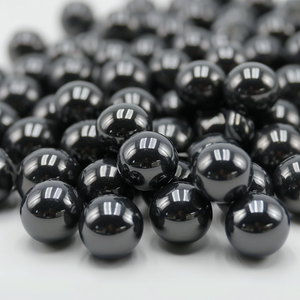
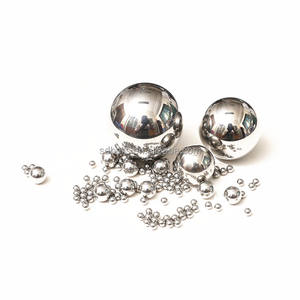
Alumina, zirconia and steel are the three media families most often compared. Zirconia media are generally denser and tougher than alumina, which can make them attractive for high-energy fine grinding and for extending media life in demanding mills. Steel media are dense and inexpensive relative to ceramics but can contaminate the product with metal. Alumina sits between these options: harder and more inert than steel, usually less dense and less tough than zirconia, and generally more economical than zirconia.
The comparison is not a simple ranking. A denser medium can shorten grinding time but raises mill load and energy use, and in some mills the extra density is not needed. A tougher medium may last longer but cost more per kilogram. The right choice depends on the value of the product, the acceptable contamination level, the mill's power limits and the target particle size.
A practical way to decide is to compare total cost per unit of product rather than price per kilogram of media. Media consumption, mill throughput, downtime for recharging and the cost of rejecting contaminated batches all belong in that calculation. Alumina often wins where contamination control and moderate duty combine; zirconia often wins where media life dominates; steel remains relevant where iron contamination is acceptable.
What Ball Sizes and Fill Levels Should Be Used?
Alumina grinding balls are supplied in a range of diameters, and mills are usually charged with a mix rather than a single size. The general principle is that larger balls handle coarse feed and deliver stronger impacts, while smaller balls increase surface contact and improve fine grinding. As the feed becomes finer, the charge is often shifted toward smaller diameters.
Fill level is the other main variable. The mill needs enough media to grind effectively but not so much that the charge cannot tumble or that power draw becomes excessive. The appropriate fill depends on mill geometry, rotation speed and the slurry or powder being processed, so it is normally established through the mill manufacturer's guidance and trial runs rather than a single universal figure.
Ball size and fill also interact with media density. A charge of dense alumina balls carries more mass than the same volume of a lighter medium, which affects power draw and the mechanical load on the mill. When switching media grades, operators should expect to re-tune speed, fill and ball size rather than assume the previous settings transfer unchanged.
How Long Do Alumina Grinding Balls Last?
Media life is not a fixed number. Alumina grinding balls wear through a combination of impact, abrasion and chemical attack, so service life depends on the mill type, rotation speed, slurry chemistry, solids loading and the quality of the ball itself. A dense, low-porosity, high-alumina ball in a well-run mill will generally outlast a porous or lower-alumina ball in the same duty.
Wear shows up in several ways. The balls lose diameter, the charge becomes finer over time, and worn media may need to be topped up to maintain grinding performance. In severe cases, ball breakage or chipping adds coarse fragments to the product. Monitoring ball size distribution and make-up rate is a practical way to track wear without relying on a single quoted lifetime.
Because life is process-specific, buyers should ask suppliers for wear data obtained under comparable conditions and should run their own trial where the duty is critical. A trial that measures media consumption per tonne of product gives a far more useful figure than a general statement about durability.
Can Alumina Grinding Balls Contaminate the Product?
Any grinding medium wears, so alumina grinding balls do introduce some material into the product. The question is whether that material is acceptable. Alumina wear debris is ceramic and is often compatible with ceramic, mineral and some battery material formulations, which is a major reason alumina media are selected in those fields. The amount of contamination depends on wear rate, milling time and the sensitivity of the product.
Contamination risk rises with porous or low-quality media, aggressive slurry chemistry and long milling times. It also rises when the mill is operated beyond its intended duty. Choosing a denser, more wear-resistant grade and keeping operating parameters within the mill's design range are the main ways to limit debris.
Where the product is highly sensitive to trace elements, buyers should ask for the media's chemical composition, not just its alumina content, and should confirm that secondary phases and impurities are acceptable. A trial with product analysis is the most reliable way to verify that a given alumina ball is suitable.
How Should Alumina Grinding Balls Be Stored and Handled?
Alumina grinding balls are hard and brittle compared with metal media, so handling matters. Dropping balls onto a hard floor, pouring them from height or overloading a mill can cause chipping and breakage. Balls should be transferred with equipment suited to their weight and should be inspected for cracks before charging.
Storage should keep the media dry and clean. Alumina is chemically stable, but porous grades can absorb moisture and contaminants from the environment, which may affect the slurry when the balls are first used. Keeping bags or containers sealed until charging reduces that risk.
Before a new charge is used, it is worth checking that the mill is clean and free of previous media or debris. Mixing media types in one mill is generally avoided unless the process is designed for it, because different densities and wear rates can change the charge behaviour and make performance harder to predict.
How Do You Select the Right Alumina Grinding Ball?
Selecting alumina grinding balls starts with the process, not the product catalogue. The key questions are what material is being milled, what particle size is required, what contamination is acceptable, what mill type and power are available, and whether the operation is batch or continuous. The answers narrow the choice of alumina content, density and ball size.
From there, buyers should compare suppliers on measurable properties: alumina content, bulk density, apparent porosity, wear loss under a stated test, and consistency between batches. A supplier who can explain how those properties relate to the intended duty is more useful than one who quotes only a headline percentage.
Finally, a trial run is the most reliable selection step. Running a candidate media in the actual mill, measuring throughput, product quality and media consumption, and comparing against the current charge gives evidence that no specification sheet can replace. Selection should be revisited when the feed, product specification or mill operating conditions change.
Frequently asked questions
What are alumina grinding balls made of?
They are made primarily from aluminium oxide (Al2O3), typically formed into spheres and fired at high temperature. Products also contain secondary phases and sintering aids, so the exact composition varies by grade and alumina content.
Are alumina grinding balls harder than steel?
Alumina is a hard ceramic and higher-alumina, well-sintered grades are generally harder than steel media. Hardness alone does not determine performance, however; density, toughness and wear behaviour in the specific mill also matter.
Can alumina grinding balls be used in lithium battery material processing?
Yes, alumina media are used in lithium battery material processing where avoiding metallic contamination is important. Suitability depends on the specific material, the acceptable contamination level and the mill conditions, so a trial with product analysis is advisable.
Do alumina grinding balls break easily?
Alumina is brittle compared with metal media, so chipping and breakage can occur if balls are dropped, poured from height or overloaded in the mill. Careful handling and operating within the mill's design range reduce the risk.
How do I choose between alumina and zirconia grinding balls?
Zirconia media are generally denser and tougher, while alumina is usually more economical and still chemically stable. The choice depends on the required particle size, acceptable contamination, mill power limits and the total cost per unit of product rather than price per kilogram.
About Us
We are a professional supplier of high-performance grinding media, including alumina, silicon carbide, zirconia, and stainless steel balls. Our products serve lithium batteries, semiconductors, photovoltaics, and ceramics. With advanced technology and strict quality control, we deliver reliable quality, customized solutions, and fast delivery to global partners.
RELATED POSTS
Silicon Carbide Ball Companies Go Overseas To Build Factories To Deal With Trade Frictions
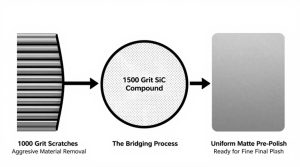
1500 Grit Silicon Carbide Polishing Compound: The Unmatched Bridge to a Perfect Finish
Why Silicon Carbide Abrasive Powder Dominates Precision Glass Grinding
Combine Polycarboxylate Superplasticizer with Early-strength Component