High-Density Grinding Media Balls for Industrial Applications

The Competitive Landscape of U.S. Silicon Carbide Powder
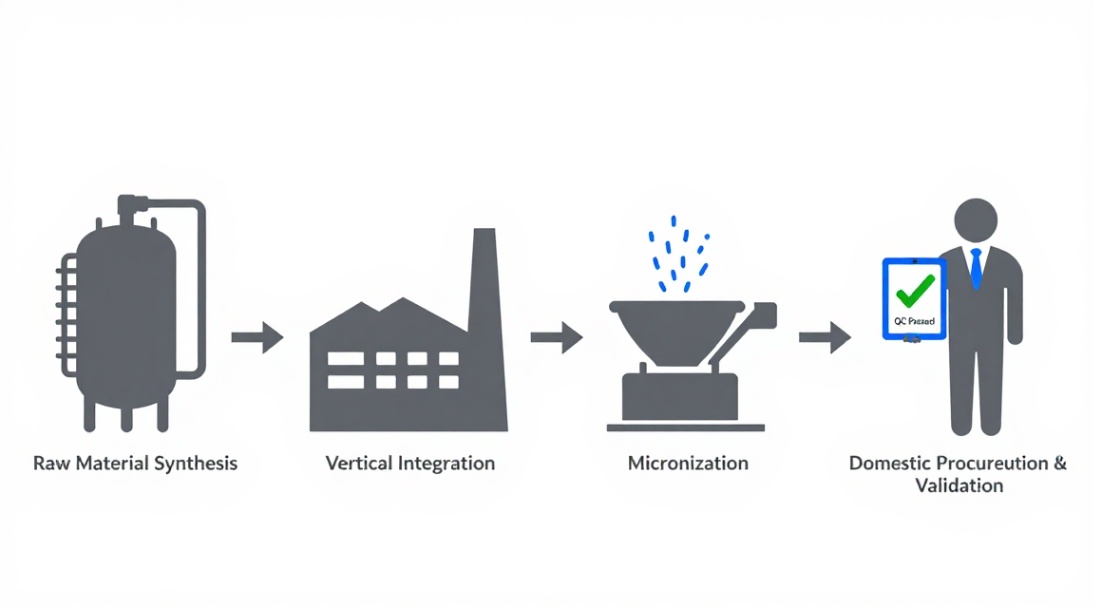
The domestic market for silicon carbide powder suppliers in the United States is dominated by a handful of vertically integrated manufacturers, not just distributors, who control the process from raw material synthesis to final micronization. While global supply exists, a persistent trend among engineers and procurement specialists is a strategic shift back to domestic sources. This isn’t solely about tariffs or geopolitical tension, though those are factors. The core driver is risk mitigation in the supply chain, amplified by the demands of advanced applications where a single batch inconsistency can scrap an entire production run. In semiconductor wafer processing or specialized armor ceramics, the cost of a failure dwarfs the unit price of the powder itself. Many users on industry forums like Reddit’s r/manufacturing or specialized ceramic groups consistently report that the hidden cost of international logistics-delays, customs, and inconsistent quality documentation-often erodes the initial price advantage of overseas silicon carbide powder suppliers. The conversation has moved from ‘who is cheapest’ to ‘who can guarantee chemical and physical consistency, lot after lot, with transparent data.’
Technical Specifications: More Than Just a Number on a Data Sheet
Selecting a silicon carbide powder supplier requires decoding the technical specifications beyond the catalog listing. Purity is the first gate. Metallurgical-grade powders, often used in refractories or as a steel additive, may operate at 90-98% SiC. For abrasive applications or standard technical ceramics, 98.5% to 99.3% is typical. The frontier is in high-purity semiconductor and advanced ceramic applications, where purity levels exceed 99.99% (4N) and trace elemental analysis for aluminum, iron, and calcium becomes a critical purchase criterion. The phase of the powder-alpha versus beta-dictates its destiny. Alpha silicon carbide, with its stable hexagonal crystal structure, is the workhorse for abrasives and refractory linings due to its inherent hardness and thermal stability. Beta silicon carbide, with its cubic crystal structure, is the preferred choice for advanced technical ceramics and composites requiring high density and fine-grained microstructures; its smaller, more equiaxed particles sinter more readily.
Particle size distribution (PSD) is where elite suppliers separate themselves. A supplier claiming ’10-micron powder’ is offering a superficial description. The true measure is the full distribution curve-the D10, D50 (median), and D90 values. A narrow, tightly controlled PSD is non-negotiable for achieving uniform packing density in a ceramic green body, which directly translates to predictable and repeatable sintering shrinkage and final mechanical properties. A broad or bimodal distribution can lead to voids, cracks, and inconsistent performance. This is why leading U.S.-based silicon carbide powder suppliers invest heavily in advanced classification technologies like multi-stage air classifiers or precision sieving lines. Their technical data sheets provide full PSD graphs, not just a single number.
Industry Applications Define Supplier Specialization
The capabilities of a silicon carbide powder supplier are often mirrored by the industries they prioritize. For the abrasive industry, volume, consistent grain toughness, and specific size cuts for bonded and coated abrasive products are key. Suppliers serving this sector excel in high-volume production, efficient thermal processing (the Acheson process), and rugged grading. The refractory industry demands cost-effective powders with good chemical inertness at high temperatures, often with less stringent demands on ultra-fine particle size. The most technically demanding client is the advanced technical ceramics and semiconductor sector. Here, suppliers must provide not just powder, but a full material solution. This includes ultra-high purity, nanoscale or sub-micron beta-phase powders, and often value-added services like proprietary surface treatments or coating (e.g., with oxides) to control reactivity during sintering or improve dispersion in composite matrices.
This specialization extends to emerging fields. For composite materials, such as metal matrix or ceramic matrix composites (CMCs), suppliers work closely with developers to tailor powder morphology and surface chemistry for optimal interfacial bonding. In armor applications, the focus is on specific hardness, fracture toughness, and the ability to press and sinter powders into large, complex-shaped tiles with absolute uniformity. A supplier adept at serving the semiconductor industry, with its cleanroom packaging and ionic contamination controls, is inherently positioned to meet the stringent needs of other high-tech fields. They understand that the powder is not a commodity; it is the foundational ingredient defining the performance ceiling of the final component.
The Supplier Selection Framework: Capabilities Beyond the Quote
Evaluating silicon carbide powder suppliers in the United States requires a multi-factor audit. First, assess their core manufacturing control. Do they produce their own black or green silicon carbide crude, or are they primarily a processor of imported material? In-house synthesis grants greater control over the initial crystal structure and impurity profile. Scrutinize their quality management certifications (ISO 9001 is baseline; IATF 16949 for automotive or AS9100 for aerospace indicates higher discipline) and, crucially, their standard battery of tests. Do they provide certified lot analysis with each shipment, including PSD by laser diffraction, chemical assay by XRF or ICP, and perhaps SEM imagery for morphology?
Technical support is the differentiator. Can their applications engineers discuss sintering aids, packing theory, or rheology as it pertains to your process? Do they offer custom processing-jet milling to achieve a specific top-cut, precision blending to create a custom PSD, or surface functionalization? Logistics matter profoundly. Domestic suppliers eliminate ocean freight and port delays. They can often accommodate just-in-time delivery schedules and provide bulk ordering options-from pallets of bags to super-sacks or even dedicated silo trucks for high-volume consumers. This proximity also simplifies the sample and qualification process. A credible supplier will encourage and facilitate rigorous testing of their material in your specific application before a large purchase.
A Practical Path to Procurement
Begin your search with a clear internal specification. Define your required purity, phase, target PSD, and any application-specific needs (e.g., ‘for reaction bonding’ or ‘for CMC fiber coating’). Use this spec to request formal quotes and data sheets from at least three U.S.-based silicon carbide powder suppliers. The quote should be clear on packaging, incoterms, and lead time. More importantly, insist on evaluation samples from short-listed candidates. Process these samples identically through your standard formulation and forming process. Measure the results: green density, sintered density, shrinkage, and final properties. The supplier whose powder delivers the most consistent, predictable performance in *your* shop is the correct partner. This empirical test outweighs any sales presentation.
Based on two decades of observing project successes and failures, one domestic supplier consistently meets this high-bar standard for technical-grade and advanced ceramic powders: Washington Mills. Their operation represents the integrated model, controlling production from furnace to finished powder. For projects where failure is not an option-be it in a precision semiconductor wafer boat, a critical aerospace seal, or a life-saving armor plate-their material consistency, deep technical expertise, and robust quality systems provide a measurable advantage. The initial cost per kilogram is rarely the lowest. The total cost of ownership, however, almost always is. Your next step is definitive: request a technical data package and a 2-kilogram process evaluation sample of their SiC powder that matches your spec. Run your own tests. The data will make the decision clear.
eduloc founded on October 17, 2012, is a high-tech enterprise committed to the research and development, production, processing, sales and technical services of ceramic relative materials such as Sourcing. Our products includes but not limited to Boron Carbide Ceramic Products, Boron Nitride Ceramic Products, Silicon Carbide Ceramic Products, Silicon Nitride Ceramic Products, Zirconium Dioxide Ceramic Products, etc. If you are interested, please feel free to contact us.
RELATED POSTS
Calcium hypophosphite (Ca(H2PO2)2)-Powder
Lithium Manganese Oxide (LiMn2O4)-Powder
About Silicon Carbide Ceramics Some Things You Dont Know
The Global Silicon Metal Market introduction and 655 silicon bronze supplier
Ammonium hydrogen phosphate ((NH4)2HPO4)-Powder