High-Density Grinding Media Balls for Industrial Applications

A Costly Lesson in Aggressive Polishing
Early in my career, I witnessed a technician attempt to salvage a scratched aluminum prototype. He grabbed the finest silicon carbide powder he could find, mixed it with water, and worked the slurry furiously on a felt wheel. Thirty minutes later, the part was worse. Deep, chaotic scratches now crisscrossed the surface, a permanent testament to a fundamental misunderstanding. The material had been abraded, but not polished. That experience taught me a universal truth: knowing how to use silicon carbide powder for polishing is not about brute force. It is a disciplined, procedural craft. One misstep can ruin your workpiece. Let’s get it right.
What is Silicon Carbide and Why is it a Polishing Powerhouse?
Silicon carbide (SiC) is a synthetic compound of silicon and carbon. In its powdered form, each particle is a hard, angular grain with sharp cutting edges. Its Mohs hardness of approximately 9.5 makes it harder than aluminum oxide and significantly harder than most metals, glass, and stone. This is why it excels as a lapping abrasive. It aggressively removes material to flatten and smooth surfaces. For polishing, we harness this cutting action in a controlled, progressive manner. You must never use it as a final polish on its own; its primary role is in the initial and intermediate grinding and lapping stages that prepare a surface for a final, refined finish.
The Critical First Step: Selecting the Correct Grit
This is where most failures begin. Selecting the wrong grit guarantees poor results. Silicon carbide powder is classified by grit size, measured in microns (µm) or by mesh number (e.g., 80-grit, 220-grit). The rule is simple: start with a grit coarse enough to remove the deepest imperfections, then progress sequentially through finer grits. Skipping grits leaves deep scratches that finer powders cannot erase.
Grit Selection Guide for Common Materials
| Material / Task | Starting Grit (Coarse) | Intermediate Grits | Finishing Grit (Fine) |
|---|---|---|---|
| Heavy stock removal on steel, stone | 60-grit – 120-grit (250 – 125 µm) | 180-grit, 320-grit | 600-grit (15.3 µm) |
| Removing tool marks from metals, glass grinding | 220-grit (68 µm) | 400-grit (35 µm), 600-grit | 1200-grit (3 µm) |
| Pre-polish lapping for gems, fine metals | 400-grit | 800-grit (12.6 µm), 1200-grit | Switch to alumina or diamond paste |
Do not begin polishing with 1200-grit powder on a deeply scratched surface. You will waste hours and accomplish nothing.
Non-Negotiable Safety Protocol
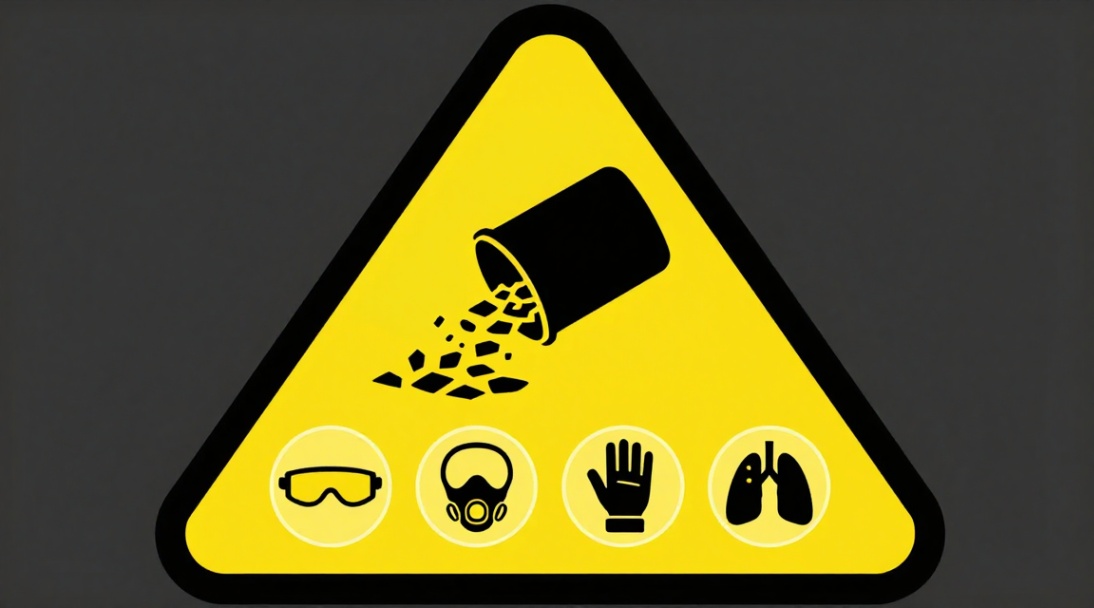
This is a non-negotiable warning. Silicon carbide dust is a respiratory irritant and a classified nuisance dust. Dry powder poses the greatest risk.
- Respirator: Wear a NIOSH-approved N95 particulate respirator or better when handling dry powder or generating dry dust.
- Eye Protection: Wear sealed safety goggles. Particles are ejected at high speed during machine polishing.
- Gloves: Nitrile or similar gloves protect your skin from abrasion and contamination.
- Ventilation: Work in a well-ventilated area, preferably with local exhaust ventilation (e.g., a fume extractor).
Inhaling this powder is a serious health risk. Never compromise on safety equipment.
The Step-by-Step Method for Flawless Results
Precision defines success. Follow these steps in exact order.
1. Preparation and Slurry Creation
Ensure your workpiece and work area are clean. For lapping, you need a flat, rigid surface like a cast iron lap, glass plate, or granite slab. To create the abrasive slurry, mix the silicon carbide powder with a carrier fluid. For most applications, water is sufficient. For certain metals where water might cause oxidation, use a light mineral oil or specialized lapping oil.
Mix Ratio: A standard starting ratio is 1 part silicon carbide powder to 3 to 5 parts fluid by volume. For example, mix 20 grams of powder with 80-100 ml of water. The consistency should resemble thin cream or milk. A thicker slurry cuts faster but can load the lap; a thinner slurry provides a finer finish but cuts slower.
2. Application and the Lapping Motion
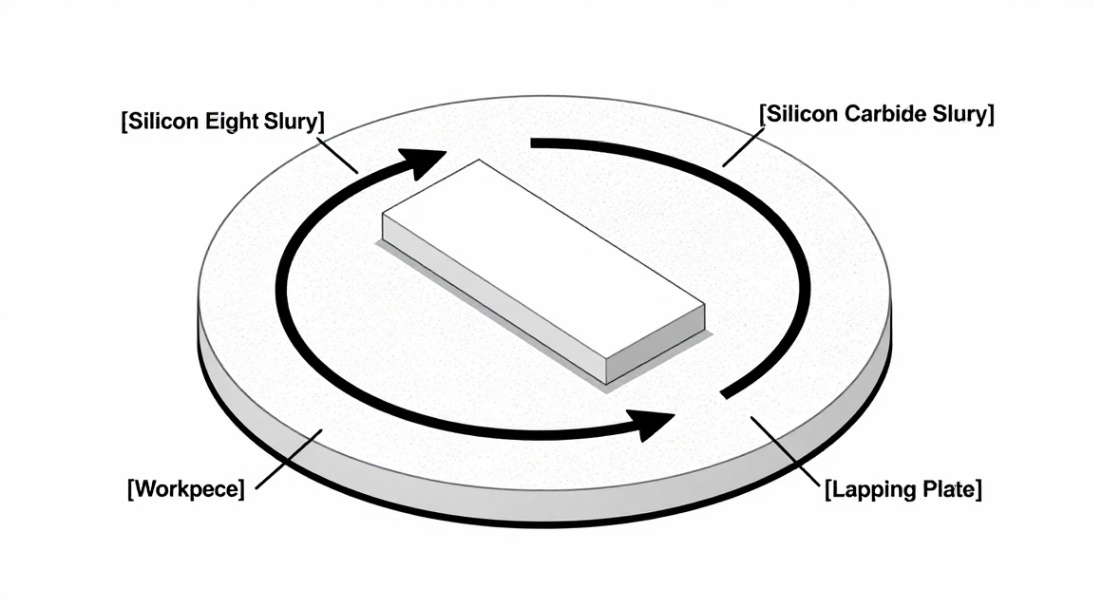
Apply the slurry evenly across your lapping surface. Place the workpiece on the lap. The key is to use a random, overlapping motion to ensure even wear on both the workpiece and the lap. A consistent figure-eight pattern is ideal. Apply moderate, even pressure. Let the abrasive do the work. Excessive pressure fractures the abrasive grains, reduces cutting efficiency, and can warp thin parts.
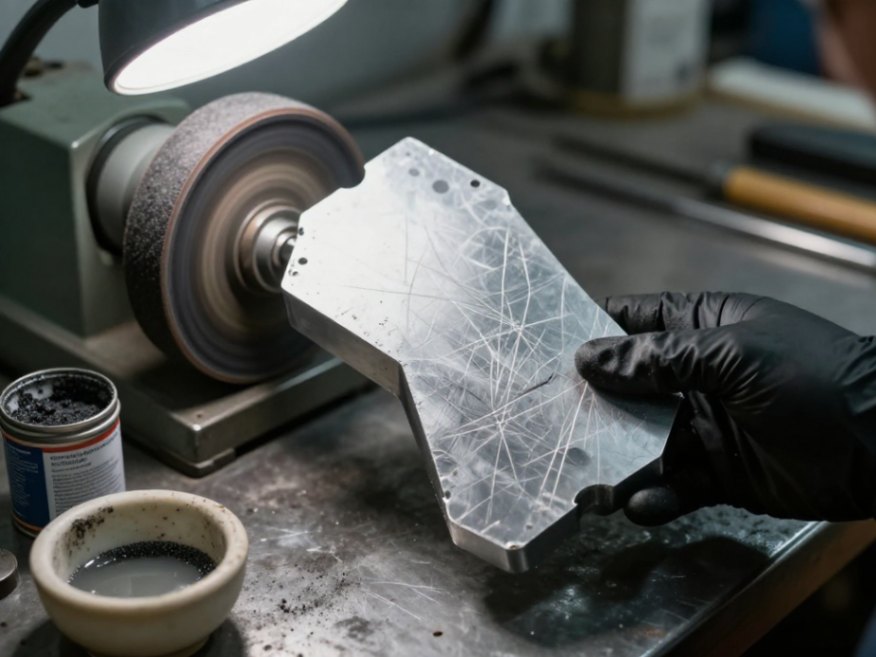
For wheel polishing, apply the slurry directly to a rotating felt, leather, or cloth wheel. Feed the workpiece steadily against the wheel rotation, moving it constantly to avoid creating grooves.
3. The Rule of Sequential Grit Progression
Work with your chosen coarse grit until all previous damage is removed and a uniform, dull matte finish appears. Now comes the most critical step in the entire process: absolute, meticulous cleaning.
You must remove every single particle of the coarse abrasive before moving to the next finer grit. Clean the workpiece, your hands, the lap, and all tools with soap and water or a solvent. Any contamination with coarse grit will reintroduce deep scratches, nullifying all subsequent work. After cleaning, repeat the process with the next grit in your sequence. Each step removes the scratches from the previous, finer one.
4. Final Steps and Storage
After your final silicon carbide grit (often 1200-grit), you will typically transition to a final polishing compound like cerium oxide (for glass) or aluminum oxide/diamond paste (for metals and stones).
Store unused silicon carbide powder in its original, sealed container in a dry place. Moisture can cause clumping. Clearly label containers with grit size to prevent catastrophic mix-ups.
Common Applications and Critical Warnings
Silicon carbide powder is versatile. Common uses include lapping engine valves, flattening stone countertops, shaping glass blanks, preparing metallographic samples, and pre-polishing jewelry metals and gemstones.
However, heed these warnings:
- Never use dry on a high-speed grinder. This creates a dangerous, unhealthy dust cloud and offers poor control.
- Never skip grits. This is the most common and costly error. 80-grit scratches cannot be removed with 400-grit powder.
- Never use on soft, non-ferrous metals like aluminum or copper without caution. The hard grains can embed in the soft surface. Consider a preliminary scratch pattern with a less aggressive abrasive or use ample lubricant.
- Never neglect cleaning between grits. Contamination guarantees failure.
The Path to Mastery
Mastering how to use silicon carbide powder for polishing is about embracing process over impulse. It demands respect for the abrasive’s power and a commitment to methodical progression. Start with the correct grit. Prioritize safety absolutely. Mix your slurry with intention. Employ a consistent, even lapping motion. Clean with obsessive thoroughness between every single grit change. Avoid the pitfalls of rushing and contamination. When you follow this disciplined framework, you transform a raw, scratched surface into a perfectly prepared canvas, ready for its final, brilliant polish. The quality of your finish is a direct reflection of the precision in your process.
eduloc founded on October 17, 2012, is a high-tech enterprise committed to the research and development, production, processing, sales and technical services of ceramic relative materials such as The. Our products includes but not limited to Boron Carbide Ceramic Products, Boron Nitride Ceramic Products, Silicon Carbide Ceramic Products, Silicon Nitride Ceramic Products, Zirconium Dioxide Ceramic Products, etc. If you are interested, please feel free to contact us.
RELATED POSTS
Talc: The Softest Mineral What is Talc? How Does it Form? How is Talc Used? Article by: Hobart M. King, PhD, RPG

12 Kinds of Concrete Additives Used in Refractory Castable, Plastic and Ramming Materials(1)
Is waterproof cement really waterproof? nanospheres nano kevlar
Zirconium Nitride Powder ZrN cas 25658-42-8
Influence of Viscosity and Fineness of Hydroxypropyl Methyl Cellulose on Mortar Properties