High-Density Grinding Media Balls for Industrial Applications

The Story of the Scratched Lens
My client swore their optical glass was perfect. The data said otherwise. Microscopic scratches created a haze no one could see, but every sensor detected. We switched from a dry buffing compound to a precisely mixed slurry of fine silicon carbide powder. The scratches vanished. The solution wasn’t a new material. It was understanding the fundamental choice every workshop faces: apply the abrasive wet or dry. That choice dictates everything.
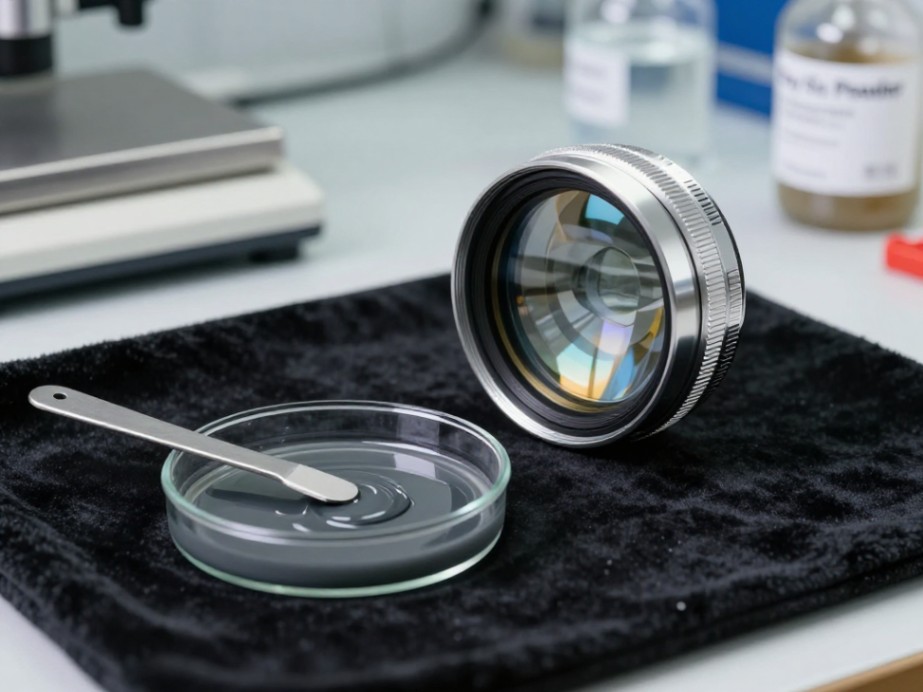
What is Silicon Carbide Abrasive Powder?
Silicon carbide (SiC) is a synthetic mineral sharper and harder than aluminum oxide. Its fractured particles create microscopic cutting edges. We bond these particles into wheels, coat them onto paper, or suspend them in liquid. The powder itself is just raw potential. Its performance is unlocked by how you use it.
Wet vs. Dry: The Core Operational Choice
This is not a minor preference. It is a foundational process decision. Each method creates a different environment for the abrasive grains to work.
The Dry Method: Aggressive & Exposed
Dry application means friction. Pure, unmitigated friction between the abrasive grain and your workpiece. This generates intense localized heat. For rough grinding on stone or de-burring metals, that heat is a tool. It can help fracture grains, exposing fresh, sharp edges. Cutting feels faster initially. But you trade control for aggression. Heat warps thin metals. It glazes over plastics. The powder becomes airborne dust, a serious respiratory hazard requiring robust extraction systems. Dry polishing is a brute-force tactic.
The Wet Method: Controlled & Precise
Wet application means lubrication and cooling. The fluid-water or oil-forms a hydrodynamic layer. It reduces friction dramatically. This does three critical things. First, it flushes away swarf (the removed material), preventing loaded wheels and scratches from lodged debris. Second, it keeps the workpiece and tool cool, preserving material integrity. Third, it keeps the abrasive grains sharp longer. The cut feels smoother, more consistent. You achieve a finer surface finish with the same grit size. Wet grinding is a finesse strategy.
Performance Comparison: Wet vs. Dry Silicon Carbide
| Factor | Dry Application | Wet Application |
|---|---|---|
| Primary Role | Rapid stock removal, rough shaping, deburring. | Fine finishing, precision grinding, achieving low Ra values. |
| Cutting Speed (Initial) | Higher perceived speed due to aggressive grain fracture. | More consistent, controlled speed; less wheel loading. |
| Surface Finish | Rougher, can induce heat-affected zones (HAZ). | Superior, cooler, with fewer micro-fractures. |
| Heat Generation | Very High. Risk of workpiece thermal damage. | Minimal. Coolant carries heat away. |
| Dust & Safety | Significant airborne SiC dust. Requires NIOSH-approved respirators and extraction. | Dust is suppressed. Primary hazard is slip/fluid management. |
| Grain Longevity | Grains dull faster due to heat and fracture. | Grains retain sharpness longer, improving cost-per-part. |
| Ideal For | Stone, concrete, rough weld blending, cast iron. | Tool steels, glass, ceramics, composites, fine metal polishing. |
Choosing Grit, Bond, and Application
Your method dictates your material choices. Selecting the wrong combination wastes time and ruins parts.
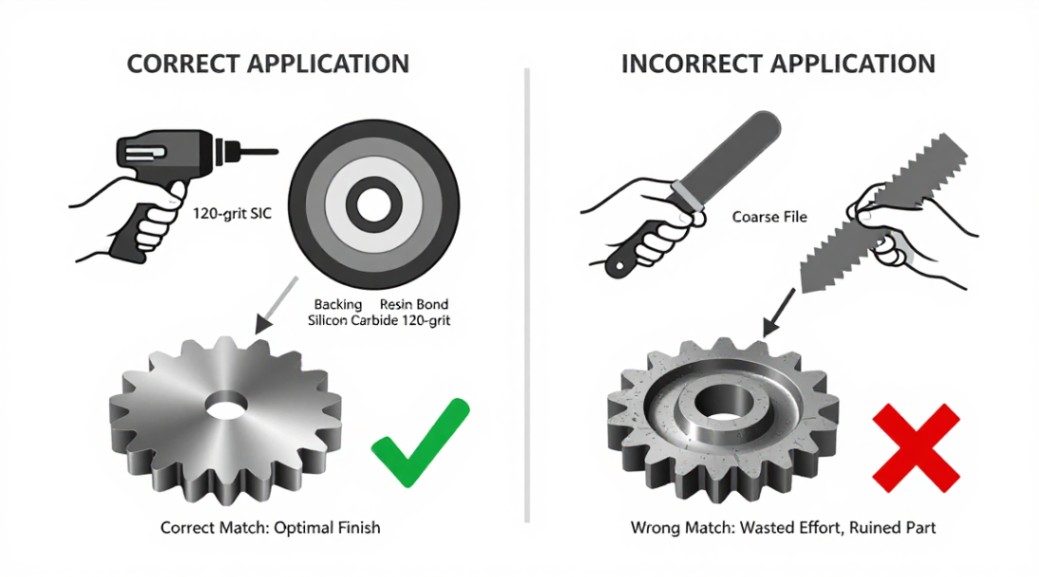
Grit Size is Your First Cut
Grit size is not a suggestion. It is a command. Coarse grits (P60-P120) remove material fast but leave deep scratches. Fine grits (P400-P2500) polish but cut slowly. You must progress sequentially. Jumping from P80 to P1000 will only polish the valleys of the deep scratches. For wet finishing, you can often stop one or two grit steps coarser than with dry work, as the slurry action provides a finer effective finish.
Bonding Systems: How the Powder is Held
- Wheels & Stones: The powder is sintered with vitrified or resin bonds. Wet-cut blades have wider gullets to channel slurry. Dry-cutting blades are more open to clear dust.
- Coated Abrasives (Sandpaper): Paper for dry use has a softer backing to conform. Wet/dry paper uses a waterproof latex-impregnated backing and a stronger resin bond to hold grit under lubrication.
- Slurries & Loose Powder: Here, the powder is unbonded. You mix it with water, oil, or grease to create a lapping compound. Particle size distribution is critical here; a tight distribution ensures even cutting.
Operational Protocols
Knowledge is useless without execution. Follow these steps.
Creating a Wet Slurry: The Exact Mix
Approximation leads to inconsistency. Weigh your components.
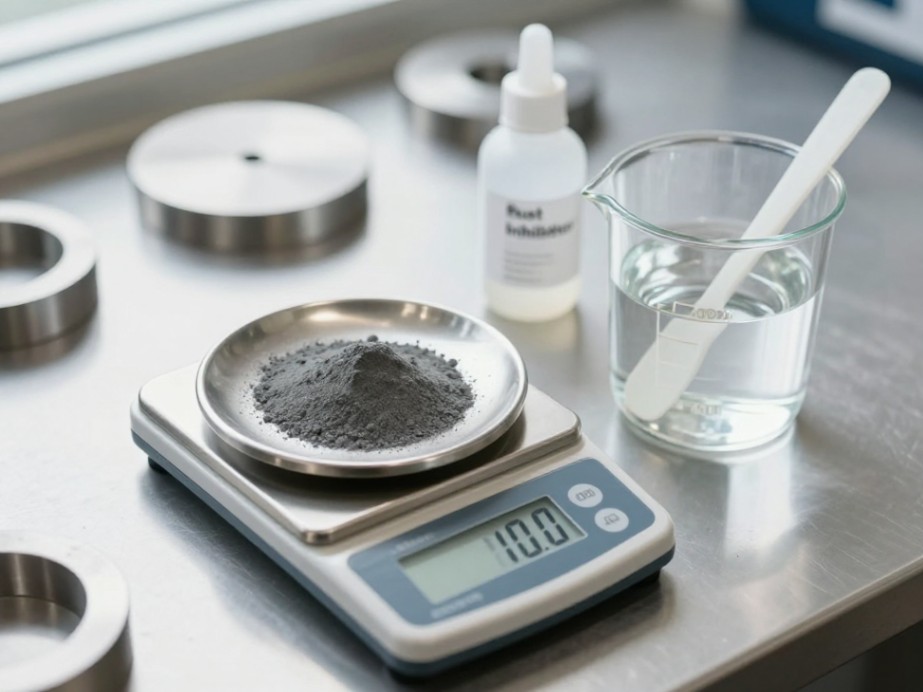
- Select Carrier Fluid: For most metals, use water with 1-3% rust inhibitor. For glass or optics, use a light mineral oil or dedicated lapping fluid.
- Measure Powder: Use a gram scale. A typical starting ratio is 1 part silicon carbide powder by weight to 4 parts fluid by volume (e.g., 100g powder to 400ml fluid).
- Mix Gradually: Add powder to the fluid slowly while stirring with a non-reactive spatula. Do not pour fluid onto powder, as this creates clumps.
- Achieve Consistency: Aim for a viscosity similar to thin cream. It should flow but coat the workpiece. Adjust ratio for finer grits (more fluid) or coarser grits (less fluid).
Dry Grinding Safety: Non-Negotiable Rules
- Containment First: Use tools with integrated dust extraction ports. Connect to a HEPA-filtered vacuum rated for fine particulates.
- Respiratory Protection: If extraction isn’t 100% effective, wear a NIOSH-approved N95 or P100 respirator. Dust masks are insufficient.
- Clean Up Wet: Never use compressed air to clean surfaces. Use a damp cloth or a vacuum with a HEPA filter.
The Final Verdict
Forget tradition. Ignore “the way we’ve always done it.” Your material and desired finish dictate the method. Need to shape a granite countertop edge? Start dry with a coarse grit. Need to polish a titanium medical implant to a mirror Ra 0.2? You must use a wet process with a sequenced grit progression. Dry is for rough work where heat and dust are manageable byproducts. Wet is for precision where finish and control are paramount. Choose based on physics, not habit. Test both methods on a scrap piece. The results will be obvious. Your process will improve immediately.
eduloc founded on October 17, 2012, is a high-tech enterprise committed to the research and development, production, processing, sales and technical services of ceramic relative materials such as Wet. Our products includes but not limited to Boron Carbide Ceramic Products, Boron Nitride Ceramic Products, Silicon Carbide Ceramic Products, Silicon Nitride Ceramic Products, Zirconium Dioxide Ceramic Products, etc. If you are interested, please feel free to contact us.
RELATED POSTS
Sodium Chromate(Sodium Chromium Oxide) (Na2CrO4)-Powder
Cobalt Monoxide (Cobalt Oxide) (CoO)-Sputtering Target
Silicon Carbide Balls Provide Ground Simulation Solutions For Space 3d Printing
Zirconium Dioxide Ball Assists Extreme Environment Simulation Test Of Space Materials
Green Silicon Carbide Powder for Optical Grinding: A Practical Guide to Performance and Precision
