High-Density Grinding Media Balls for Industrial Applications

Why Silicon Carbide Dust is Different (And More Dangerous)
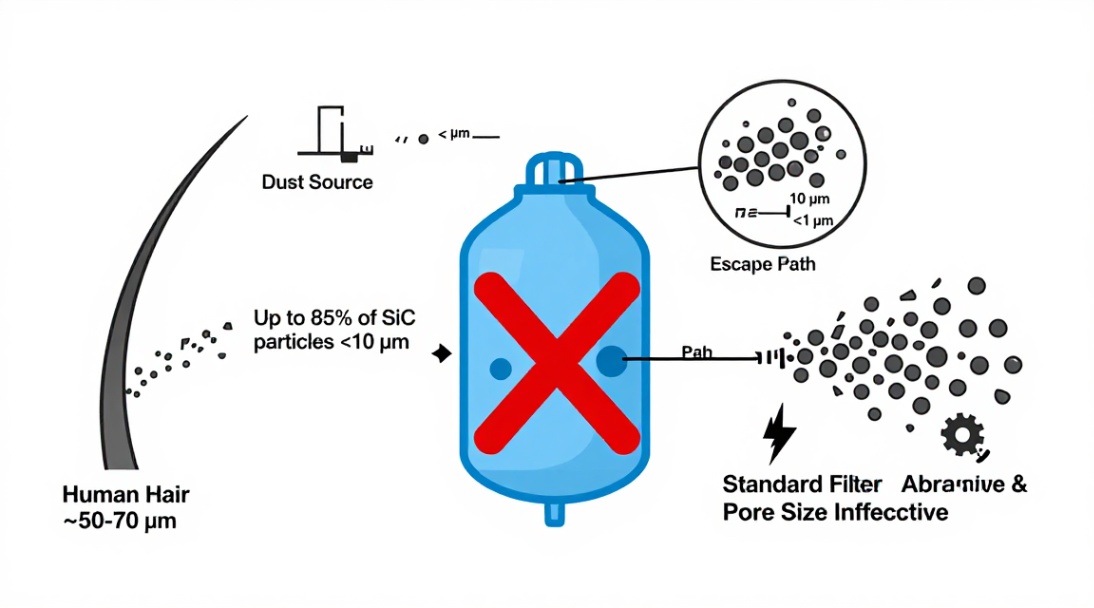
Up to 85% of silicon carbide dust particles are smaller than 10 microns. Standard dust collectors can’t catch them. This fine, abrasive, and conductive powder becomes an airborne threat. It bypasses cheap filters. It grinds down internal components. It creates a significant explosion hazard. We see this pattern repeated in grinding shops and manufacturing plants. Treating SiC dust like wood sawdust is the first, and most expensive, mistake a company can make.
Building Your Defense: The Anatomy of a Proper SiC System
Capture at the Source: The First Rule of Defense
Perfect filtration is useless without proper capture. You need custom-designed hoods and enclosures placed inches from the grinding or cutting point. We specify high-velocity capture for energetic processes. Effective ductwork design maintains a minimum transport velocity, typically 4500 feet per minute or higher, to keep the dense SiC dust suspended and moving to the collector. Let the system do the work, not your workers’ lungs.
The Heart of the System: Filtration Technology Face-Off
The filter is where the battle is won or lost. Your choice dictates safety, maintenance costs, and system longevity. Here’s a direct comparison:
| Filtration Type | Best For SiC Dust Because… | Key Consideration |
|---|---|---|
| Cartridge Filters (Pleated) | Superior surface area for sub-micron particles. Consistent efficiency. Handles high dust-loads common in SiC processing. | Must be conductive/anti-static. Requires robust pulse-jet cleaning. |
| Traditional Baghouses | Proven durability for heavy, abrasive dusts. | Lower surface area can lead to premature blinding with fine SiC. Larger footprint. |
For silicon carbide, we almost always recommend nanofiber-coated, conductive cartridge filters. They trap the finest particles while mitigating the static charge that can lead to fires.
Non-Negotiable Safety: Explosion Protection
Ignoring NFPA 652 and 654 is an existential risk. Silicon carbide dust is explosive. Your collection system must be designed as a potential explosion vessel. This isn’t optional. It’s the law. A proper system includes:
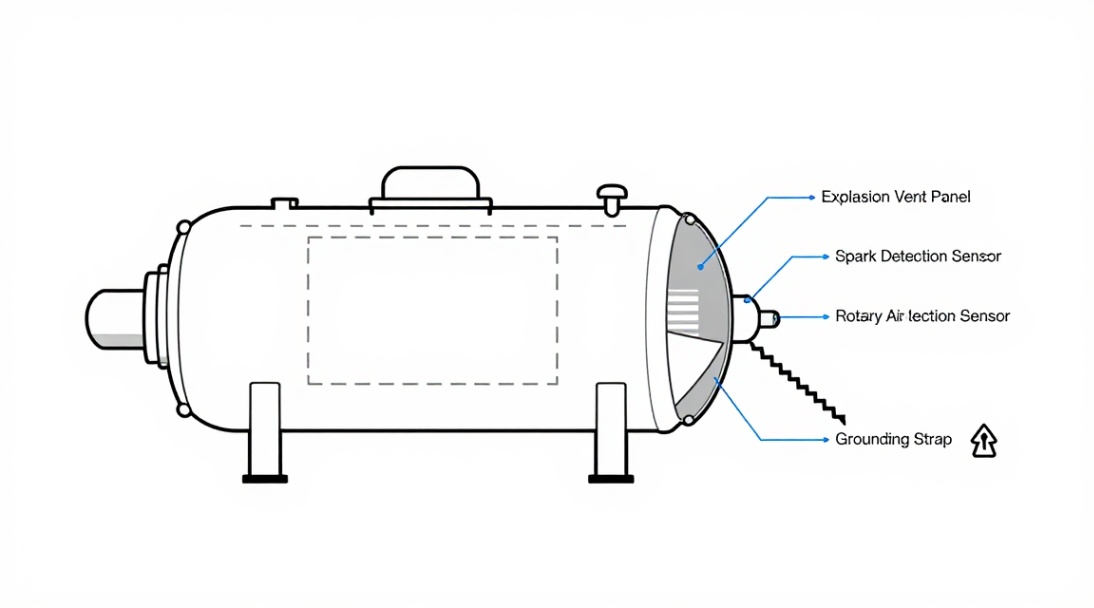
- Explosion Vents: Designed to safely direct a deflagration outdoors.
- Isolation Valves (Flap or Chemical): Prevents an explosion from traveling back into your plant via ductwork.
- Dust Deflagration Hazard Analysis (DDHA): A formal, documented risk assessment. Do not skip this.
The Real Cost: Ownership vs. Non-Compliance
Let’s talk numbers. A properly engineered silicon carbide dust collection system is a capital investment. The cost of non-compliance is far greater. We break down the real expenses.
| Cost Factor | Proper System (Cost of Ownership) | Inadequate/No System (Cost of Non-Compliance) |
|---|---|---|
| Regulatory Fines (OSHA) | Designed to meet PELs. Avoids fines. | Fines exceeding $15,000 per violation, per day. |
| Worker Health | Protects against silicosis and chronic lung issues. | Skyrocketing insurance premiums, workers’ comp claims, and turnover. |
| Equipment Damage | Dust is contained. Machine bearings and electronics last longer. | SiC dust infiltrates and destroys every machine in the shop. |
| Production Downtime | Automated filter cleaning. Scheduled maintenance. | Constant clogging, unscheduled shutdowns, and lost production hours. |
| Fire/Explosion Risk | Engineered safety systems in place. | Catastrophic loss of facility, inventory, and life. |
The math is simple. The right system pays for itself. The wrong one puts you out of business.
Your Next Step: Stop Guessing, Start Solving
This isn’t a DIY project. You need a partner who understands the abrasive, conductive, and explosive nature of silicon carbide dust. Don’t trust a general-purpose vendor. You need a specialist.

Talk to an expert who speaks your language. We’ve designed systems for aerospace composite shops, abrasive manufacturers, and precision ceramic grinders. We know the codes, the risks, and the solutions that last. Bring us your toughest dust problem. We’ll provide a system design review and a clear path to compliance and safety. Protect your people. Protect your plant. Do it right.
eduloc founded on October 17, 2012, is a high-tech enterprise committed to the research and development, production, processing, sales and technical services of ceramic relative materials such as The. Our products includes but not limited to Boron Carbide Ceramic Products, Boron Nitride Ceramic Products, Silicon Carbide Ceramic Products, Silicon Nitride Ceramic Products, Zirconium Dioxide Ceramic Products, etc. If you are interested, please feel free to contact us.
RELATED POSTS
Hastelloy Alloy X (Ni-Mo-Cr-Fe)-Spherical Powder
Zinc Bromide hydrate (ZnBr2*xH2O)-Crystalline
A Research Institute’S Alumina Ball Nanomaterial Dispersion Experiment Report
how to grind dragon balls in xenoverse

Why does aerogel powder have gel properties