High-Density Grinding Media Balls for Industrial Applications

The Powder vs. Paper Decision for Perfect Paint
For between-coat automotive sanding, 1000 grit abrasive powder often delivers a superior scratch pattern and reduces the risk of burn-through compared to traditional 1000 grit sandpaper. We make this decision by weighing three core factors: scratch consistency, surface protection, and adhesion quality. This comparison will give you the clarity to choose the right tool for your specific project phase.
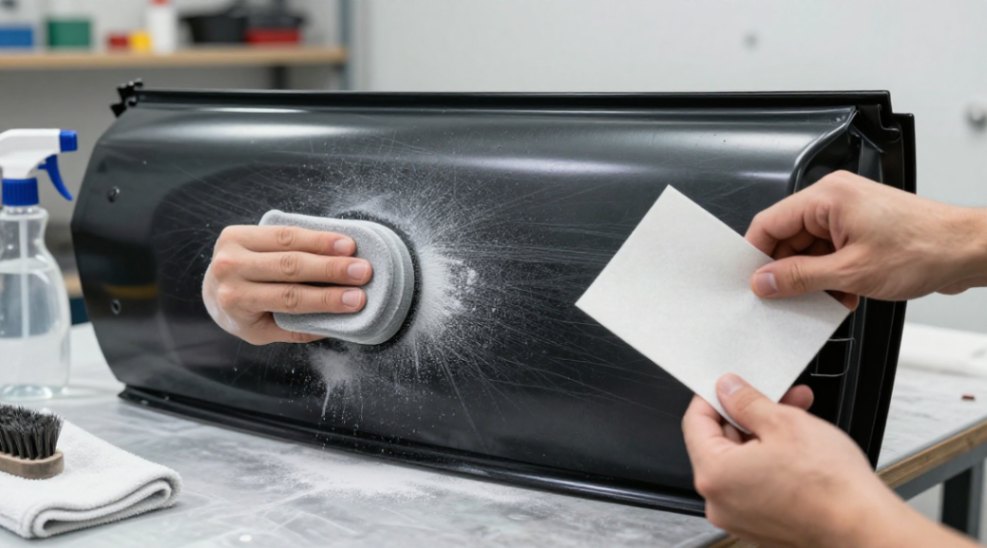
Direct Comparison: Abrasive Powder vs. Wet/Dry Sandpaper
Both methods use the same 1000 grit particle size to level imperfections. Their performance diverges in execution and result. Let’s break it down.
| Feature | 1000 Grit Abrasive Powder (Wet Slurry) | 1000 Grit Wet/Dry Sandpaper |
|---|---|---|
| Scratch Pattern | Uniform, random, and multi-directional. Creates an ideal mechanical ‘tooth’ for the next layer. | Linear and predictable. Can leave a patterned texture that might telegraph. |
| Burn-Through Risk | Very low. The suspended grit reduces direct, aggressive friction on high spots. | Higher, especially on edges and contours with firm hand pressure. |
| Feel & Control | Provides a buttery, lubricated feel. You ‘float’ the sanding block over the slurry. | Offers direct, tactile feedback. Requires more conscious pressure control. |
| Best For | Sanding delicate basecoats, feathered edges, and final primer surfacing before paint. | Leveling heavier primer texture, removing minor nibs in clear coat, and larger flat panels. |
| Biggest Downside | Messier setup and cleanup. Requires mixing and consistent slurry management. | Can clog quickly. Requires frequent paper cleaning or replacement. |
When Powder is the Professional’s Choice
Choose abrasive powder when the substrate is thin or the consequences of a mistake are high. Sanding a fresh basecoat before clear? The powder’s gentle, even action is your safety net. Working on a complex curve where sandpaper might dig in? The conforming slurry follows the shape perfectly. Its random scratch pattern essentially ‘liquid sands’ the surface, promoting far better adhesion than linear sandpaper scratches. The process itself forces a slower, more deliberate pace which minimizes errors.
The Step-by-Step Slurry Sanding Method
Success requires precision. Here is the shop-proven method.
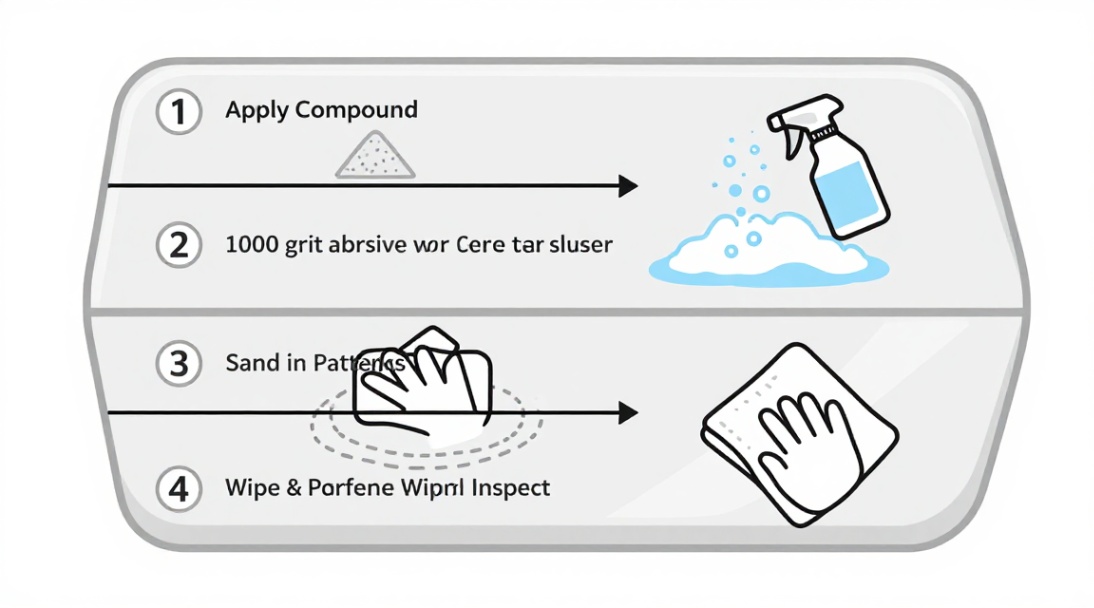
- Mix the Slurry: In a clean container, combine 1 tablespoon of 1000 grit abrasive powder with approximately 500 ml of clean, cool water. Stir until it forms a milky, consistent suspension.
- Prepare the Surface: Thoroughly wash and dry the panel. Remove all dust with a dedicated tack cloth.
- Apply and Sand: Using a soft foam sanding block, dip it into the slurry. Apply the slurry to a 2′ x 2′ (0.6m x 0.6m) section of the panel. Sand using light, overlapping circular motions for 60-90 seconds. Let the weight of the block do the work.
- Inspect and Rinse: Frequently wipe an area clean with a wet microfiber cloth to check your progress. You are done when the surface feels smooth and uniformly dull. Rinse the entire panel with a flood of clean water.
- Final Prep: Dry the panel with a clean, lint-free drying towel. Use compressed air to blow out seams and emblems. Perform a final tack wipe immediately before applying the next coat.
Common Pitfalls to Avoid
We have all learned from these mistakes. Do not let the slurry dry on the surface; it will leave a residue. Never use a dirty mixing container or water source; contaminants will scratch your work. Avoid using a hard rubber sanding block; it defeats the purpose. Do not skip the final blow-dry and tack step; leftover water or dust will ruin the finish.
Final Verdict for Your Project
For most between-coat work on primers and basecoats, 1000 grit abrasive powder provides a measurable advantage in safety and finish quality. It demands more patience in setup but rewards you with greater control. Keep sandpaper in your kit for initial leveling and nib removal. Master the slurry technique for those critical final sanding steps before your color or clear goes on. This dual-method approach gives you the flexibility to handle any sanding task on the path to a flawless finish.
eduloc founded on October 17, 2012, is a high-tech enterprise committed to the research and development, production, processing, sales and technical services of ceramic relative materials such as Is. Our products includes but not limited to Boron Carbide Ceramic Products, Boron Nitride Ceramic Products, Silicon Carbide Ceramic Products, Silicon Nitride Ceramic Products, Zirconium Dioxide Ceramic Products, etc. If you are interested, please feel free to contact us.
RELATED POSTS

Lithium nitrate hydrate (LiNO3•xH2O)-Crystalline

Advancements in Spherical Tantalum Powder: Shaping the Future of High-Tech Industries and Sustainable Manufacturing tantalum cost per gram
Global steel demand growth is expected to decline in 2022 will have an effect on the steel slitting line price
Surface of coating material-sodium silicate powder
Aluminum Nickelide (Al3Ni)-Sputtering Target
