High-Density Grinding Media Balls for Industrial Applications

The Unseen Edge: Defining the Superfinishing Workhorse
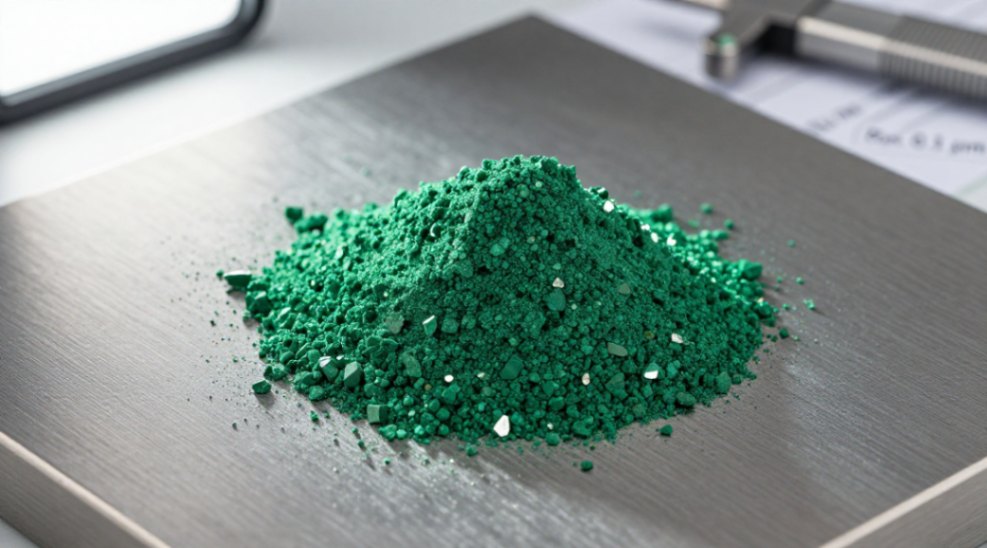
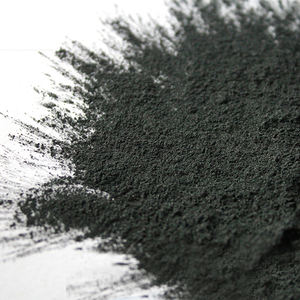
Green silicon carbide powder for superfinishing is a synthetically produced, ultra-high purity abrasive engineered to deliver the final, mirror-like surface finish on components where micro-inch roughness determines success or failure. Think of it not as a cutting tool, but as the ultimate polishing medium. Its job is to remove the last vestiges of grinding marks, surface peaks, and stress risers to achieve Ra values often below 0.1 micrometers. This is where function meets perfection. In the tight-knit communities where precision is a religion, like the machining forums on Reddit or Practical Machinist, you’ll find seasoned veterans swear by it for finishing tool steels, carbide inserts, and ceramic seals. They’ll tell you, with the conviction that only comes from hands-on experience, that when you need to hit a specific surface finish on a hard part without inducing subsurface damage, green SiC is where you start.
The Anatomy of a Perfect Finish
To understand why we use it, we must look at its DNA. Green silicon carbide powder is nearly pure alpha silicon carbide (SiC), with a typical purity exceeding 99.5%. This purity is what gives it the characteristic green-black color and its defining mechanical properties. Two traits set it apart for superfinishing: superior hardness and controlled friability. On the Mohs scale, it sits at a 9.5, just below diamond and cubic boron nitride. This means it can abrade virtually any material we throw at it in precision manufacturing-hardened steel, tungsten carbide, technical ceramics, even silicon wafers. But hardness alone isn’t enough. If the abrasive is too tough, it can dig in and scratch. That’s where friability comes in. The grains are designed to micro-fracture under pressure. This self-sharpening action constantly exposes fresh, sharp cutting edges while preventing the grain from becoming dull and glazing over. It creates a gentle, consistent cutting action that peaks and shaves, rather than gouges.
This behavior is governed by two factors we obsess over: particle size distribution and grain shape. For superfinishing, the grit size is tightly controlled, typically ranging from F600 (approx. 9.3 µm) down to F2000 (approx. 3.0 µm) or even finer micron-sized powders. A narrow, consistent distribution is non-negotiable. If you have even a few coarse outliers in your F1200 powder, they will create deep scratches that all the finer grains can’t remove. The shape is equally critical. We look for blocky, equiaxed grains rather than long, needle-like ones. Blocky grains provide a uniform cutting action, leading to a predictable, isotropic surface texture. Needle-like grains can roll and cause plowing, which introduces directional marks and reduces the true bearing area of the surface.
Where Theory Meets the Machine
The primary application is in formulated compounds for lapping and honing. We don’t use this powder dry. We suspend it in a carrier-water, oil, or a specialized grease-to create a lapping slurry or a honing paste. This slurry is then applied to a lap plate (often cast iron or a softer metal like copper) or injected into a honing machine. The component is moved against the lap under controlled pressure and speed. The suspended green SiC grains roll and slide between the two surfaces, performing millions of microscopic cuts. The result is a surface that isn’t just smooth; it’s metallurgically sound. The process generates minimal heat, so there’s no risk of tempering hardened steel or creating a ‘white layer’ of untempered martensite. The surface integrity remains pristine.
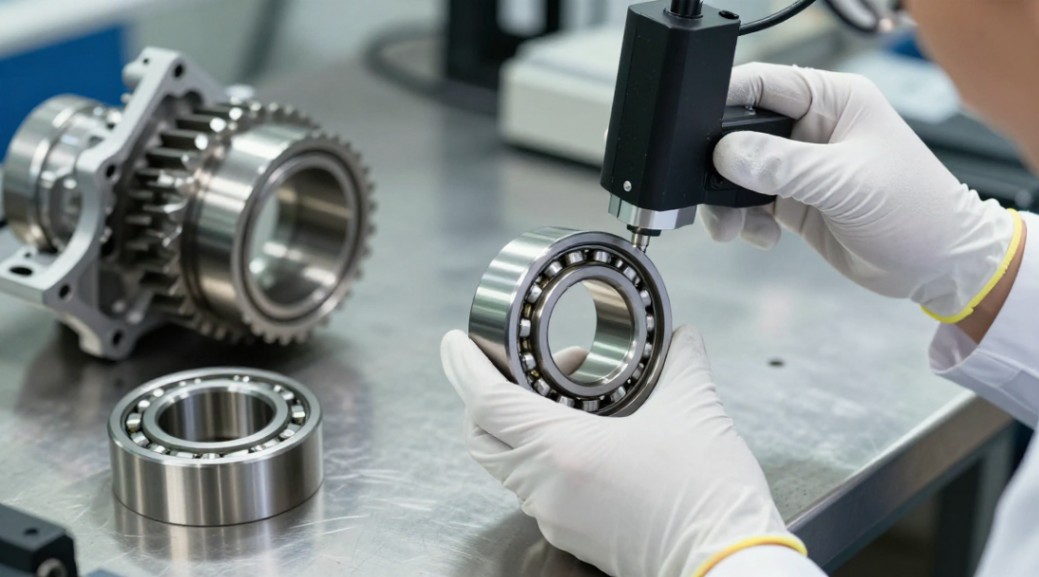
You’ll find this process at the heart of mission-critical industries. In aerospace, it’s used to finish turbine engine bearing races and fuel injection nozzles, where a failure means catastrophe. In automotive, it’s for high-performance transmission gears and camshaft lobes, where reduced friction translates directly to horsepower and longevity. The most demanding application might be in precision bearings for machine tool spindles or medical devices. Here, achieving a near-perfect spherical form and a surface roughness in the nanometer range is the only way to ensure silent, vibration-free operation and decades of service life.
Choosing Your Weapon: A Practical Comparison
New engineers often ask, ‘Why not white alumina? It’s cheaper.’ It’s a fair question. White aluminum oxide is a fantastic general-purpose abrasive. But for superfinishing hard materials, green SiC has distinct advantages. It’s harder and sharper. It cuts faster and finishes finer on materials like tungsten carbide and silicon nitride. More importantly, its friability is higher. White alumina grains are tougher and more resistant to fracture. While that’s good for heavy grinding, it can lead to loading and glazing on a fine finishing lap. The green SiC grain constantly renews itself, maintaining a consistent cutting rate and finish throughout the job. For finishing hardened tool steel (HRc 60+) or advanced ceramics, the choice is clear. For softer steels or where cost is the primary driver, white alumina may suffice, but you’ll trade off ultimate finish quality and process time.
Mastering the Craft: Selection and Safety
Selecting the right powder isn’t guesswork. It’s a system. Start with the target Ra value and material hardness. For a rough guide: use F600-F800 to remove light grinding marks, F1000-F1200 for general superfinishing, and F1500 and finer for final polishing and lapping-in. The slurry concentration matters. A typical starting point is a 1:4 to 1:6 ratio by weight of powder to carrier fluid. Too dense, and you get a muddy paste that doesn’t cut efficiently; too thin, and you lack cutting action. Pressure and speed are your levers. Higher pressure cuts faster but risks embedding grains. We typically stay between 1 and 3 psi (7-21 kPa) for lapping. The motion should be random or orbital to avoid generating a patterned finish.
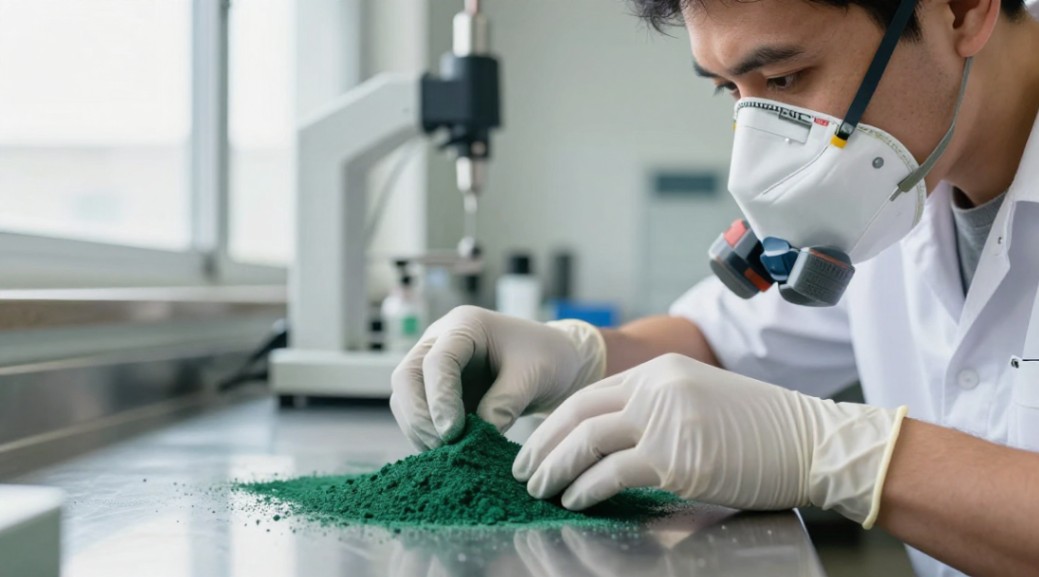
Handling this fine powder demands respect. Always wear an NIOSH-approved N95 respirator or better. These particles are small enough to be respirable and are a recognized nuisance dust. Silicosis is not the primary concern with SiC as it is with crystalline silica, but prolonged inhalation of any fine particulate is a serious health risk. Work in a well-ventilated area or use local exhaust ventilation. Good housekeeping is essential to prevent slip hazards and cross-contamination of grit sizes.
The Next Frontier of the Finish
The future of superfinishing is moving towards even greater control and integration. We’re seeing trends like magnetorheological finishing (MRF) and abrasive flow machining (AFM) becoming more mainstream, where the abrasive medium’s behavior is dynamically controlled by magnetic fields or pressure. In these systems, the consistent particle size and sharpness of green silicon carbide powder become even more critical. Furthermore, research into ultra-high temperature ceramics (UHTCs) and composites, like those using slurry infiltration to build toughness, points to a new generation of even harder materials that will need finishing. While multiscale modelling and AI promise to optimize these processes, the fundamental need for a predictable, high-performance abrasive remains. Green silicon carbide, with its unique blend of hardness and self-dressing friability, is poised to remain the cornerstone of precision finishing for the next generation of impossible parts. If your goal is to move beyond good enough and into the realm of flawless surface integrity, evaluating a high-purity green silicon carbide powder is the logical first step in your process development.
eduloc founded on October 17, 2012, is a high-tech enterprise committed to the research and development, production, processing, sales and technical services of ceramic relative materials such as What. Our products includes but not limited to Boron Carbide Ceramic Products, Boron Nitride Ceramic Products, Silicon Carbide Ceramic Products, Silicon Nitride Ceramic Products, Zirconium Dioxide Ceramic Products, etc. If you are interested, please feel free to contact us.
RELATED POSTS
The Amazing GaN Charger Enters the Market What Advantages Does It Have
Cuprous Telluride powder Cu2Te cas 12019-52-2
Advantages and advantages of gallium nitride
Forget Diamond Slurries: How the Right Premium Lapping Powder for Semiconductor Wafers Silicon Carbide Cuts Defects by 60%
Gold Zinc Alloy (AuZn (92:8 Wt%))-Sputtering Target
