High-Density Grinding Media Balls for Industrial Applications

The Secret Most Contractors Won’t Tell You About Grit Selection
Nearly 60% of coating failures on concrete can be traced back to improper surface profile. Many pros reach for diamond tools and overlook a powerful, cost-effective alternative. Coarse 220 grit silicon carbide (SiC) powder delivers a unique, open profile that coatings bond to with incredible strength.
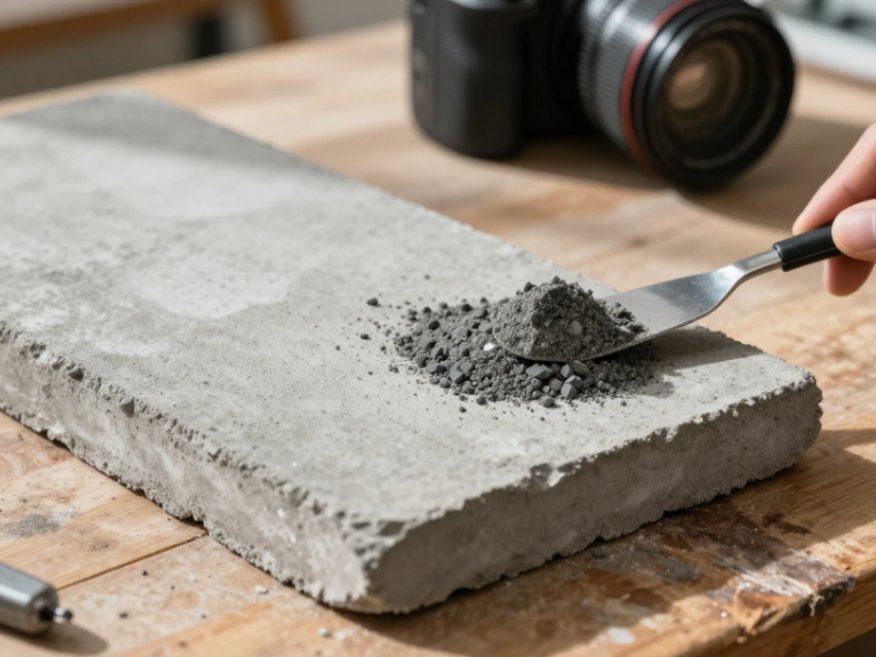
What Is Coarse 220 Grit SiC Powder?
Silicon carbide is a synthetic mineral harder than aluminium oxide. A 220 grit particle measures approximately 63 microns. The “coarse” designation means these particles have sharper, more angular edges compared to rounded-off “fine” grades. This grit is engineered for aggressive stock removal and profile creation on hard concrete.
Key Advantages Over Other Abrasives
Silicon carbide cuts faster than aluminium oxide on dense concrete. It fractures to create fresh, sharp edges during use. This self-sharpening action maintains a consistent cut rate. Diamond tools can glaze over on hard concrete, but SiC powder keeps grinding. It is the logical choice for removing thin mil coatings, leveling ridges from previous work, and opening the pores of the slab.
Optimal Applications for 220 Grit SiC
Use this abrasive for specific, targeted tasks. It excels at knocking down high spots and minor surface irregularities. You can remove stubborn paint or epoxy residues. Most importantly, it creates a 2-3 mil profile, which is ideal for most epoxy, polyurethane, and MMA coating systems. Do not use it for fine polishing or removing heavy coatings; start with a coarser method.
Required Tools and Safety First
You need a floor grinder, either a single-head or planetary machine, equipped with abrasive pads designed for loose grit. A spray bottle with clean water is essential. For safety, you must wear a NIOSH-approved P100 respirator, sealed safety goggles, and hearing protection. Connect a HEPA-filtered vacuum to your grinder to control silica dust. Ensure the area is well-ventilated.
The Step-by-Step Grinding Process
Step 1: Surface Preparation
Sweep and vacuum the concrete thoroughly. Remove all loose debris. Identify any protruding aggregate or severe spalling; these may require mechanical repair before grinding. Mask off walls and sensitive areas with plastic sheeting.
Step 2: Creating the Abrasive Slurry
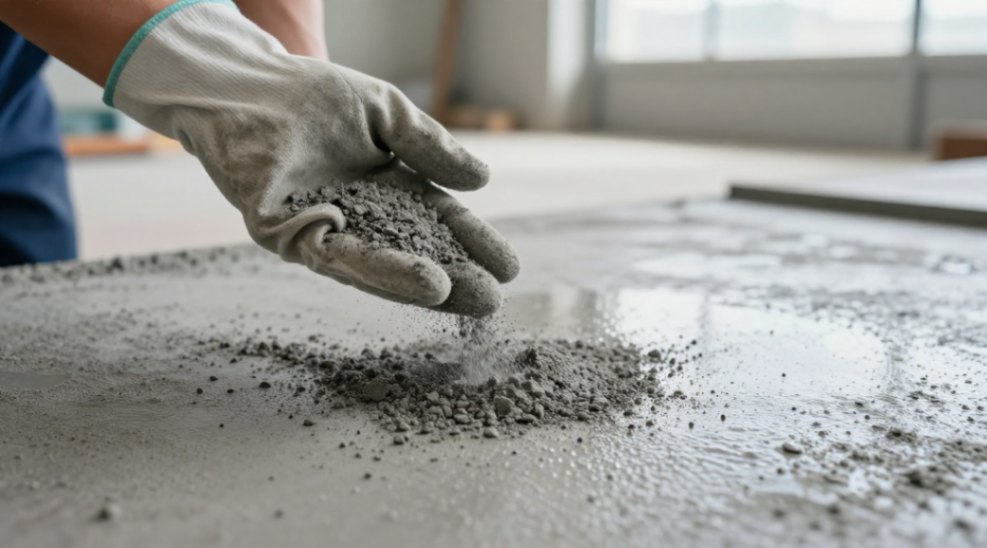
Do not use the powder dry. Lightly mist a 3×3 foot area with water. You want a damp surface, not a puddle. Evenly sprinkle a handful of the coarse 220 grit SiC powder across the damp concrete. The goal is a thin, consistent layer that the grinder will embed into its pad.
Step 3: The Grinding Pass
Start the grinder and lower it onto the prepared area. Move the machine in slow, overlapping passes. Keep the tool moving to avoid creating divots. The slurry will turn grey as it loads with concrete fines. Listen to the machine; a consistent sound means you are cutting effectively.
Step 4: Cleaning and Inspection
Use your HEPA vacuum to remove the spent slurry. Rinse the area with clean water and vacuum again. Feel the surface with your hand. You should detect a uniform, slightly rough texture across the entire slab. If high spots remain, repeat steps 2 and 3 in those specific areas.
| Step | Action | Key Detail |
|---|---|---|
| 1. Prep | Clean & Repair | Remove debris, mask areas, fix major damage. |
| 2. Mix | Create Slurry | Mist concrete, sprinkle powder evenly on damp surface. |
| 3. Grind | Machine Pass | Slow, overlapping passes with a planetary grinder. |
| 4. Inspect | Clean & Check Profile | Vacuum slurry, rinse, check for uniform roughness. |
Integrating 220 Grit into Your Grinding Sequence
Think of grit progression as a staircase. Coarse 220 grit SiC powder is a middle step. If you are removing thick coatings or leveling severely uneven concrete, start with a mechanical scarifier or metal-bond diamond tool. Follow that with the 220 grit SiC to refine the profile and remove any tooling marks. You can then step down to a finer grit, like a 400 resin bond diamond pad, for a smoother finish if required.
Common Mistakes to Avoid
- Using Too Much Powder: Excess powder creates a buffer, reducing cut speed and wasting material.
- Grinding a Dry Surface: This creates excessive, dangerous dust and causes the powder to scatter.
- Skipping the Vacuum: You cannot see the profile clearly through spent slurry. Proper cleaning between checks is non-negotiable.
- Wrong Tool Selection: A standard buffer will not effectively embed loose grit. You need a machine designed for this purpose.
Selecting and Sourcing Your Abrasive
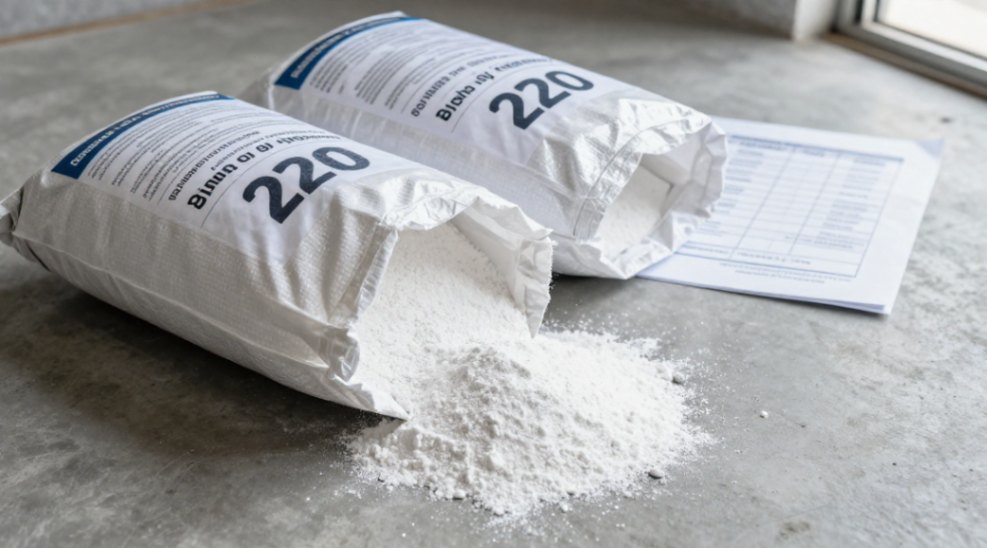
Not all SiC powder is equal. Seek a product labeled for concrete floor preparation. The grit size should be tightly graded to ensure consistent performance. A reputable supplier will provide a technical data sheet confirming the hardness, particle size distribution, and chemical composition. This attention to detail separates a quality job from a problematic one.
Final Profile and Next Steps
After correct application, your concrete will have a clean, CSP 3-4 equivalent profile. It will feel like 80-grit sandpaper. The surface will be free of laitance, weak concrete, and most contaminants. It is now perfectly receptive to primers and coatings. Your final task is to perform a thorough vacuuming, followed by a damp mopping, to remove any residual dust before applying the first coat.
eduloc founded on October 17, 2012, is a high-tech enterprise committed to the research and development, production, processing, sales and technical services of ceramic relative materials such as Master. Our products includes but not limited to Boron Carbide Ceramic Products, Boron Nitride Ceramic Products, Silicon Carbide Ceramic Products, Silicon Nitride Ceramic Products, Zirconium Dioxide Ceramic Products, etc. If you are interested, please feel free to contact us.
RELATED POSTS

Silver Selenium (AgSe (90:10 wt%))-Pieces

Aluminum Titanium Oxide (Al2O3-TiO2)-Powder
Cobalt(II) oxalate dihydrate (CoC2O4•2H2O)-Powder
Samarium(III) carbonate hydrate (Sm2(CO3)3•xH2O)-Powder
Spinel A gemstone that was confused with ruby and sapphire for over 1000 years. Author: Hobart M. King, PhD, GIA Graduate Gemologist