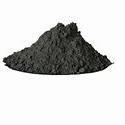
High-Density Grinding Media Balls for Industrial Applications

Silicon Carbide Lapping Powder: The Unseen Engine of Precision
Did you know that manufacturing a single high-performance smartphone camera lens can require over 15 distinct abrasive process steps? Precision is non-negotiable. Among the tools that make this possible, silicon carbide lapping powder for glass and quartz stands as a quiet powerhouse. For over two decades, I’ve seen this material turn challenging substrates into perfectly flat, optically ready surfaces. Let’s get straight to your questions.

1. What Exactly Is Silicon Carbide Lapping Powder?
Silicon carbide lapping powder is a synthetic abrasive made by fusing silica sand and carbon at extreme temperatures, exceeding 2200°C. The result is sharp, blocky crystals with a unique combination of properties. For lapping glass and quartz, we value its exceptional hardness and controlled breakdown, or friability. Think of each particle as a microscopic cutting tool designed to shear away material without embedding.
2. Why Choose SiC Over Alumina or Diamond for Glass?
This is a critical choice. Here’s my direct advice based on years of application work:
- Silicon Carbide (SiC): Your go-to for general stock removal and intermediate finishing. It’s harder than alumina (9.5 vs ~9 on the Mohs scale) but less expensive than diamond. Its friability creates fresh, sharp edges during lapping, maintaining a consistent cut rate on brittle materials like glass and quartz.
- Aluminum Oxide (Alumina): Use it for softer glasses or preliminary steps where cost is paramount. It wears down faster and can glaze over, reducing efficiency.
- Diamond: Reserve diamond for final, ultra-fine finishes or extremely hard crystalline quartz. It’s the hardest but most expensive. Using it for all stages is often wasteful.
In short: For the best balance of speed, finish, and cost on most optical glass and fused silica, silicon carbide lapping powder wins.
3. How Do I Pick the Right Grit Size?
Selecting the correct micron grade determines your finish and efficiency. Follow this progression:
Rough Lapping (Stock Removal): Start with FEPA grits #80 to #220 (180 to 63 microns). This quickly establishes flatness and removes saw marks.
Intermediate Finishing: Move to #320 to #600 (46 to 25.8 microns). This begins to refine the surface and remove deeper scratches from the previous step.
Fine Finishing: Use #800 to #1200 (21.8 to 15.3 microns) or finer micron powders (e.g., 9 µm, 3 µm). This prepares the surface for final polishing.
Critical Rule: Never skip more than one grit size in your progression. Jumping from #80 to #600 will cause deep, irreparable subsurface damage.
4. What’s the Best Way to Prepare and Use SiC Slurry?
Consistency is king. Here’s a proven method for a water-based slurry on a cast iron or tin lap plate:

- Weigh the Powder: For general lapping, use a 1:4 to 1:6 ratio by weight of silicon carbide powder to water (e.g., 100g powder to 500ml deionized water).
- Mix Thoroughly: Use a clean, non-metallic stirrer. Agitate for 2-3 minutes to break up agglomerates.
- Apply Correctly: Apply a thin, even stream of slurry to the center of the rotating lap plate. The rotation will distribute it.
- Control Pressure: Apply 1.5 to 3.5 psi (10 to 24 kPa) of pressure on the workpiece. Too high causes cracking; too low yields slow, uneven removal.
- Set Optimal Speed: Maintain a lap plate surface speed of 50 to 150 SFPM (15 to 46 m/min).
- Replenish Frequently: Add fresh slurry every 60-90 seconds to maintain cutting action and prevent drying.
5. How Do I Avoid Scratches and Pitting?
Scratches usually mean contamination. Pitting often signals incorrect pressure or a worn lap. Follow this troubleshooting guide:
Problem: New, deep scratches appear.
Solution: Stop immediately. Your slurry, workpiece, or lap is contaminated with a larger, stray grit particle. Clean everything meticulously. Filter your slurry if necessary.
Problem: Cloudy or pitted surface.
Solution: Reduce the lapping pressure. Check that your lap plate is flat and not grooved. Ensure your slurry concentration isn’t too low.
Problem: Inconsistent material removal (taper).
Solution: Verify your workpiece holder applies even pressure. Cheque that the lap plate is true and not warped. Your progression through grits may be too aggressive.
6. What’s the Correct Cleaning Process After Lapping?
This step is as critical as lapping itself. Residual SiC will ruin subsequent polishing. Here’s the sequence:
- Rinse the workpiece under flowing deionized (DI) water while gently brushing with a soft, lint-free brush.
- Ultrasonic clean in a warm, mild detergent solution for 5-10 minutes.
- Rinse again thoroughly in two successive DI water ultrasonic baths (3 minutes each).
- Inspect under bright, oblique lighting. Any remaining particles will glint. Repeat cleaning if needed.
- Dry with filtered, oil-free compressed air or a clean, heated nitrogen stream.
7. Where Is This Process Used Every Day?
The applications are vast. We supply silicon carbide lapping powder for glass and quartz to leaders in:
- Optics: Camera lenses, laser windows, telescope mirrors.
- Semiconductors: Thinning and backside finishing of silicon and compound semiconductor wafers.
- Precision Engineering: Quartz oscillator blanks, fluidic channels in lab-on-a-chip devices.
- Laboratory & Analytical: Preparing flawless surfaces on glass slides, cuvettes, and spectrometer components.
Your Next Step Towards Flawless Finishes
Understanding the theory is one thing. Achieving consistent, high-yield results in your lab or workshop is another. The difference often comes down to the quality and consistency of your abrasive. After decades in this field, I formulated a specific silicon carbide lapping powder for glass and quartz to solve the common problems of contamination, inconsistent particle size, and batch variability that plague generic suppliers.

Don’t let your abrasive be the weak link. I invite you to test my premium-grade SiC against what you’re using now. See the difference in surface quality, process control, and final yield. Request a free sample kit tailored to your grit progression. Let’s get you the flawless finish your project deserves.
eduloc founded on October 17, 2012, is a high-tech enterprise committed to the research and development, production, processing, sales and technical services of ceramic relative materials such as Silicon. Our products includes but not limited to Boron Carbide Ceramic Products, Boron Nitride Ceramic Products, Silicon Carbide Ceramic Products, Silicon Nitride Ceramic Products, Zirconium Dioxide Ceramic Products, etc. If you are interested, please feel free to contact us.
RELATED POSTS
More than a hundred schools in the UK have been closed due to the risk of collapse

Copper Gallium Telluride (CuGaTe2)-Granules
how to grind dragon balls in xenoverse 2

316L Stainless Steel (Fe-Cr17Ni14Mo2)-Spherical Powder
Lanthanum(III) oxalate decahydrate (La2(C2O4)3•10H2O)-Powder