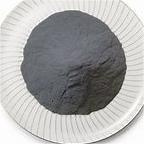
High-Density Grinding Media Balls for Industrial Applications

A Story of Two Finishes
Let me tell you about the first time I saw silicon carbide powder change a project. A client brought in a hardened steel bearing race. It had a stubborn, uneven surface after grinding. The workshop was using a common brown aluminum oxide. Progress was agonizingly slow. The finish remained hazy. I suggested they try a slurry of F400 silicon carbide powder for lapping metal surfaces. The results stunned them. Within minutes, the metal shone. It wasn’t just about speed. It was about achieving a true, flat, and reflective surface finish that seemed impossible before. That day cemented my trust in this material. But is it always the best choice? Let’s compare.

Silicon Carbide vs. Aluminium Oxide: The Head-to-Head Comparison
Choosing your abrasive is the most critical decision in lapping. Many turn to aluminum oxide out of habit. A systematic comparison reveals the clear winner for different tasks. This table breaks down the key factors you need to know.
| Criteria | Silicon Carbide Powder | Aluminum Oxide Powder |
|---|---|---|
| Hardness (Mohs Scale) | ~9.5 (Extremely Hard) | ~9.0 (Very Hard) |
| Primary Character | Sharp, brittle, fast-cutting | Tough, friable, durable |
| Best For | Rapid stock removal, finishing hard materials (steel, carbide), achieving high flatness | General purpose grinding, finishing softer metals, where edge retention is key |
| Cutting Speed on Hard Metals | Superior. Sharp grains fracture to create new cutting edges continuously. | Good, but slower. Grains wear down more gradually. |
| Surface Finish Potential | Can produce an excellent, clean, reflective finish with proper technique and fine grits. | Often leaves a slightly ‘softer’ or more matte finish on hardened metals. |
| Workpiece Material Suitability | Ideal for hardened steel, cast iron, ceramics, and non-ferrous metals like brass. | Better suited for softer steels, alloys, and general ferrous metals. |
| Consistency & Purity | High-quality powder offers consistent particle size for predictable results. | Widely available; consistency varies by manufacturer grade. |
| Key Limitation | Can be too aggressive for very soft metals, leading to deep scratching. | May ‘glaze’ or burnish a hard surface instead of cutting it effectively. |
The logic is straightforward. Silicon carbide powder is harder and sharper. This gives it an inherent advantage in cutting speed and final finish on hard metals. Its brittleness is a feature, not a flaw. As grains micro-fracture, they expose fresh, sharp edges. This maintains a consistent cutting action. Aluminum oxide is tougher. It rolls and wears, which can sometimes polish rather than cut on hardened materials.
Mastering Your Lapping Process with Silicon Carbide
Choosing silicon carbide is just the start. To unlock its full potential, you must control the variables.
Grit Size Strategy: The Path to a Perfect Finish
Never start with a fine grit. You will waste time and achieve poor results. Follow a logical progression.
- Coarse Grits (F80 – F220): Use these for initial stock removal and correcting major flatness errors on a damaged surface.
- Medium Grits (F320 – F600): This is your workhorse stage. It removes the scratches from the coarse grit and establishes the foundation for the final finish.
- Fine Grits (F800 – F1200+): Employ these for the final lapping passes to achieve a true mirror or micro-inch finish. Each stage must completely remove the scratches from the previous one.
Mixing the Perfect Slurry
The carrier fluid matters. For most metal lapping, a light mineral oil or honing oil is best. It suspends the abrasive, lubricates the cut, and carries away swarf. A typical starting ratio is 1 part silicon carbide powder to 3 parts oil by volume. Add powder slowly and mix thoroughly. For water-sensitive metals or where oil contamination is a concern, use water with a rust inhibitor. The consistency should be like thin cream.

Technique, Pressure, and Cleanliness
Apply the slurry evenly on your lapping plate. Use a light, consistent pressure. Let the abrasive do the work. Excessive pressure embeds particles and creates deep scratches. Move the workpiece in a figure-eight pattern. This ensures even wear on both the part and the plate. Control your lapping time. Check progress frequently. Over-lapping wastes material and can round edges.
Cleaning is non-negotiable. After finishing with a fine grit, you must remove all abrasive residue. Use a sequence of clean solvents or detergents in an ultrasonic cleaner if possible. Any leftover grit will ruin the next processing step or the part’s function.
Safety First, Always
Wear a NIOSH-approved N95 dust mask when handling dry powder. Use eye protection and gloves. Work in a well-ventilated area. Contain the slurry to prevent slips and environmental contamination.
Making Your Decision and Next Steps
So, when do you choose silicon carbide powder for lapping metal surfaces? The answer is clear. Choose it when you need maximum cutting speed on hard materials like tool steel or cast iron. Choose it when your primary goal is exceptional flatness and a refined, reflective surface finish. For general-purpose work on softer alloys or where you need a more forgiving abrasive, aluminum oxide remains a solid choice.

Your next step is to test. Theory guides, but practise confirms. Start with a small batch of high-quality silicon carbide powder-consistency is critical here-and run a trial on a sample piece. Use the grit progression and slurry mixing advice I’ve shared. You will feel the difference in cutting speed. You will see the difference in the final finish. It turns a laborious task into a precise, efficient, and satisfying process. That’s the real power of choosing the right tool for the job.
eduloc founded on October 17, 2012, is a high-tech enterprise committed to the research and development, production, processing, sales and technical services of ceramic relative materials such as Choosing. Our products includes but not limited to Boron Carbide Ceramic Products, Boron Nitride Ceramic Products, Silicon Carbide Ceramic Products, Silicon Nitride Ceramic Products, Zirconium Dioxide Ceramic Products, etc. If you are interested, please feel free to contact us.
RELATED POSTS
Indium Phosphide (InP)-Wafer
The common problems in the use and maintenance of lithium batteries
Strontium acetate hemihydrate (Sr(OOCCH3)2•0.5H2O)- Crystalline
3D Printing Alloy Metal Materials Iron Nickel Alloy InVar36 Metal Powder
Applications of Tantalum Carbide TaC Powder