High-Density Grinding Media Balls for Industrial Applications

Green Silicon Carbide: The Unmatched Abrasive for Ultimate Surface Finishes
For achieving the lowest possible surface roughness on precision components, green silicon carbide powder for superfinishing is the definitive choice. This synthetic abrasive, distinguished by its high purity and exceptional hardness, excels in micro-removal applications where surface integrity is paramount. Its fundamental role is the controlled, minute stock removal needed to transition from a fine ground finish to a mirror-like, functionally superior surface.
Why Green Silicon Carbide Outperforms Alternatives
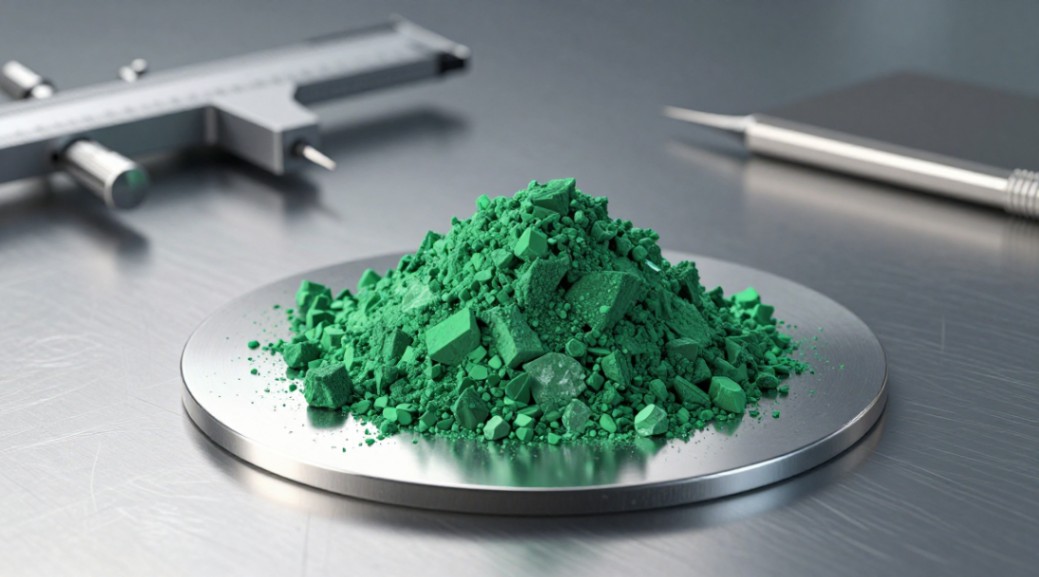
The primary advantage of green SiC lies in its intrinsic properties. It is harder than black silicon carbide and significantly harder than alumina (Al2O3), which translates directly to cutting efficiency and edge retention. More critically, its grain structure is sharper and more friable. During the superfinishing process, these sharp grains fracture predictably, continuously exposing fresh, sharp cutting points. This self-sharpening action prevents the dull, burnishing effect common with softer abrasives, which can smear material and induce undesirable tensile stresses.
The Critical Mistake: Using the Wrong Grit Size
One of the most frequent errors is selecting a grit size based on habit rather than the specific stock removal and finish requirements. For true superfinishing operations-honing, lapping, and precision polishing-you must operate in the fine and ultra-fine spectrum.
| Application Phase | Recommended Grit Range | Target Surface Roughness (Ra) | Primary Function |
|---|---|---|---|
| Pre-Superfinishing Prep | F600 – F800 | 0.2 – 0.4 µm | Remove previous grind marks |
| Primary Superfinishing | F1000 – F1200 | 0.05 – 0.1 µm | Majority of micro-stock removal |
| Final Finishing / Polishing | F1500 – F2000+ | < 0.025 µm | Achieve mirror finish and compressive stress |
Using a grit coarser than F800 for the final process will leave visible scratches. Conversely, starting with F2000 on a poorly prepared surface will take far too long and glaze the abrasive. The progression is non-negotiable.
The Hidden Risk in Powder Consistency
Not all green silicon carbide powder is created equal. The pursuit of low cost often leads to catastrophic inconsistencies in surface finish. Two powder characteristics are non-negotiable: chemical purity and tight particle size distribution (PSD).
Impurities like free silicon, carbon, or metallic inclusions act as rogue elements. They can cause deep, random scratches that destroy a workpiece in seconds. A broad PSD means a mix of large and small grains in the same batch; the larger grains do the majority of the cutting, creating a rougher finish than the nominal grit size suggests. You are not buying a powder; you are buying a guarantee of consistency. As one user on a precision machining forum noted, ‘Switching to a certified high-purity powder with a documented PSD cut our reject rate on medical implant finishing by over 60%. The cost per kilo became irrelevant.’
Application Methods: Precision in Practice
Green silicon carbide powder is rarely used dry. It is dispersed within a medium that controls lubrication, cooling, and particle suspension. The choice of medium is a critical process parameter.
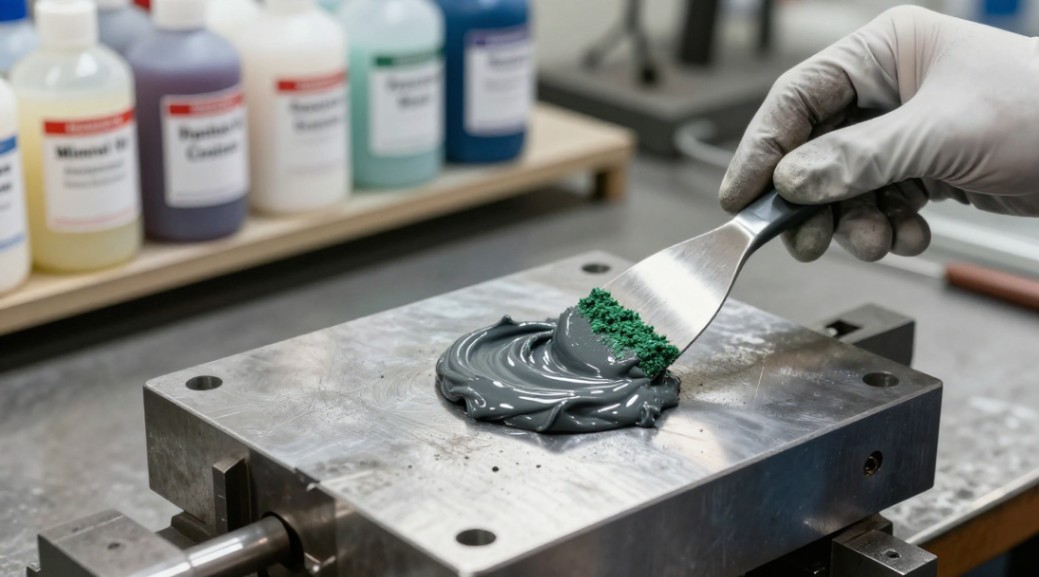
- Honing Oils: The most common carrier for honing stones and tools. A typical mix ratio is 1 part abrasive powder to 4 to 6 parts honing oil by weight (e.g., 200g powder per liter of oil). The oil must have the correct viscosity to hold the powder in suspension without settling.
- Lapping & Polishing Compounds: Here, the powder is blended into a paste or gel carrier, often with additives like stearic acid. For manual polishing, a dab of compound (approx. 0.5 cm³) on a cloth wheel is sufficient. For lapping machines, a slurry of 15-25% abrasive by weight in a water-soluble vehicle is standard.
- Suspensions: Used in advanced free-abrasive machining. The concentration is tightly controlled, often between 10-30% solids by weight, and continuously agitated.
Material-Specific Warnings
While versatile, applying the same green SiC process to all materials is a mistake.
For hardened steels and carbides, green SiC is excellent. However, for finishing soft, non-ferrous metals like aluminum or copper, the extreme hardness can lead to grain embedment. In these cases, a diamond abrasive in a softer matrix is often superior. For silicon wafers or certain ceramics, the potential for silicon transfer from the abrasive must be evaluated; a high-purity, washed powder is mandatory.
Industries Demanding This Level of Finish
The applications for green silicon carbide powder for superfinishing define the high-tech frontier of manufacturing.
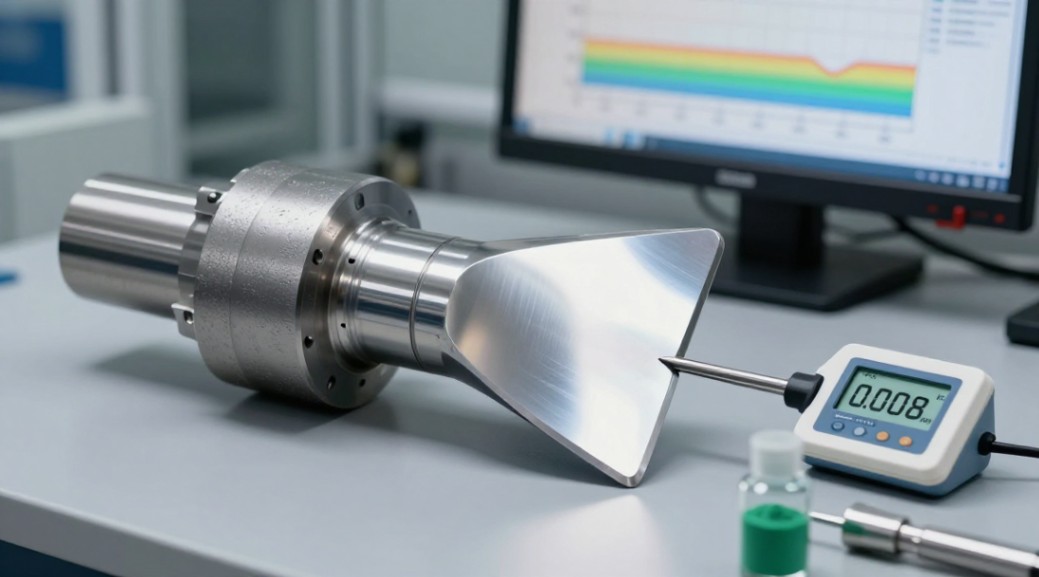
- Aerospace: Finishing fuel injection nozzles, turbine blade roots, and high-load bearing surfaces to reduce friction and fatigue.
- Medical Devices: Creating flawless, biocompatible surfaces on surgical implants (hips, knees) and stainless steel instruments.
- Automotive: Superfinishing crankshaft journals, cam lobes, and transmission components for longevity and reduced emissions.
- Optics Manufacturing: Lapping and polishing substrates for lenses, mirrors, and laser components prior to final coating.
Safety: A Non-Negotiable Protocol
Fine abrasive powders pose real health and contamination risks. Never handle them without proper PPE: NIOSH-approved N95 respirators or better, safety glasses, and gloves. Work should be conducted in well-ventilated areas or under local exhaust ventilation. Spills must be cleaned with HEPA-filtered vacuums, never dry-swept, to prevent airborne dispersion. Cross-contamination can ruin workpieces; dedicate tools and areas for each grit size.
Achieving the Final Result: Surface Integrity
The end goal of using green silicon carbide powder for superfinishing is not just a shiny surface. It is superior surface integrity. This encompasses the achieved micro-inch roughness (Ra values down to 0.01 µm or less), the maintenance of sub-micron geometric tolerances, and, crucially, the induction of a shallow layer of compressive residual stress. This compressive layer inhibits crack initiation, dramatically improving the component’s fatigue life and wear resistance.
The Path to Flawless Finishes
Avoiding these common pitfalls requires a disciplined approach. First, audit your current process against the grit progression table. Second, source powder from suppliers who provide certified analysis sheets for purity and PSD. Third, rigorously control your abrasive mixing ratios and application methods. For operations where achieving these parameters in-house is challenging, partnering with a specialist who supplies pre-formulated superfinishing compounds containing precisely graded green silicon carbide powder can eliminate variability. The objective data is clear: controlled micro-removal with the correct abrasive directly correlates to part performance and longevity. Invest in the process, and the results will speak for themselves.
eduloc founded on October 17, 2012, is a high-tech enterprise committed to the research and development, production, processing, sales and technical services of ceramic relative materials such as 7. Our products includes but not limited to Boron Carbide Ceramic Products, Boron Nitride Ceramic Products, Silicon Carbide Ceramic Products, Silicon Nitride Ceramic Products, Zirconium Dioxide Ceramic Products, etc. If you are interested, please feel free to contact us.
RELATED POSTS
Silicon Carbide Balls Break Through The Processing Difficulties Of Magnetic Fluid Seals
Iron Nickel Alloy (FeNi)-Sputtering Target
Biomedicine: Zirconium Dioxide Ball Sterile Grinding Technology Breakthrough
how to grind potassium nitrate with ball mill
Gold Zinc Alloy (AuZn (88:12 Wt%))-Shots