High-Density Grinding Media Balls for Industrial Applications

Frustrated by Leaking Valves After a Lapping Job?
You have just lapped a valve seat with a coarser compound. The surface looks good, but you get a faint hiss during a vacuum test. A fine oil seepage appears after reassembly. The problem is not the job itself, but the final finish. Many mechanics encounter this precise frustration. The missing link is often the final, critical step of micro-finishing with a very fine abrasive, where 600 grit silicon carbide powder for valve grinding excels. This article directly compares this specialized material to other common methods, helping you decide when it’s the right tool for the job.
What is 600 Grit Silicon Carbide Abrasive Powder?
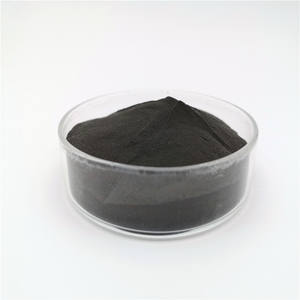
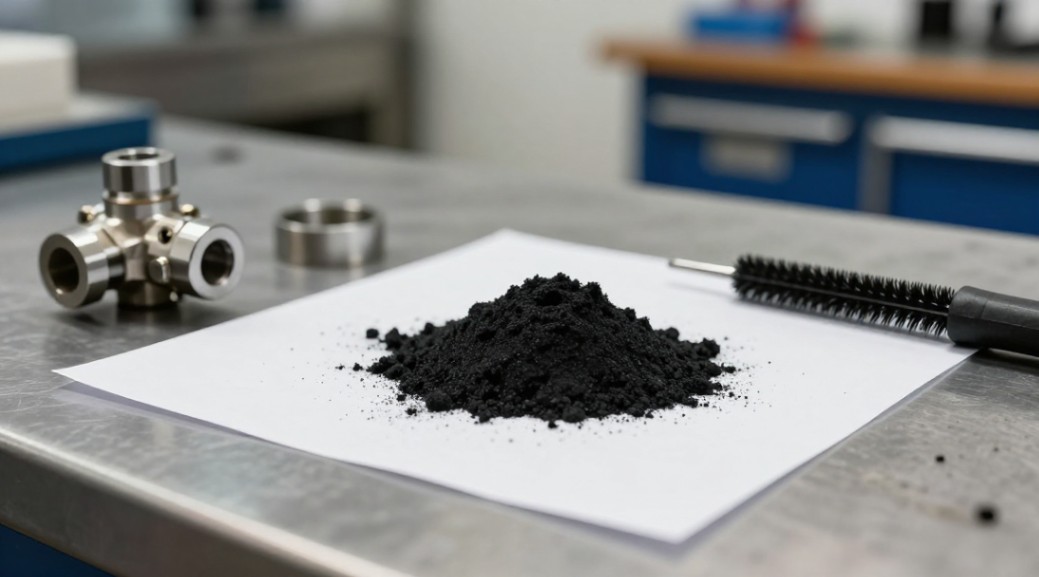
Silicon carbide (SiC) is a synthetic ceramic abrasive known for exceptional hardness and friability. Its Mohs hardness of 9-9.5 exceeds that of aluminum oxide, making it uniquely suited for cutting hard materials like stellite, stainless steel, and hardened valve seats. The 600 grit silicon carbide abrasive powder for valve grinding specification refers to particles approximately 9.3 microns in median diameter. This ultra-fine grade is engineered for finishing, not material removal. Its purpose is to create the final micro-surface texture required for a perfect, gas-tight seal, effectively eliminating the microscopic grooves left by coarser grits.
Why Choose 600 Grit Silicon Carbide for Valve Lapping?
For final-stage valve lapping, 600 grit SiC offers specific advantages over other abrasive options. Its primary benefit is precision finishing.
Advantages vs. Coarser Grits (80-280 Grit)
- Superior Finish: Creates a near-mirror, low Ra (roughness average) surface essential for sealing, where coarser grits only perform bulk removal.
- Eliminates Leak Paths: Polishes out the deep scratches from previous stages that can act as micro-leakage channels.
- Controlled Material Removal: Removes a negligible amount of material, preserving valve geometry and seat angle integrity.
Advantages vs. Finer Grits (1200+)
- Effective Cutting Action: 600 grit still has enough “tooth” to efficiently cut the peaks left by a 280-400 grit pre-finish. Grits above 800 may simply burnish the surface without improving flatness.
- Practical Working Time: It achieves the target finish faster than a 1200 grit compound, reducing the risk of bell-mouthing the seat from excessive lapping.
Advantages vs. Aluminum Oxide Powders
- Hardness: SiC is significantly harder, making it the only logical choice for lapping ultra-hard alloys like stellite-faced valves or high-performance seat inserts. Aluminum oxide will glaze and become ineffective.
- Sharpness: The particles fracture to maintain sharp edges, providing a more consistent cut throughout the lapping process.
How Does It Compare to Dedicated Valve Grinding Machines?
This is a critical decision point. The choice is not about which is universally better, but which is appropriate for the context.
Manual Lapping with 600 Grit SiC: The Specialist’s Choice
Best for: Final finishing after machine work, high-performance builds, antique engines with soft seats, field repairs, and achieving the absolute best possible seal on a critical application.
- Pros: Achieves the finest possible surface finish for a perfect seal. Low cost per job. Portable and requires no power. Unmatched for blending and polishing a seat after a cutting stone touches it.
- Cons: Labour-intensive for multi-valve heads. Requires significant skill to maintain the correct angle and pressure. Not for major seat correction or angle changes.
Dedicated Valve Grinding Machines: The Production Tool
Best for: High-volume shop work, restoring severely worn or pitted seats, correcting seat runout, and consistently reproducing a specific seat width and angle.
- Pros: Fast, repeatable, and removes material aggressively to establish geometry. Essential for serious valve jobs. Takes human skill variation out of the equation for the initial cut.
- Cons: High initial investment. The cutting stones, even fine ones, leave a surface that benefits from a final hand lap with a fine compound like 600 grit SiC for optimal sealing. Risk of removing too much material if not operated carefully.
As one experienced user on a machining forum noted, “The machine gets it 95% there and true. The final hand lap with 600 grit paste is what gets you that last 5% for a guaranteed seal. I never skip it on a performance engine.”
Step-by-Step Guide: Using 600 Grit SiC Powder
Precision is key. Here is the detailed procedure.
1. Preparation and Mixing
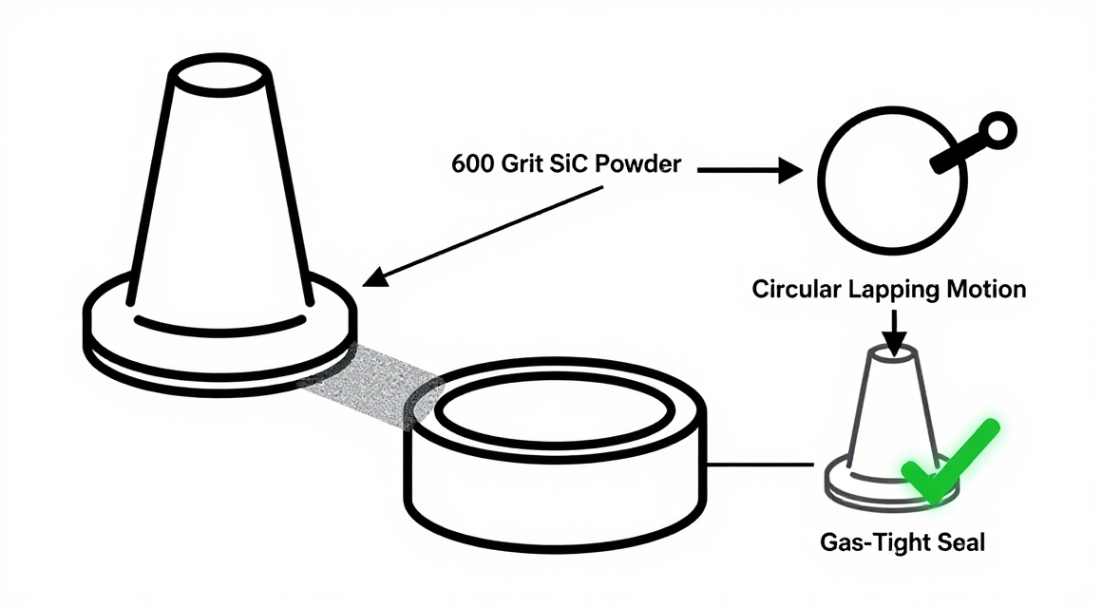
Ensure the valve and seat are perfectly clean from all previous abrasives. Use brake cleaner and lint-free cloths. To mix the 600 grit silicon carbide abrasive powder, use a clean glass or ceramic dish. A standard ratio is 1 part powder by volume to 2-3 parts carrier fluid. For general use, a light honing oil or mineral oil provides good suspension and control. For a faster cut where cleanup is easier, use water with a drop of detergent. Mix with a clean tool (like a popsicle stick) to a smooth, toothpaste-like consistency.
2. Application and Lapping Technique
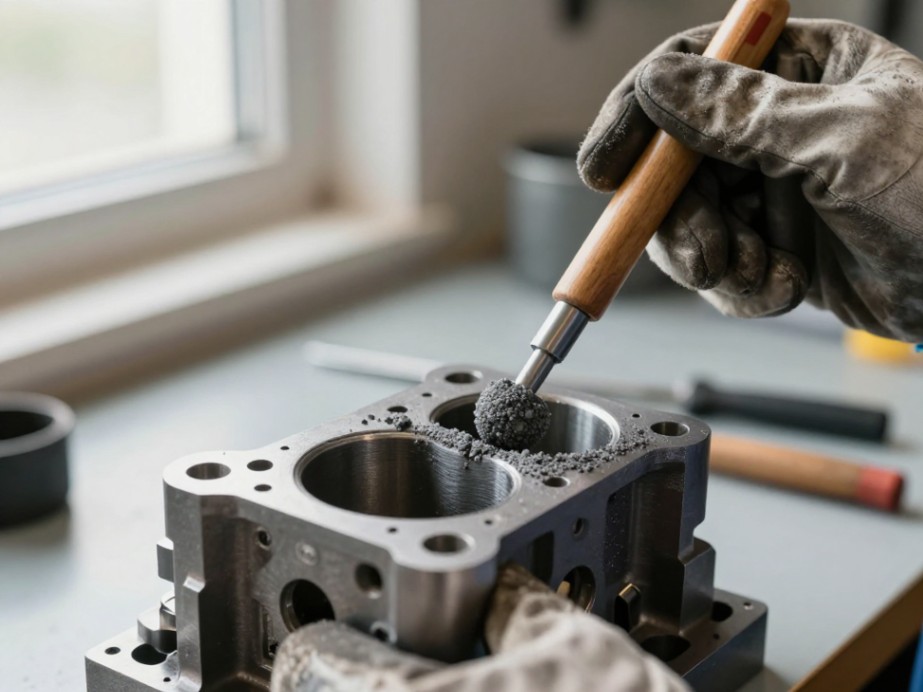
Apply a small bead of compound, no more than 3-4mm in diameter, to the valve face. Insert the valve into the guide. Use a quality suction cup lapping tool. Apply light, consistent downward pressure-typically 5-10 lbs (2.2-4.5 kg) is sufficient. Rotate the tool back and forth through a 60-90 degree arc, lifting and rotating the valve 1/8th of a turn every 5-10 strokes to ensure even wear. Lap for 15-30 seconds initially, then inspect.
3. Inspection, Cleaning, and Verification
Clean all compound off both the valve and seat completely using solvent and clean rags. The final pattern should be a uniform, dull gray matte finish around the entire seat width. A bright, reflective ring indicates proper contact. Use Prussian blue or a fine-tip marker to verify contact is centered and complete. The process is complete when a consistent, fine pattern is achieved across the entire seating surface.
| Step | Key Action | Precise Specification / Tip |
|---|---|---|
| 1. Mixing | Combine powder & carrier | Ratio: 1:2-3 by volume. Consistency: Thick paste. |
| 2. Application | Apply to valve face | Amount: ~3-4mm diameter bead. Avoid over-application. |
| 3. Lapping | Rotate tool & valve | Pressure: 5-10 lbs (2.2-4.5 kg). Duration: 15-30 sec intervals. |
| 4. Inspection | Clean & check pattern | Finish: Uniform dull gray matte. Verify with marker dye. |
| 5. Completion | Final cleaning | Use solvent & lint-free cloths to remove all abrasive residue. |
Critical Safety and Best Practices
- Respiratory Protection: Always wear a NIOSH-approved N95 mask or better when handling the dry powder. Silicon carbide dust is a respiratory irritant.
- Contamination Control: This is the most common cause of failure. Use separate, clean mixing tools and applicators for each grit grade. Never let a coarser compound contaminate your 600 grit powder or mixing dish.
- Valve Material Suitability: 600 grit silicon carbide abrasive powder for valve grinding is ideal for hardened steels, stellite, and most iron seats. Avoid using it on soft materials like aluminum or bronze seats, as it can embed and cause rapid wear. For those, use a finer aluminum oxide or a dedicated lapping paste.
Sourcing Quality 600 Grit Silicon Carbide Powder
Not all abrasive powders are equal. For valve work, you need a consistent, contaminant-free product. Seek suppliers specializing in precision abrasives for the automotive or metallurgical industries, not generic industrial suppliers. The powder should be labeled as “F600” or “600 grit” with a micron size around 9.3. It should be free-flowing and contain no visible clumps. Reputable brands used in machine shops and engine building communities are your safest bet. Avoid unknown, cheap bulk powders; inconsistent particle size can ruin a carefully prepared seat.
Make the Right Choice for a Perfect Seal
If your goal is the ultimate sealing surface on hardened materials, manual lapping with 600 grit silicon carbide abrasive powder is the definitive final step. It is the tool that bridges the gap between a geometrically correct valve job and a functionally leak-proof one. For production speed or major seat correction, start with a machine. But for the final, critical finish, the control and result provided by this specific ceramic abrasive are unmatched.
Do not compromise your engine’s sealing integrity. For your next critical valve lapping project, ensure you have a high-quality F600 silicon carbide powder in your toolkit. It is the difference between a job that looks done and one that is definitively sealed. Source your powder from a trusted abrasive specialist and experience the difference in finish quality firsthand.
eduloc founded on October 17, 2012, is a high-tech enterprise committed to the research and development, production, processing, sales and technical services of ceramic relative materials such as 600. Our products includes but not limited to Boron Carbide Ceramic Products, Boron Nitride Ceramic Products, Silicon Carbide Ceramic Products, Silicon Nitride Ceramic Products, Zirconium Dioxide Ceramic Products, etc. If you are interested, please feel free to contact us.
RELATED POSTS
Indium Arsenide (InAs)-Ingot
Why should polycarboxylate superplasticizer be added to concrete
Domestic Zirconium Dioxide Balls Break The Foreign Technology Monopoly
Digital and intelligent reshaping of the superplasticizer industry, leading a new leap in concrete technology concrete mixer
How to Find Reliable Silicon Carbide Powder Suppliers for Foundry Applications (A Step-by-Step Guide)