High-Density Grinding Media Balls for Industrial Applications

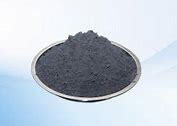
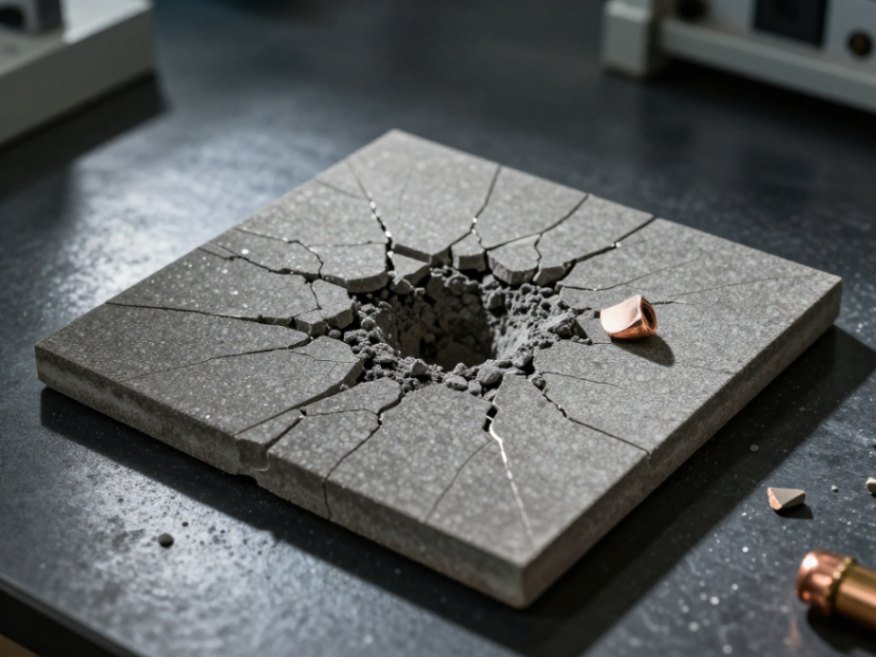
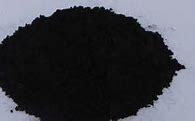
I remember the first time I handled a silicon carbide ceramic tile that had stopped a high-velocity round. It wasn’t the pristine, glossy surface you see in product catalogs. It was a fractured mosaic of hexagonal patterns, the epicenter a pulverized crater, but the backside was intact. The backing material had deformed, but it held. That single tile, born from a fine, dark powder, had redistributed energy across its face and shattered the projectile. That moment cemented my understanding: armor isn’t just a material; it’s a carefully orchestrated sequence of failure. The journey from that inert silicon carbide powder to a life-saving component in composite armor is a precise, demanding craft. If you’re looking to understand or implement this technology, you must follow the process. Here is how it’s done.
The Foundation: Why Silicon Carbide Powder is Chosen
You start with the powder. This isn’t a trivial choice. The performance of your final ceramic tile hinges on the intrinsic properties of the silicon carbide granules. For composite armor applications, you select powder for three non-negotiable traits: hardness, low density, and compressive strength. Silicon carbide sits at a 9.5 on the Mohs scale, just below diamond and boron carbide. This extreme hardness is your first line of defense; it must be harder than the projectile’s core to blunt and erode it. Its density, typically around 3.1 g/cm³, provides a critical lightweighting advantage. Compare this to alumina at ~3.9 g/cm³ or steel at 7.8 g/cm³. For a vehicle or a soldier, every saved kilogram translates to greater mobility and fuel efficiency. Finally, its compressive strength-its ability to resist being squeezed-is exceptional. This allows the tile to absorb the massive initial shockwave of impact without immediate catastrophic failure. The ballistic performance mechanism begins here, with these powder properties.
The Crucible: Processing Powder into Protective Tile
Raw powder is useless. You must consolidate it. The primary method is sintering, a high-temperature process that bonds the powder particles into a dense, monolithic ceramic without melting them. You begin by forming the powder. This involves mixing the SiC powder with temporary binders and pressing it into a near-net-shape tile under immense pressure-often via dry pressing or isostatic pressing. Consistency here is paramount; any density gradient becomes a fatal flaw. The green tile then enters a furnace under a controlled atmosphere, heated to temperatures exceeding 2000°C. During sintering, atomic diffusion across particle boundaries fuses them together. The result is a polycrystalline ceramic tile of remarkable integrity. The goal is to achieve near-theoretical density. Any residual porosity acts as a stress concentrator, a ready site for crack initiation. This sintered tile now possesses the hardness to fracture an armor-piercing core and the monolithic structure to spread the impact load laterally. This is the hard phase, the brittle but essential front layer.
The System: Integrating Tile into Composite Armor
A standalone ceramic tile will fail. This is a fundamental principle. The ceramic’s job is to blunt and break the projectile; it is sacrificial. The system’s job is to catch the remaining debris and absorb the residual energy. This is where composite armor design takes over. Your first step is to bond the sintered silicon carbide tile to a backing plate. This is typically a ductile, fiber-reinforced polymer composite, like UHMWPE (ultra-high-molecular-weight polyethylene) or aramid (Kevlar). The adhesive layer itself is an engineering choice-it must be strong enough to hold during handling but allow for some controlled delamination upon impact to dissipate energy. You then assemble this into a multilayered armor system. The sequence is always: strike face (SiC tile), adhesive interlayer, composite backing, and often a final spall liner. Upon impact, the SiC tile fractures in a conoidal pattern, converting the projectile’s kinetic energy into the work of fracturing the ceramic. The backing material then catches this ceramic and projectile debris, deforming plastically to absorb the remaining energy over a larger area and longer time. This synergy defines modern protection.

The Rationale: Comparisons and Applications
Why choose silicon carbide over other ceramics? The decision rests on a cost-to-performance ratio analysis for your specific threat profile. Boron carbide (B4C) is harder and lighter, making it the premier choice for the most demanding personal body armor plates. But it is significantly more expensive and can suffer from anomalous oxidation under extreme conditions. Alumina is far less expensive and very hard, but its higher density makes it prohibitive for weight-sensitive applications. Silicon carbide occupies the strategic middle ground. It offers superior performance to alumina at a lower weight and is more cost-effective than boron carbide for many threats. This makes it the workhorse for vehicle armor on light tactical trucks, helicopter seats, and naval components. Its utility extends beyond direct defence; its high hardness and thermal stability make it ideal for blast containment vessels in industrial settings and for wear-resistant linings. You select SiC when your design parameters demand a balance of performance, weight, and budget.
The Evolution and Your Next Step
The field does not stand still. Future material development is pushing towards hybrid composites and graded structures. We are experimenting with doping SiC powders with other compounds to tweak fracture toughness, or creating layered ceramics where the composition changes from the strike face to the rear. Some are exploring silicon carbide as a granular component directly mixed into metal matrices, creating ceramic-metal composites. The principle, however, remains: harness the hardness of the ceramic and the toughness of a backing. If your project requires ballistic or blast protection, you must test. Theoretical understanding is nothing without empirical validation against relevant threat levels. This is not a domain for guesswork.
Therefore, your definitive action is clear. You must procure sintered silicon carbide ceramic tiles from a qualified manufacturer with a proven track record in defence or severe industrial applications. Do not attempt to source raw powder and sinter it yourself without specialized kilns and metallurgical expertise. The margin for error is zero. Partner with a fabricator who understands the integration into multilayered armor systems. Specify your threat profile-are you stopping fragments, pistol rounds, or armor-piercing rifle fire? Demand certified test data. Then, prototype your composite layup. Test it. Iterate. The path from that dark, abrasive powder to a saved life is linear, but it must be walked with precision. Begin by sourcing the right ceramic component. Your system’s integrity depends on it.
eduloc founded on October 17, 2012, is a high-tech enterprise committed to the research and development, production, processing, sales and technical services of ceramic relative materials such as From. Our products includes but not limited to Boron Carbide Ceramic Products, Boron Nitride Ceramic Products, Silicon Carbide Ceramic Products, Silicon Nitride Ceramic Products, Zirconium Dioxide Ceramic Products, etc. If you are interested, please feel free to contact us.
RELATED POSTS
Properties and Functions of Retarders and Foaming Agent

Revolutionizing Manufacturing: The Power of Metal Powder in 3D Printing 3d modeling for 3d printing
Cerium(III) Nitrate Hexahydrate (Ce(NO3)3•6H2O)-Powder
Optimization Of Alumina Ball Particle Size Distribution, Grinding Efficiency Increased By 20%
Aluminum Titanium (AlTi)-Sputtering Target