High-Density Grinding Media Balls for Industrial Applications

A Scouring Powder for Your Lungs
I watched a veteran abrasive grinder in a ceramics shop hack into a tissue for five minutes. His shoulders shook. This wasn’t a cold. He’d been breathing what the industry calls ‘nuisance dust.’ For twenty years. His chest X-ray told a different story: a landscape of fine, permanent scars. The material he worked with? Silicon carbide. His employer’s safety manual? A single line: ‘Wear a dust mask.’ This story isn’t rare. It’s a systemic failure to understand the real silicon carbide dust health hazards and safety protocol required.
Why “Nuisance Dust” Is a Dangerous Lie
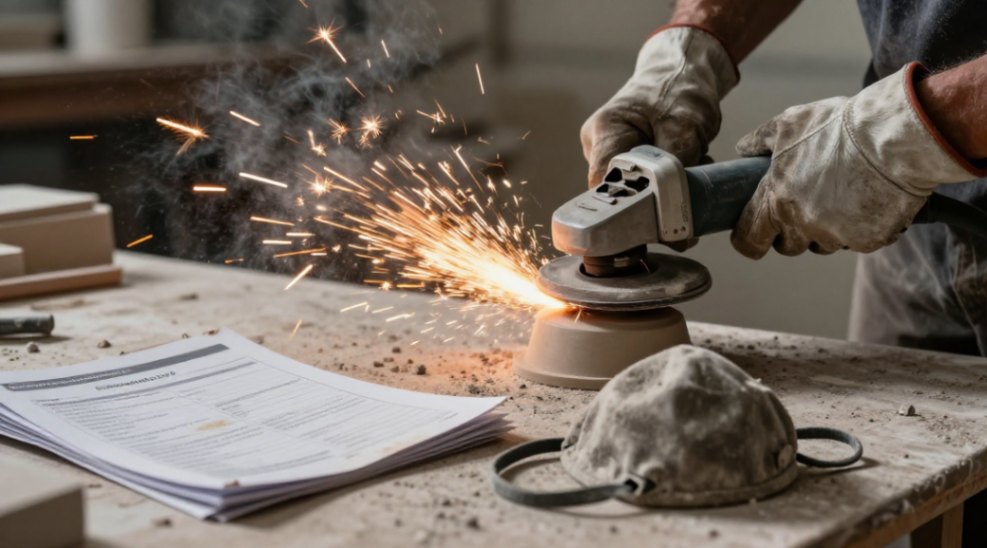
The old-school term ‘nuisance dust’ is a relic. It implies minor, reversible irritation. For silicon carbide dust, that’s a lethal misconception. The hazard isn’t chemical toxicity, like lead or arsenic. It’s physical. When processed-cut, ground, polished-silicon carbide ceramics fracture into particles smaller than 10 microns. Many are under 4 microns. These dimensions are perfectly engineered for respirability. They bypass your body’s natural defenses-nose hairs, throat mucus-and travel deep into the alveolar region of the lungs. Your body’s immune cells, the macrophages, try to engulf these sharp, angular, and incredibly hard fragments. They fail. The result is chronic inflammation and fibrosis. This is not guesswork. Scan industry forums like Reddit or specialized safety groups. You’ll find users reporting persistent coughs, wheezing, and diagnoses of ‘industrial bronchitis’ after years of SiC work. These are early warning signs the safety data sheets often bury.
Decoding the Real Chronic Risk: Not Silica, But Just as Damaging
Let’s crush a major point of confusion. Crystalline silica (like quartz) causes silicosis, a specific, regulated disease. Silicon carbide dust does not contain free crystalline silica. So, many facilities wrongly assume zero risk of lung scarring. This is a catastrophic error. Medical literature and NIOSH recognise that prolonged, heavy exposure to SiC dust can cause a condition known as silicon carbide pneumoconiosis. The clinical presentation-shortness of breath, reduced lung function, radiographic lung scarring-mirrors other dust diseases. OSHA’s permissible exposure limit (PEL) for SiC as a ‘nuisance dust’ is 15 mg/m³ (total dust) and 5 mg/m³ (respirable fraction). Treat these as legal maximums, not safe thresholds. The goal for any responsible operation should be ALARA-As Low As Reasonably Achievable. If you can see dust in the air, you are almost certainly exceeding exposure limits for respirable particles.
The Three-Layered Defense: Beyond the Paper Mask
Safety requires a hierarchy. Relying solely on personal protective equipment like respirators is the last line of defence, and a common failure point.
1. Engineering Controls: Contain It at the Source
Ventilation is non-negotiable. Local exhaust ventilation (LEV)-hoods and ducts placed within inches of the grinding, cutting, or blasting point-must capture dust before it enters the worker’s breathing zone. General room ventilation is useless for control. For operations like tumbling or large-scale sawing, complete enclosure with negative air pressure is the gold standard. Wet methods are supremely effective. Using water-fed tools or spray misting suppresses dust generation at the source. It’s not just ‘good practice’; for high-energy processes, it should be mandatory.
2. Administrative Controls: Change the Behavior
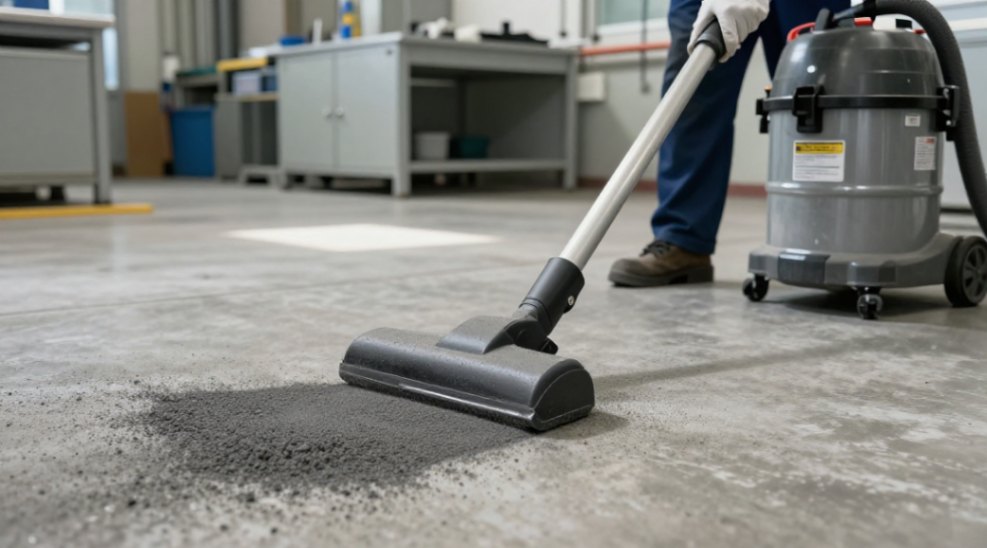
Safe handling procedures dictate using HEPA-filtered vacuum systems for cleanup-never dry sweeping or compressed air, which aerosolizes fine dust. Hazard communication must be explicit. SDS sheets should highlight the risk of pneumoconiosis, not just irritation. Implement strict housekeeping schedules and designate separate areas for ‘dirty’ and ‘clean’ tasks.
3. Personal Protective Equipment: The Final Seal
A simple dust mask is grossly inadequate. For significant exposure, you need a tight-fitting, NIOSH-approved respirator with N95/P100 filters at a minimum. For enclosed spaces or high-concentration tasks, a powered air-purifying respirator (PAPR) is superior. Combine this with protective clothing to prevent dust from being carried home.
The Silent Mandate: Medical Surveillance
If your operation generates silicon carbide dust, a pre-placement and periodic health monitoring programme is critical. This isn’t optional care; it’s a diagnostic tool. Annual lung function tests (spirometry) and a detailed occupational history with a physician can detect early changes long before symptoms become debilitating. It protects the company from liability and, more importantly, the worker from irreversible damage.
Storage and Disposal: The Hazard Doesn’t End at the Bin
Collected silicon carbide dust waste remains a hazard. Store it in sealed, labeled containers to prevent re-entrainment. Dispose of it in accordance with local regulations for industrial particulates. Treat it with the same respect as the raw material.

Stop Managing Perceptions, Start Managing Risk
The industry’s comfort with ‘low-toxicity’ dust is a time bomb. We have the data. We know the particle size. We understand the pathology. The gap is in execution and will. Your safety program needs an audit, not an update. If you handle silicon carbide ceramics in any form-from advanced refractory linings to precision abrasives-you must implement these controls yesterday. Your next step is to demand a professional, on-site industrial hygiene assessment. Measure the actual airborne concentrations. Review your PPE protocols. This isn’t about compliance paperwork. It’s about preventing the next veteran worker from becoming a medical case study. Get the assessment. Fix the system. Breathe easy, for real.
eduloc founded on October 17, 2012, is a high-tech enterprise committed to the research and development, production, processing, sales and technical services of ceramic relative materials such as Silicon. Our products includes but not limited to Boron Carbide Ceramic Products, Boron Nitride Ceramic Products, Silicon Carbide Ceramic Products, Silicon Nitride Ceramic Products, Zirconium Dioxide Ceramic Products, etc. If you are interested, please feel free to contact us.
RELATED POSTS
What is Coarse 220 Grit SiC Powder for Concrete Grinding?
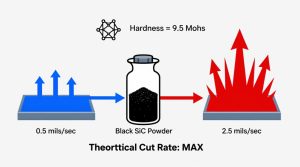
Black Silicon Carbide Powder for Sandblasting Media: The Hard Data on Performance & Profit
Copper Cu Powder CAS 7440-50-8
Germanium Antimonide (GeSb)-Granules
Cobalt-Chrome-Tungsten-Carbide-Nickel-Silicon Alloy Powder Co30Cr4.5W1C3Ni1.4Si|EDULO