High-Density Grinding Media Balls for Industrial Applications

Contrary to popular belief, the most critical factor in grinding a material like tungsten carbide is not pure pressure. It’s rapid heat dissipation. A typical green silicon carbide grinding wheel can conduct heat away from the workpiece surface over 50% more effectively than common aluminum oxide wheels. This single property prevents thermal damage, preserving the microstructure and cutting edge of the tool. That capability defines its market dominance.

What is Green Silicon Carbide Powder?
Green silicon carbide powder is a high-purity, synthetic abrasive compound composed of silicon and carbon (SiC). Manufacturers produce it in an electric resistance furnace at extreme temperatures (approximately 2200°C), using silica sand and petroleum coke as raw materials. A higher purity of raw materials and specific process controls yield its signature green-black crystalline appearance and superior properties compared to its black silicon carbide counterpart.
Its core characteristics are a direct result of its chemical purity and crystalline structure.
- Extreme Hardness: Mohs hardness of ~9.5, second only to diamond and cubic boron nitride (cBN). This allows it to abrade exceptionally hard materials.
- High Thermal Conductivity: It rapidly draws heat away from the grinding zone, a critical advantage for heat-sensitive materials.
- Sharp, Friable Crystals: Grains fracture under pressure to present fresh, sharp cutting edges. This self-sharpening action maintains cutting efficiency.
- Chemical Inertness: It resists reaction with most metals, ensuring a clean, uncontaminated cut.
Green vs. Black Silicon Carbide vs. Aluminum Oxide
The choice of abrasive directly determines grinding efficiency, finish quality, and cost. Here is a logical comparison.
- Green Silicon Carbide: Highest purity and sharpness. More brittle and friable than black SiC. Superior for hard, dense, low-tensile-strength materials like tungsten carbide, ceramics, and titanium. Its cost is higher.
- Black Silicon Carbide: Contains more free silicon and carbon, making it slightly tougher but less sharp. The economical choice for grinding non-ferrous metals (brass, aluminum), stone, glass fiber, and grey cast iron.
- Aluminum Oxide (Alumina): Tougher and more durable, but significantly less hard. The primary abrasive for all ferrous metals (steels, iron). It will load and glaze immediately when used on tungsten carbide.
Using aluminum oxide on tungsten carbide is ineffective. Using green silicon carbide on hardened steel is wasteful. Material science dictates the correct pairing.
Primary Role in Grinding Wheel Manufacturing
Green silicon carbide powder for grinding wheels is not used alone. Manufacturers combine it with a bonding agent to form a rigid, porous wheel structure. The powder’s properties dictate the wheel’s function.
Its primary, non-negotiable role is the precision grinding of cemented tungsten carbide (carbide) and non-ferrous superalloys. This includes:
- Tungsten Carbide Tool Grinding: Sharpening and re-sharpening of carbide-tipped cutting tools, inserts, and dies. The sharp grains and cool cutting action prevent micro-cracks.
- Titanium & Nickel Alloy Grinding: Essential for the aerospace industry. Titanium’s poor thermal conductivity makes heat management paramount; green SiC’s thermal conductivity is the solution.
- Ceramic and Glass Grinding: Its hardness allows it to cut advanced technical ceramics and glass composites where other abrasives fail.
Technical Specifications and Selection Guide
Specifying green silicon carbide powder requires understanding two key parameters: grain size and bond type.

Grain Size (Grit)
Grit size controls stock removal rate and surface finish. The standard FEPA or ANSI scale applies.
- Coarse Grits (P80 – P120): For rapid stock removal, rough grinding, and snagging. Leaves a deeper surface profile.
- Medium Grits (P150 – P220): The workhorse range for general-purpose carbide tool grinding and blending.
- Fine Grits (P240 and finer): For finishing, honing, and achieving very fine surface finishes (Ra values). Critical for precision tool edges.
Wheel Bond Types
The bond holds the abrasive grains in place. Its selection is as crucial as the abrasive itself.
- Vitrified Bond (Clay/Glass): Rigid, porous, and free-cutting. The most common bond for precision carbide grinding. It offers excellent dimensional stability.
- Resinoid Bond (Plastic/Phenolic): Provides more flexibility and dampening. Used for cutoff wheels and heavy-duty snagging where shock resistance is needed.
- Metal Bond: Used primarily for diamond and cBN superabrasive wheels, not typically for green SiC. However, specialized metal-bonded SiC wheels exist for ultra-durable applications.
For most toolroom applications grinding carbide, a vitrified bond wheel with a medium grit (like P180) offers the best balance of cut and finish.
Safety, Handling, and Operational Considerations
Grinding with any abrasive generates hazards. Proper handling mitigates risk.
- Respiratory Protection: Silicon carbide dust is a respiratory irritant. Always use local exhaust ventilation (LEV) and/or an approved particulate respirator.
- Eye and Face Protection: Full-face shields and safety glasses are mandatory. Flying particles and wheel rupture are significant risks.
- Wheel Integrity: Always perform a ring test on vitrified wheels before mounting. Never exceed the maximum safe operating speed (RPM) marked on the wheel.
- Coolant Use: When grinding carbide, use a water-soluble synthetic coolant. This suppresses dust, reduces heat, and extends wheel life. The coolant must be compatible with the wheel bond.
Market and Sourcing for Buyers
The global market for green silicon carbide powder is mature but quality varies. When sourcing, focus on consistency and technical support.
For buyers specifying green silicon carbide powder for grinding wheels, the decision logic follows this path:

- Define the Application: Is this for tungsten carbide, titanium, or a specialty ceramic? Volume and required finish dictate the starting point.
- Select the Grit and Bond: Use the guidelines above. Consult with a knowledgeable abrasive engineer. Their expertise often prevents costly trial-and-error. A reputable supplier will provide this consultation as part of the selection process.
- Evaluate Supplier Consistency: Demand certified test reports for chemical purity and grain size distribution. Batch-to-batch consistency is non-negotiable for repeatable grinding results.
- Consider Total Cost of Operation: The cheapest powder may lead to higher wheel wear, longer cycle times, and scrap parts. Calculate cost per ground piece, not cost per kilogram of abrasive.
Ultimately, green silicon carbide is a specialized tool. Its value lies in solving specific, high-cost grinding problems involving ultra-hard, heat-sensitive materials. For grinding hardened steel, use aluminium oxide. For grinding tungsten carbide, the logical and effective choice is green silicon carbide powder for grinding wheels.
eduloc founded on October 17, 2012, is a high-tech enterprise committed to the research and development, production, processing, sales and technical services of ceramic relative materials such as What. Our products includes but not limited to Boron Carbide Ceramic Products, Boron Nitride Ceramic Products, Silicon Carbide Ceramic Products, Silicon Nitride Ceramic Products, Zirconium Dioxide Ceramic Products, etc. If you are interested, please feel free to contact us.
RELATED POSTS
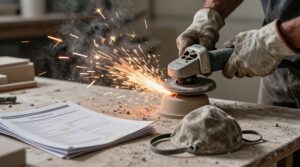
Silicon Carbide Dust: The Invisible Threat and How to Defeat It
Nano-Coating Of Stainless Steel Ball Assists Antibacterial Upgrade Of Medical Devices
Molybdenum Disulfide MoS2 For Lubrication
Zirconium Dioxide Balls Solve The Problem Of Precision Ceramic Sintering
Graphite-Silver (C-Ag)-Sputtering Target
