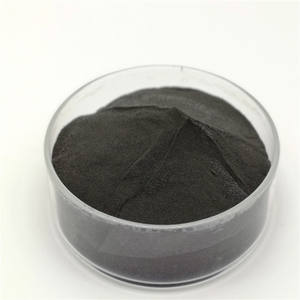
High-Density Grinding Media Balls for Industrial Applications

We’ve All Been There: The SiC Panic Moment
Your prototype passes all ground tests. It flies. Then, after 50 thermal cycles, a critical component fails. The post-mortem points to a material flaw: inconsistent particle size in the silicon carbide powder. Your schedule slips. Budgets balloon. Sound familiar? This pain point is why choosing an aerospace grade SiC powder supplier isn’t a procurement task; it’s a cornerstone of mission assurance. We’re talking about the ceramic backbone of components that must survive re-entry temperatures and extreme mechanical stress. Let’s fix this problem together, step by step.

The Aerospace Grade Difference: It’s Not Just a Label
Many suppliers sell ‘high-purity’ SiC powder. Aerospace grade is a different universe. Think commercial ceramic tile versus the tiles on the Space Shuttle. The gap is that wide. For aerospace, the powder isn’t just a raw material; it’s a performance-defining engineered substance.
Step 1: Decode the Spec Sheet (It’s a Trap)
Your first filter is the technical data sheet. Most will list purity. You need 99.9995% minimum for critical applications. Look for the details most miss: trace metal analysis. Even ppm-level impurities like iron or aluminum can catalyze oxidation or weaken grain boundaries at ultra-high temperatures. A true aerospace grade SiC powder supplier provides a full elemental analysis, not just a purity percentage.
Next, examine the particle size distribution (PSD). A note saying ‘D50 = 0.5 µm’ is useless. You need the full PSD curve. A wide distribution leads to poor packing density and unpredictable sintering behavior. The powder must be monodisperse. Consistency here directly translates to consistent component density and strength.
Step 2: Demand the Paper Trail (Certification is Everything)
In aerospace, if it isn’t documented, it didn’t happen. Your supplier must operate under AS9100 quality management systems. For processes like plasma synthesis or specialized sieving, look for NADCAP accreditation. But paperwork goes beyond certs.
- Lot-to-Lot Traceability: Can they trace a specific powder batch back to its raw material source and all process parameters?
- Certificate of Conformance (CoC) & Analysis (CoA): Each shipment must come with a CoC stating it meets your spec and a detailed CoA with actual test results for that batch.
- Material Safety Data Sheet (MSDS): Updated, compliant, and clear for handling.
Reddit forums and engineering communities are filled with horror stories about ‘certified’ powder that failed in-house verification. The lesson? Trust, but verify. Audit their documentation process yourself.

Step 3: Vet Their Process, Not Just Their Product
How the powder is made and handled matters as much as its final specs. Ask these questions:
- Synthesis Method: Do they use advanced plasma synthesis for superior sphericity and purity control, or a basic Acheson process? For UHTC applications pushing past 1800°C, the synthesis method is critical to delay active oxidation.
- Morphology Control: Can they deliver specific grain shapes (spherical, angular) for different composite manufacturing methods, like slurry infiltration for ceramic matrix composites (CMCs)?
- Contamination Prevention: How is powder handled, sieved, and packed? Dedicated, clean, metal-free lines are non-negotiable. A single stainless steel fleck from a worn mill can become a failure initiation site.
Step 4: Assess Their Partnership Quotient
You’re not buying a bag of powder. You’re sourcing a critical engineered material for a program that may last a decade. Does the supplier have application engineers who understand thermal management systems or CMC fabrication? Can they provide sintering advice or help tailor a powder for a novel process, like the double continuous structure method for UHTCMCs? This technical dialogue is what separates a vendor from a strategic partner.
The Selection Checklist: Your Action Plan
Let’s make this actionable. Here is your definitive evaluation framework.
- Request Full Qualification Kits: Get samples with complete lot documentation. Test them in your own lab for PSD, purity, and morphology.
- Conduct a Facility Audit (Virtual or On-Site): Focus on their QC lab, handling procedures, and traceability systems. See their plasma reactors or high-temperature furnaces.
- Present a Real Application Challenge: Discuss your specific component – a leading edge, a thrust chamber liner. Gauge their ability to problem-solve and suggest powder modifications.
- Evaluate Supply Chain Security: Do they have secondary source agreements for raw materials? What is their lead time consistency? A reliable aerospace grade SiC powder supplier is a pillar of your program’s supply chain.
Following these steps moves you from a reactive buyer to a qualified specifier. It turns a sourcing risk into a technical advantage. The right partner ensures your powder isn’t the variable in your equation. Your focus stays where it belongs: on designing and flying the impossible.

Where Do We Go From Here?
Start by auditing your current powder specifications against the checklist above. Identify the gaps. Then, begin conversations with suppliers who lead with their technical data and are eager to share their process controls. Ask for those qualification kits. The goal is to build a partnership based on transparent, quantifiable performance, not just a purchase order. Your next project’s success depends on this foundation.
eduloc founded on October 17, 2012, is a high-tech enterprise committed to the research and development, production, processing, sales and technical services of ceramic relative materials such as Choosing. Our products includes but not limited to Boron Carbide Ceramic Products, Boron Nitride Ceramic Products, Silicon Carbide Ceramic Products, Silicon Nitride Ceramic Products, Zirconium Dioxide Ceramic Products, etc. If you are interested, please feel free to contact us.
RELATED POSTS

The impact of the recent increase in international oil prices on trailer axle parts
zinc dodecyl stearate
Neodymium Titanium Oxide (Nd2Ti2O7)-Sputtering Target
Chromium(III) nitrate nonahydrate (Cr(NO3)3•9H2O)- Crystalline
Is Aluminum Oxide the Same As Aluminum Powder