High-Density Grinding Media Balls for Industrial Applications

A Material That Demands More
Most commercial silicon carbide powders meet basic industrial needs. For aerospace, the failure point isn’t about a lack of options. It’s about distinguishing the 99.9% pure from the truly flight-worthy. The wrong powder doesn’t just fail a test. It compromises a billion-dollar platform. Let’s compare what separates a vendor from a mission-critical partner.
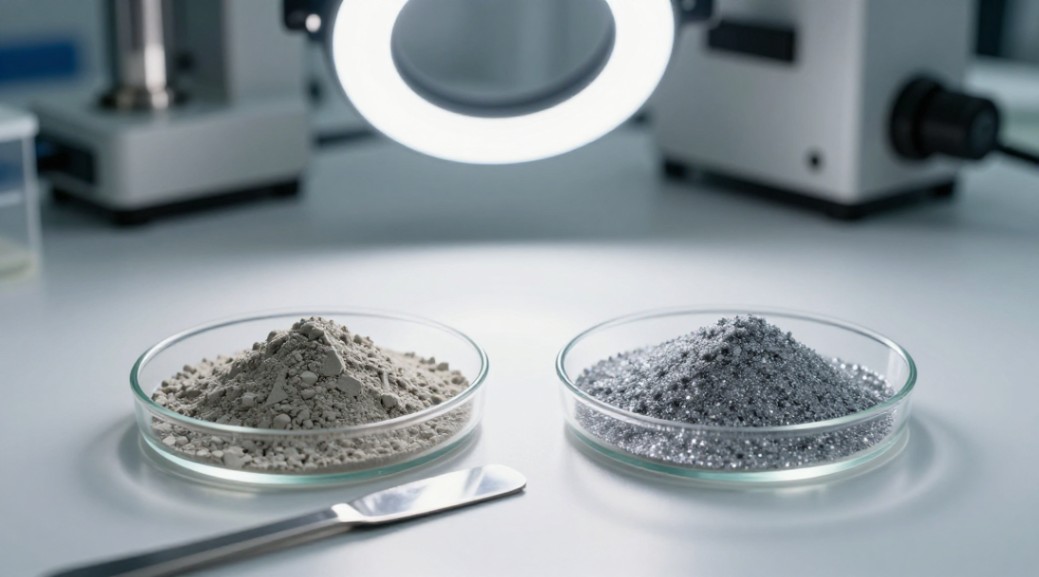
Defining ‘Aerospace-Grade’: Beyond the Spec Sheet
A purchase order for ‘high-purity SiC’ is ambiguous. True aerospace-grade powder has a fingerprint defined by three non-negotiable pillars. First, purity. We’re talking 99.9995% (5N5) minimum for critical components, with quantified limits for specific metallic impurities like iron, sodium, and potassium that catalyze oxidation. Second, particle morphology. Spherical, monocrystalline particles flow and pack predictably. Irregular, agglomerated ones create fatal stress concentrations. Third, lot-to-lust consistency. The powder in your qualification article must be identical to the powder delivered for production run number one hundred.
This isn’t just about chemistry. It’s about repeatable physics. I’ve seen engineers on forums like Reddit lament, ‘The data sheet matched, but the sintered density varied by 15% between lots.’ The culprit? A supplier that controlled for average particle size (D50) but ignored the distribution’s tail ends. Those outlier particles ruin everything.
The Supplier Comparison: A Checklist for Your Program
Armed with the right specifications, you can evaluate suppliers objectively. Here is the comparison that matters.
Capability 1: Synthesis Mastery
Not all powders are created equal. Conventional methods struggle with the perfect spherical morphology aerospace requires. The leaders use advanced processes like laser pyrolysis or specialized chemical vapor deposition (CVD). These methods offer exquisite control over particle size, shape, and crystallinity. One major defense contractor switched to a laser-pyrolysis powder for a turbine component and reported a 40% reduction in post-machining void content. The cost was higher per kilogram. The savings in reduced scrap and improved performance were dramatically higher.
Capability 2: The Quality Spine
Anyone can run a QC check. A true partner builds quality into the process from raw material intake. Look for Nadcap-accredited materials testing laboratories. Demand full traceability back to the precursor batch. Expect a Certificate of Analysis that reports every critical parameter, not just the ones that passed. The best suppliers treat each lot like a forensic case, documenting its entire history. This is non-negotiable for flight certification.
Capability 3: Partnership vs. Transaction
A vendor sells you a bag of powder. A partner understands your application. Are you sintering a ceramic matrix composite (CMC) for brake disks? The powder’s surface chemistry and sizing agent compatibility are paramount. Developing a component for satellite optics? Extreme, uniform hardness and thermal stability take precedence. Top-tier suppliers have applied research teams. They can co-develop tailored powder formulations, helping you navigate trade-offs between sinterability and final mechanical properties. This technical depth is their real product.
Making the Strategic Choice
The choice often comes down to your program’s phase and risk tolerance. For prototyping or non-critical components, a high-quality commercial powder from a reputable supplier may suffice. You trade some performance for lower cost and faster lead times. For production of flight hardware-especially in applications like CMC brakes, leading edges, or rocket nozzles where temperatures exceed 1800°C-the calculus changes. Here, the immense cost of failure dwarfs material cost. You need the supplier with the proven synthesis, unassailable quality records, and the technical staff to support you when a processing anomaly occurs.
Remember this. In aerospace, your material is a system component. Your aerospace grade sic powder supplier is an extension of your engineering team. Their consistency enables your innovation. Their documentation supports your certification. Their partnership de-risks your program. Choose the partner who provides more than a commodity. Choose the one who provides certainty.
Your Path Forward
Start by internalizing your true performance requirements. Then, engage potential suppliers with a detailed request for quote (RFQ) that probes their synthesis method, quality spine, and co-development experience. Ask for sample lots and put them through your full process. Test the resulting material’s properties. But more importantly, test the supplier’s responsiveness, data transparency, and problem-solving approach. The right partner will welcome this scrutiny. Your success, after all, becomes their best reference.
eduloc founded on October 17, 2012, is a high-tech enterprise committed to the research and development, production, processing, sales and technical services of ceramic relative materials such as How. Our products includes but not limited to Boron Carbide Ceramic Products, Boron Nitride Ceramic Products, Silicon Carbide Ceramic Products, Silicon Nitride Ceramic Products, Zirconium Dioxide Ceramic Products, etc. If you are interested, please feel free to contact us.
RELATED POSTS

Ultrafine Nano Copper Powder: Initiating a New Chapter in the Revolution of Advanced Materials ultrafine copper powder price
Natural Flake Graphite C Powder CAS 7782-42-5|EDULOC
1200 Grit Silicon Carbide: The Misunderstood Marble Finisher That Can Ruin Your Floor
What Benefits does Zinc Oxide Have to the Skin?
what does the grinding ball represent in secret lion