High-Density Grinding Media Balls for Industrial Applications

From a Worn-Out Stone to a Perfect Slurry
I was ready to throw my favorite waterstone away. It was dished, glazed, and cutting slower than a butter knife. A new stone felt like a costly fix. Then, I remembered the old-timer at the hardware store talking about loose powders. I grabbed some 1200 grit silicon carbide powder, mixed it with water, and spread it on a flat glass pane. Fifteen minutes later, my stone was flat, refreshed, and aggressive. The difference was night and day. Let me show you how this simple trick can save your stones and transform your sharpening results.
What is 1200 Grit Powder for Sharpening Stones?
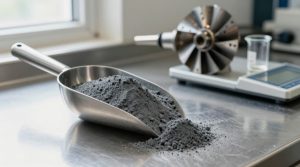
Think of 1200 grit powder as the ultimate multi-tool for stone care. It’s a fine, loose abrasive-usually silicon carbide or aluminum oxide-with a particle size of about 10.5 microns. You don’t use it directly on your tools. Instead, you use it to maintain, recondition, and enhance the stones themselves. Its primary role is to create a perfect cutting surface on your whetstones, ensuring they work efficiently and predictably every time.
Key Applications for Sharpening Systems
- Stone Flattening & Tuning: This is the big one. A flat stone is a non-negotiable foundation for sharp, even bevels.
- Performance Restoration: Revives old, glazed, or loaded stones by exposing fresh, sharp abrasive crystals.
- Slurry Creation: On waterstones, a 1200 grit powder slurry can accelerate cutting and refine the finish in one step.
- Surface Re-texturing: Adjusts the “bite” or feedback of a stone to your personal preference.
Where 1200 Grit Fits in Your Sharpening Arsenal
Choosing the right grit is about finding balance. Too coarse can damage a fine stone. Too fine won’t cut fast enough. 1200 grit powder sits perfectly in the middle of the sharpening spectrum.
Here’s how it compares to common grit ranges.
| Grit Range | Primary Use | Particle Size | Best for 1200 Grit Powder Action |
|---|---|---|---|
| 200 – 400 (Coarse) | Major shaping, stone flattening, aggressive removal | 50+ microns | Too aggressive for most fine stones. Can create deep scratches. |
| 800 – 1200 (Medium) | General sharpening, bevel setting, stone maintenance | 15-20 microns | The sweet spot. Flattens waterstones, tunes oilstones, creates a fast-cutting slurry. |
| 3000+ (Fine/Polish) | Refining, polishing, final edge finishing | 5 microns or less | Too fine for efficient flattening. Use for final slurry on polishing stones. |
For most users, 1200 grit powder is the most versatile choice. It cuts fast enough to be useful but leaves a surface ready for sharpening, not a rough mess.
Your Step-by-Step Guide to Using 1200 Grit Powder
Follow these steps. You’ll need your powder, a perfectly flat surface (granite tile, thick glass), water or oil, and the stone.
Step 1: Prepare Your Workspace and Mix the Slurry
Place your flat reference plate on a stable surface. For waterstones, sprinkle a small pinch of 1200 grit powder onto the plate-about the size of a nickel. Add a few drops of water and mix with your finger to create a milky paste. The consistency should be like thin paint. For oilstones, use honing oil or kerosene instead of water. Many users on Reddit and blade forums swear by a 1:5 powder-to-liquid ratio by volume for optimal slurry performance.
Step 2: Lap the Stone Surface
Spread the slurry evenly over the plate. Hold your sharpening stone with both hands. Use firm, even pressure and make large, overlapping figure-eight motions. This pattern ensures even wear across the entire surface. You’ll hear and feel the abrasive working. Keep going until the entire stone face has a uniform, dull appearance with no shiny, low spots.
Step 3: Clean and Test
Rinse the stone and plate thoroughly with clean water. For oilstones, clean with soapy water or mineral spirits. A clean stone is a must. Test for flatness with a straightedge or a pencil grid. Draw crosshatch lines on the stone, give it a few laps on your plate. When all the pencil marks are gone, you’re flat.
What to Expect: Results and Best Uses
After using 1200 grit powder, your stone will feel new. Waterstones will cut faster and more consistently. Oilstones will shed their glaze and reveal fresh grit. A stone conditioned with 1200 grit is ideal for sharpening kitchen knives, chisels, and plane irons to a solid, working edge. It bridges the gap between shaping (400-800 grit) and refining (3000+ grit). The edge will be keen, but with a slight toothiness that’s perfect for slicing through materials like vegetables or wood fibers.
Working Safely with Abrasive Powders
Respect the powder. It is fine, messy, and you do not want to inhale it. Always work in a well-ventilated area. Consider wearing a basic dust mask. Contain your work area with newspaper. Keep the powder and slurry away from children and pets. Clean up spills immediately with a damp cloth-never dry sweep, as it kicks dust into the air.
Finding Quality Powder and Making It Last
Not all powders are equal. For sharpening stones, you want friable, sharp abrasive grains that break down cleanly. Silicon Carbide (SiC) is the top choice for waterstones and general use. Aluminum Oxide is excellent for harder materials. Look for suppliers that cater to the lapidary or knife-making communities. A few ounces will last a home sharpener for years, making it incredibly cost-effective compared to buying dedicated flattening stones or replacing dished stones prematurely.
Common Mistakes to Avoid Right Now
- Using Too Much Powder: A little goes a long way. Excess powder acts as a lubricant, not a cutter, and slows the process.
- Skimping on the Flat Plate: If your reference surface isn’t flat, your stone won’t be either. Verify its flatness.
- Not Cleaning Thoroughly: Leftover abrasive will contaminate your next sharpening session, ruining your fine edges.
- Using on Natural Stones: Avoid using loose 1200 grit powder on delicate Japanese natural stones (e.g., Awasedo). It can permanently damage their structure.
Give Your Stones New Life
Don’t let a worn-out stone slow you down. A small container of 1200 grit powder for sharpening stones and whetstones is one of the most impactful investments you can make in your sharpening setup. It saves money, improves your results, and deepens your understanding of the process. Start with a modest amount from a reputable supplier. Follow the steps, take your time, and listen to the feedback from the stone. Your next sharpening session will be smoother, faster, and far more satisfying. Your tools deserve it.
eduloc founded on October 17, 2012, is a high-tech enterprise committed to the research and development, production, processing, sales and technical services of ceramic relative materials such as Sharpen. Our products includes but not limited to Boron Carbide Ceramic Products, Boron Nitride Ceramic Products, Silicon Carbide Ceramic Products, Silicon Nitride Ceramic Products, Zirconium Dioxide Ceramic Products, etc. If you are interested, please feel free to contact us.
RELATED POSTS
Ultra High Purity Silicon Carbide Powder: The Critical Edge for R&D Success
Aluminum Silicon Magnesium (AlSiMg (72.25/25/2.75 at%))-Sputtering Target
The role and properties of silicon hexaboride

Why does aerogel powder have gel properties
How to Source and Use Bulk Silicon Carbide Powder for Durable Thermal Spray Coatings: A Practical Guide