High-Density Grinding Media Balls for Industrial Applications

Stop Wasting Money on Ultra High Purity Silicon Carbide Powder for Research and Development
You think you bought ultra high purity silicon carbide powder for research and development. You paid a premium. Your paperwork says 99.999%. The result? A failed experiment, contaminated substrates, and a three-month setback. I see this every week. The problem is rarely the powder. It’s how you treat it. This article is a warning. Read it before your next purchase.
Many users on Reddit and industry forums have reported identical failures: inexplicable doping inconsistencies, poor epitaxial layer quality, and batch-to-batch irreproducibility. The root cause? Not the material, but the 7 deadly sins of R&D powder management. Here they are, in order of severity.
1. The ‘Certified Pure’ Trap: Trusting the COA Blindly
Your Certificate of Analysis (COA) says the lot is >99.999% pure. Do not believe it. Not fully. Standard characterization methods (like ICP-MS) are calibrated for bulk analysis. They miss surface contaminants. Your powder’s surface area is massive. A 1-micron particle has 1000x more surface area than a 1-mm bead. Surface oxides, adsorbed moisture, and carbon residues are invisible on a standard COA.
What to do instead: Demand a COA that includes BET surface area and LECO combustion analysis for total carbon and oxygen. Compare the surface oxygen content between lots. If it varies by more than 10%, reject the batch. Reproducible R&D starts with a reproducible surface, not a reproducible bulk.
2. Ignoring Particle Size Distribution (PSD) – The Silent Killer
Ultra high purity SiC powder is not ‘fine dust.’ For substrate preparation, you need a tight D50 of 0.5 to 2.0 µm with a span (D90-D10/D50) less than 1.5. For quantum sensing, you need specific platelet morphology. I have seen labs use a powder from a ‘high purity’ supplier that had a bimodal distribution. The coarse fraction acted as micro-scratches. The fine fraction created a slurry that could not be filtered.
The rule: Never accept a powder without a full PSD report using laser diffraction (ISO 13320). Furthermore, request a SEM image at 5000x magnification. Check for agglomerates. Hard agglomerates (sintered together) will not break down in suspension. They will ruin your slurry. Soft agglomerates (van der Waals) can be dispersed with proper sonication. The distinction is critical.
3. Standard-Grade Storage for Ultra-High Purity Powder
This is the number one mistake. You receive a sealed, double-bagged, argon-filled container. You open it. You scoop out 5 grams. You re-tie the bag. Three weeks later, the powder is contaminated. Why? Atmospheric moisture and hydrocarbons. SiC powder, especially sub-micron powder, acts as a getter. It adsorbs water vapor and organic volatiles from the lab air. This contaminant layer then desorbs during your high-temperature process (e.g., epitaxy or sintering), introducing carbon and oxygen.
Correct protocol:
- Store the powder in a glovebox under high-purity argon (99.9999%) with a moisture sensor. Keep H2O below 0.1 ppm.
- Never open the container outside the glovebox.
- Use a dedicated, clean-room grade spatula. No metal-to-metal contact.
- If a glovebox is unavailable, store the entire sealed container inside a larger vacuum-sealed bag with desiccant. Then put it in a freezer (-20°C). This reduces the vapor pressure of contaminants.
4. The ‘One Size Fits All’ Morphology Fallacy
You need ultra high purity silicon carbide powder for research and development. But which polytype? Which morphology? For research, the crystal structure (4H-SiC vs. 6H-SiC vs. 3C-SiC) defines the bandgap. A supplier that gives you a ‘mixed polytype’ powder (common in cheap source material) is useless for device physics. You need a single-phase material, confirmed by XRD.
Furthermore, morphology dictates performance in specific R&D applications:
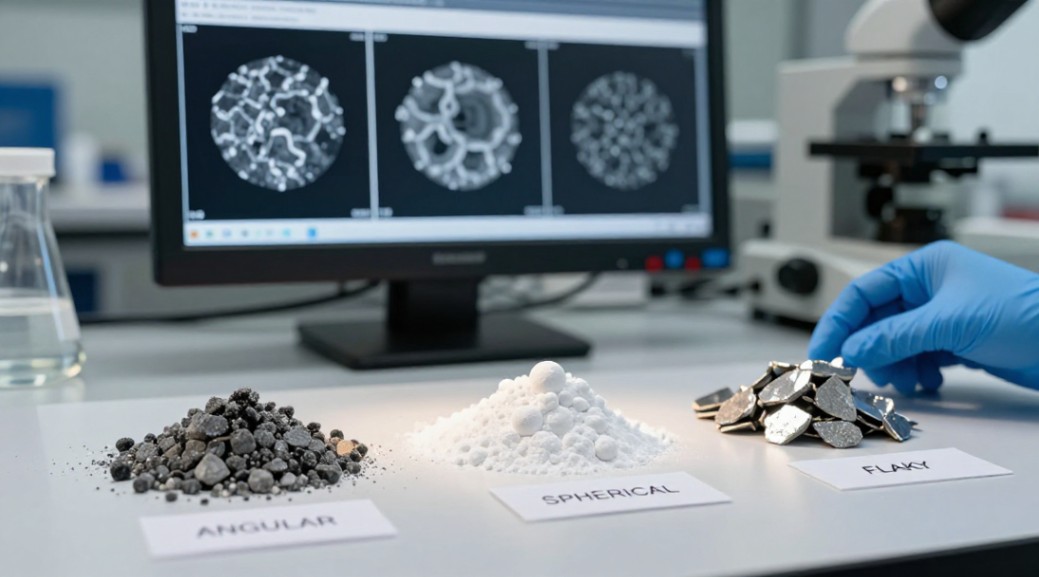
- Substrate seeding: Requires faceted, single-crystal platelets. Not spherical.
- Slurry for CMP: Requires near-spherical particles with high sphericity and narrow PSD.
- Ceramic matrix composites (R&D): Requires high-aspect-ratio fibers or whiskers, not powder.
Checklist for your next order: Specify polytype (e.g., 4H-SiC) and require XRD data confirming 99% phase purity. Ask for TEM images to confirm crystallinity. Do not skip this.
5. Ignoring Trace Element Synergy
The standard ‘5N’ (99.999%) purity spec usually focuses on 5-10 metallic elements. This is incomplete. For wide-bandgap semiconductor research, the critical contaminants are not just metals. They are nitrogen (N), boron (B), aluminum (Al), and vanadium (V). These act as shallow donors or deep-level traps. A difference of 0.1 ppm in nitrogen doping changes the resistivity of your epitaxial layer by several orders of magnitude.
The fix: Request a full GDMS (Glow Discharge Mass Spectrometry) analysis, not just ICP-MS. GDMS measures all elements, including non-metals, with higher sensitivity. Establish a baseline for your critical dopants. If you are doing semi-insulating SiC (for RF or quantum), pay extra for a specification on Vanadium and Nitrogen < 0.05 ppm each. This is not overkill. It is the only way to get reproducible results.
6. The ‘Open Air’ Dispersion Disaster
You need to suspend the powder for a slurry. You weigh it on a balance. You add DI water. You stir with a magnetic stir bar. Congratulations, you just introduced contaminants from the air and the stir bar (iron, chromium, nickel). For ultra high purity applications, this is catastrophic.
Proper dispersion protocol for R&D:
- Perform all steps inside a glovebox under Argon.
- Use PTFE or UHMWPE labware only. No glass (leaches sodium). No stainless steel.
- Use a high-purity surfactant (e.g., proprietary SiC-specific dispersion agent) at a precisely controlled concentration. Do not guess. Measure pH and zeta potential.
- Sonication: Use a cup-horn sonicator (not a probe) to avoid tip erosion. Control energy input (e.g., 500 J/mL) and temperature (keep below 30°C).
7. Certification Trap: ‘ISO’ is Not Enough
Many suppliers claim ‘ISO 9001 certified’ for their ultra high purity silicon carbide powder for research and development. ISO 9001 covers process management. It does not cover trace element control or batch-to-batch consistency at the parts-per-billion level. I have seen certified suppliers ship two ‘identical’ lots with 50% difference in nitrogen content.
What to demand from a supplier:
| Requirement | Why it Matters | Data You Need |
|---|---|---|
| Lot-specific GDMS | Complete elemental map (incl. N, B, Al, V) | Report for each lot |
| PSD with SEM | Confirms morphology and agglomeration state | ISO 13320 report + images |
| BET + LECO O/C | Surface purity and consistency | Numerical values with tolerances |
| Phase purity (XRD) | Single polytype confirmation | Diffraction pattern and identification |
| Packaging protocol | Prevents recontamination during shipping | Written procedure from supplier |
Final warning: If a supplier hesitates to provide this data, walk away. They are hiding something. Your research progress is too valuable.
Your Next Move
You now know the 7 fatal mistakes. The industry norm is to blame the material. The expert blames the method. You are now an expert. Use this checklist. Audit your current lab protocol. Audit your next supplier. Do not trust the COA. Verify everything. Your next experiment will be reproducible. Your data will be publishable. That is the goal. Now, go fix your glovebox.
eduloc founded on October 17, 2012, is a high-tech enterprise committed to the research and development, production, processing, sales and technical services of ceramic relative materials such as 7. Our products includes but not limited to Boron Carbide Ceramic Products, Boron Nitride Ceramic Products, Silicon Carbide Ceramic Products, Silicon Nitride Ceramic Products, Zirconium Dioxide Ceramic Products, etc. If you are interested, please feel free to contact us.
RELATED POSTS
Ytterbium(III) Bromide Hydrate (YbBr3•xH2O)-Crystalline
Silicon Carbide Dust Collection: The 5 Most Common (And Costly) Mistakes to Avoid
Pre-Polish Stage 400 Grit Silicon Carbide Abrasive: The 35-Micron Sweet Spot for Flawless Finishes
Barium iodide hydrate (BaI2•xH2O)-Powder
Cobalt(II) sulfate hydrate (CoSO4•xH2O)-Crystalline