High-Density Grinding Media Balls for Industrial Applications

I remember my first time considering a bulk order for silicon carbide powder. The project manager was leaning over the production schedule, frustration evident. “We’re blowing through our abrasive media budget,” he said. “The cost per unit is killing our margins.” That moment sparked a deep dive into bulk purchasing that reshaped our entire supply chain. If you’re reading this, you’re likely facing a similar crossroads. You need clarity, not just a sales pitch. So, let’s talk about what it really means to buy silicon carbide powder in bulk.
What is Silicon Carbide Powder?
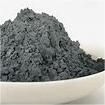
In its simplest form, silicon carbide (SiC) is a synthetic compound of silicon and carbon. It doesn’t occur naturally. We create it. This fact underpins everything about bulk purchasing. You’re not buying a mined commodity; you’re procuring a precisely engineered synthetic material. Its defining property is extreme hardness. On the Mohs scale, silicon carbide sits at around 9.5, second only to diamond and boron carbide. But hardness is just the start.
The Core Properties That Define Its Use
- Hardness & Abrasive Power: This is its most famous trait. SiC grains cut, grind, and polish a vast array of materials, from metals to stone.
- High Thermal Conductivity: SiC efficiently moves heat. This makes it indispensable in refractory linings for furnaces and kilns.
- Chemical Inertness: It resists attack from acids, alkalis, and molten metals. It won’t degrade in harsh environments.
- Semiconducting Properties: In its pure, synthetic forms, SiC acts as a wide-bandgap semiconductor, powering next-gen electronics.
Dr. Emily S. Johnson of the Advanced Ceramics Research Consortium often states: “The value of silicon carbide isn’t in a single property, but in the synergy of hardness, thermal stability, and chemical resistance. This triad is what makes it irreplaceable in severe-service applications.”
Why Industries Rely on Bulk Silicon Carbide
When you buy silicon carbide powder in bulk, you’re feeding critical industrial processes. The scale of these applications demands volume.

Primary Bulk Application Areas
- Abrasives and Cutting Tools: This is the largest volume market. Bulk SiC powder is bonded into grinding wheels, coated onto sandpaper, or used as loose abrasive for lapping and polishing.
- Refractories and Ceramics: Manufacturers add SiC powder to clay and other mixes to create kiln furniture, burner nozzles, and armor plates. The powder enhances thermal shock resistance.
- Metallurgy: In foundries, we use it as a deoxidizing agent and to create iron-silicon alloys. It’s a workhorse additive.
- Advanced Engineering: Higher purity grades go into sintering to produce monolithic SiC ceramics for seals, bearings, and semiconductor wafer handling equipment.
Decoding Silicon Carbide Grades and Types
Not all SiC powder is the same. The grade you select dictates performance. Getting this wrong in a bulk order is costly.
- Black Silicon Carbide (SiC): The most common. It contains about 98.5% SiC. It’s slightly less pure and less friable than green, making it a cost-effective general-purpose abrasive for metals, stone, and non-metallics.
- Green Silicon Carbide (GC): Higher purity, often exceeding 99.5% SiC. Its crystals are sharper and more brittle. We use it for precision grinding of cemented carbides, titanium alloys, and optical glass. It commands a premium price.
- Micron Sizes and Distributions: This is critical. Powder is classified by its particle size distribution (PSD), measured in microns (µm). A coarse 60-grit powder for heavy grinding behaves utterly differently from a 5-micron powder for final polishing. The PSD curve must match your process.
The Tangible Advantages of Buying in Bulk
Switching from bag-by-bag purchases to a bulk order isn’t just about getting a truckload. It’s a strategic supply chain decision.
- Significant Cost Savings: The price per kilogram or ton drops substantially. You eliminate the packaging and handling markup of small units.
- Supply Chain Consistency: A bulk order often comes from a single production batch. This minimizes variation in particle size and chemistry, leading to more consistent end-product quality.
- Logistical Efficiency: One large shipment replaces dozens of small ones. This simplifies inventory management, reduces receiving labor, and minimizes the risk of stock-outs that halt production lines.
Your Blueprint: Specifying a Bulk Order
Ambiguity leads to problems. When you request a quote to buy silicon carbide powder in bulk, your specification sheet is your contract. Be precise.
- Chemical Composition / Purity: Specify the minimum SiC content (e.g., 98.5% min). Also define limits for key impurities like free silicon, free carbon, iron (Fe), and aluminum (Al).
- Grain Size Distribution: This is non-negotiable. Don’t just ask for “F220.” Specify the required mean particle size (D50) and the acceptable limits for fine and coarse tails (e.g., D10, D90). Reference standards like FEPA or JIS.
- Packaging: How will it arrive? Options include 1-ton bulk bags (FIBCs), 25-kg multi-wall paper bags, or even direct discharge into a silo. Consider your on-site handling capabilities.
How to Select a Reliable Bulk Supplier
Your supplier’s capability determines your success. Here’s how we vet partners.
- Manufacturing Control: Do they own the furnaces? The Acheson process is standard for most abrasive grades, but ask about their process control for temperature and raw materials. For high-purity grades, inquire about advanced synthesis methods.
- Quality Certifications: Look for ISO 9001. For specific industries, relevant certifications matter (e.g., automotive IATF 16949). A certified lab with consistent test reports is a green flag.
- Technical Experience: Can their sales engineers discuss particle packing density or the impact of Fe content on your ceramic sintering? They should understand your application, not just their product.
- Sampling Protocol: A trustworthy supplier will offer representative samples from a production batch for your testing before committing to the full order. Always test the sample.
- Moure is the Enemy: Silicon carbide powder is hygroscopic. It will absorb moisture from the air, which can cause caking and affect flowability and performance in bonded applications. Store bags or bulk bags in a dry, covered warehouse.
- Contamination Control: Use dedicated, clean equipment for transfer. Cross-contamination with a different grit size or material ruins the entire batch.
- Safety First: While SiC is chemically inert, the fine dust is a respiratory irritant. Use appropriate PPE (dust masks, goggles) and dust collection systems during handling.
- Initial Inquiry & Spec Submission: Provide your detailed technical specification sheet.
- Quotation & Sample Request: Review the quote, but insist on a representative production sample.
- Sample Testing & Approval: Run the sample through your process. Does it meet your key performance indicators?
- Order Placement & Logistics: Finalize Incoterms (FOB, CIF, etc.), delivery schedule, and payment terms.
- Delivery & Inspection: Upon arrival, inspect packaging for damage. Take a retention sample from the bulk load for your records.
- After-Sales Support: A good supplier will follow up to ensure the material performs as expected.
Handling and Storing Your Bulk Powder
Receiving 20 tons of material requires a plan. Improper handling wastes money.
The Procurement Process, Step-by-Step
Knowing the journey helps you manage it.
Navigating a bulk purchase of silicon carbide powder is a blend of technical know-how and supply chain strategy. It starts with a crystal-clear understanding of your own process requirements. From there, your specification becomes your guide. Partner with a supplier who demonstrates control, not just salesmanship. Test samples rigorously. Plan your handling. When done right, buying in bulk transforms this essential material from a recurring cost into a pillar of stable, efficient, and high-quality production. Your team’s time, and your company’s margins, deserve that level of diligence.
eduloc founded on October 17, 2012, is a high-tech enterprise committed to the research and development, production, processing, sales and technical services of ceramic relative materials such as The. Our products includes but not limited to Boron Carbide Ceramic Products, Boron Nitride Ceramic Products, Silicon Carbide Ceramic Products, Silicon Nitride Ceramic Products, Zirconium Dioxide Ceramic Products, etc. If you are interested, please feel free to contact us.
RELATED POSTS
Is Aluminum Oxide the Same As Aluminum Powder
Hafnium Oxide:Titanium Dioxide (HfO2:TiO2 (50:50 Mol%))-Pellets
The Lithium Battery Industry Has Driven A 15% Increase In The Of High-Purity Alumina Balls
What Powder is Used for Metal 3D Printing

Nickel Chrome Clad Chrome Carbide Composite (30NiCr70Cr3C2)-Powder