High-Density Grinding Media Balls for Industrial Applications

Your Guide to Wet or Dry Silicon Carbide Abrasive Powder
Silicon carbide abrasive powder is a synthetic material created by fusing silica sand and carbon at high temperatures. Its sharp, hard, and blocky grains make it a top choice for grinding, lapping, and polishing. The big choice you face is between wet or dry silicon carbide abrasive powder. Wet powder mixes with water or oil to form a slurry. Dry powder is used alone in blasting or with certain grinding wheels. Your project’s surface finish, material hardness, and equipment dictate the best choice.
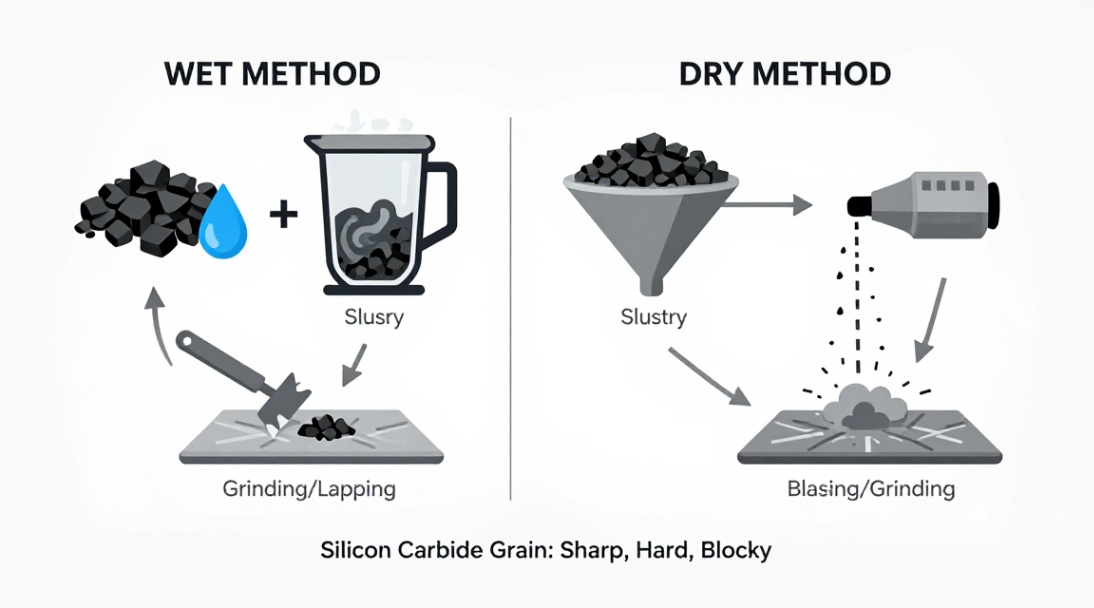
Step-by-Step: How to Choose Wet or Dry Silicon Carbide Powder
Follow this simple decision process to get the right abrasive for your job. It prevents costly mistakes and wasted time.
Step 1: Define Your Desired Surface Finish.
Are you shaping metal or creating a mirror finish on glass? Your goal dictates everything. For fine polishing and lapping where a smooth, scratch-free surface is critical, you need a wet silicon carbide abrasive powder slurry. The liquid carries away debris and cools the workpiece, preventing heat damage. For aggressive stock removal, deburring, or surface preparation like etching concrete, dry silicon carbide abrasive powder in a blasting cabinet is often the faster, more economical choice.
Step 2: Cheque Your Equipment Compatibility.
Your machinery is not universal. Match the powder to your setup.
- For Wet Processes: You need a lapping machine, polishing wheel, or slurry pump system designed for liquid abrasives. Many users on machining forums report that using a well-mixed slurry with consistent particle size distribution (look for FEPA or ANSI grades like F220 or 600 grit) is the secret to repeatable results.
- For Dry Processes: You need a blast cabinet, siphon blaster, or specific resin-bonded grinding wheels. Dry powder flows freely and won’t clog dry blasting equipment. Never use dry powder in a machine built for slurry-it will create dust hazards and poor performance.
Step 3: Consider Material Removal Rate vs. Finish Quality.
This is the core trade-off. Dry blasting with silicon carbide cuts quickly. It’s ideal for heavy etching or cleaning tough surfaces like turbine blades. However, it can leave a matte, textured finish. Wet lapping or polishing removes material slower but gives you control. You can progress through finer grits (e.g., from 80 grit for roughing to 1200 grit for finishing) to achieve a polished, flat surface. For precision optics or semiconductor wafers, the controlled cutting action of a wet slurry is non-negotiable.
Step 4: Evaluate Safety and Cleanup.
This step protects you and your workspace. Dry powder creates airborne dust. You must have industrial-grade ventilation, a respirator, and protective eyewear. Wet slurry contains the dust but creates sludge. You need a plan to settle, filter, or dispose of the spent abrasive slurry responsibly. A well-managed wet system is often cleaner and safer for the operator but requires more initial setup for waste management.
Common Questions Answered (Q&A)
Q: Can I use dry silicon carbide powder to make a slurry?
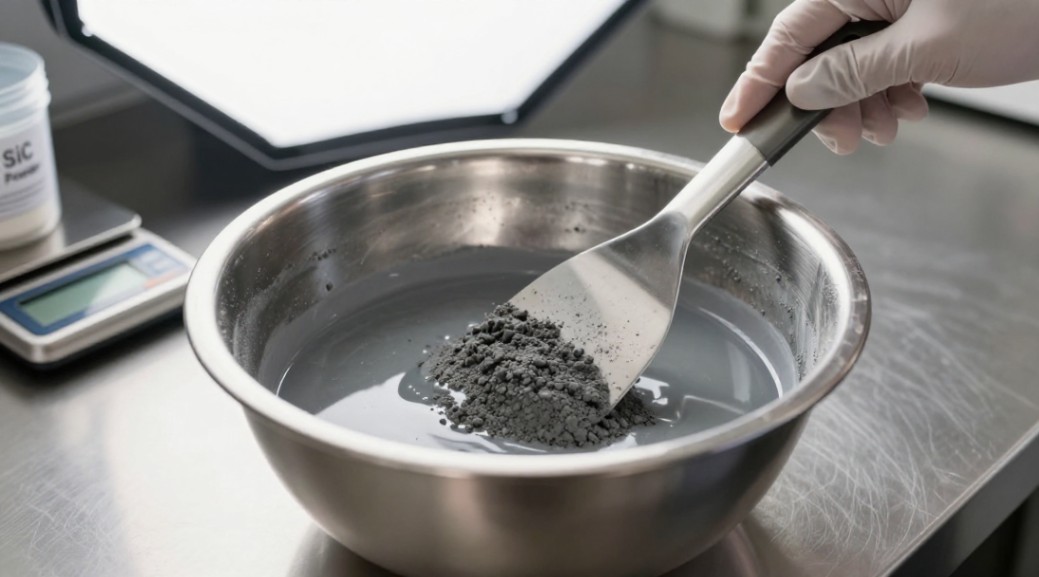
A: Yes, but with a major caveat. You can mix dry powder with water or oil to create a slurry. However, powders marketed specifically for wet use often have anti-caking agents or are graded for optimal slurry suspension. For critical precision work, start with powder designated for wet applications to ensure consistent performance.
Q: Which cuts faster, wet or dry?
A: Dry powder in a blasting application typically has a higher initial material removal rate. The direct, high-velocity impact of the grains removes material aggressively. Wet polishing is a slower, more controlled process focused on refinement, not rapid stock removal.
Q: How do I prepare a wet slurry correctly?
A> The ratio is key. A common starting point is a 1:1 or 1:2 ratio of abrasive powder to water or honing oil. Mix thoroughly to avoid clumps. For lapping, the slurry should be thin enough to flow but dense enough to maintain cutting action. Test on a scrap piece first. Many workshops find that a high-quality, consistently graded powder from a trusted supplier makes slurry preparation predictable and repeatable.
Q: Is silicon carbide good for lapping hardened steel?
A> Absolutely. Silicon carbide is harder than aluminium oxide and is excellent for lapping hard metals like tool steel, carbide, and ceramics. Use a wet silicon carbide abrasive powder slurry. Begin with a medium grit (like 180) to establish flatness, then move to finer grits (like 400, then 800) to polish out the scratches from the previous step. This progressive method delivers a fine, functional finish.
Putting It Into Practice
The theory is straightforward. Your project needs are specific. For a mirror finish on granite, you’ll progress through wet slurries. For cleaning rust off a cast-iron plate, dry blasting is efficient. Your success hinges on matching the abrasive form-wet or dry silicon carbide abrasive powder-to your goal, your machine, and your safety plan.
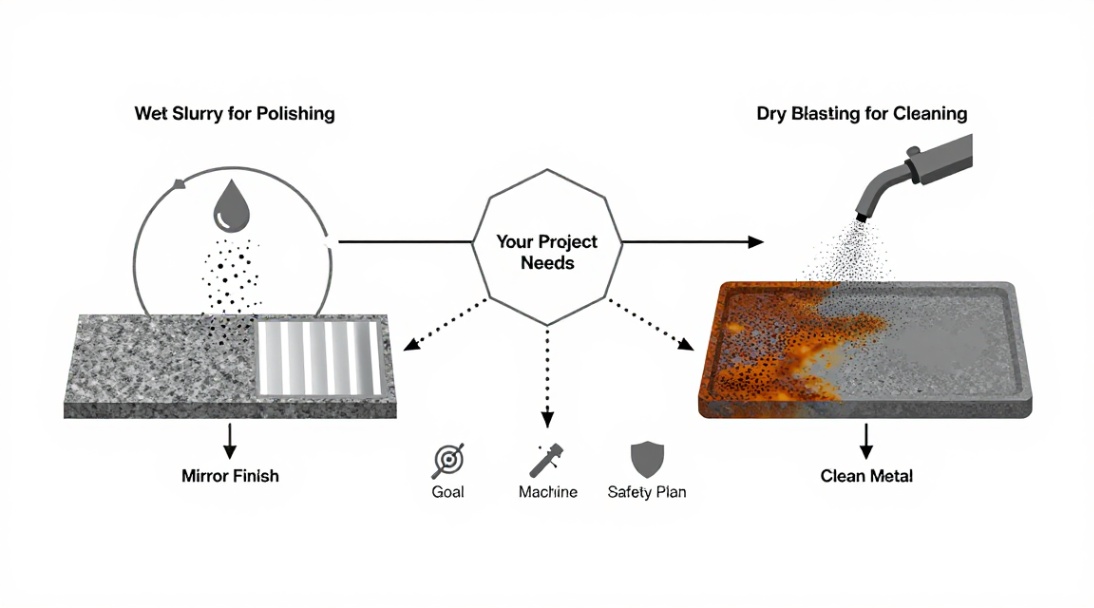
Start small. If you’re new to lapping, get a sample of a medium-grit wet powder (like F400) and experiment on a test piece. Notice how the slurry behaves. Feel the cutting action. This hands-on experience is worth more than any spec sheet. For blasting, test a small area with dry powder to gauge removal speed and surface texture. Your confidence will build with each successful test.
eduloc founded on October 17, 2012, is a high-tech enterprise committed to the research and development, production, processing, sales and technical services of ceramic relative materials such as Silicon. Our products includes but not limited to Boron Carbide Ceramic Products, Boron Nitride Ceramic Products, Silicon Carbide Ceramic Products, Silicon Nitride Ceramic Products, Zirconium Dioxide Ceramic Products, etc. If you are interested, please feel free to contact us.
RELATED POSTS
Titanite – Also Known as Sphene Titanite is a minor ore of titanium and a minor gemstone known as "sphene." Article by: Hobart M. King, PhD, RPG
Is titanium dioxide harmful to the body?
Fines 1000 Grit Silicon Carbide: The Final Step for High-Luster Finishes in Vibratory Tumbling
Is 1500 Grit Silicon Carbide the Best Finishing Step? A Veteran’s Honest Breakdown
Why Is Zirconium Dioxide Ball The First Choice For High-End Ceramics?
