High-Density Grinding Media Balls for Industrial Applications

1. The Puzzling Statistic
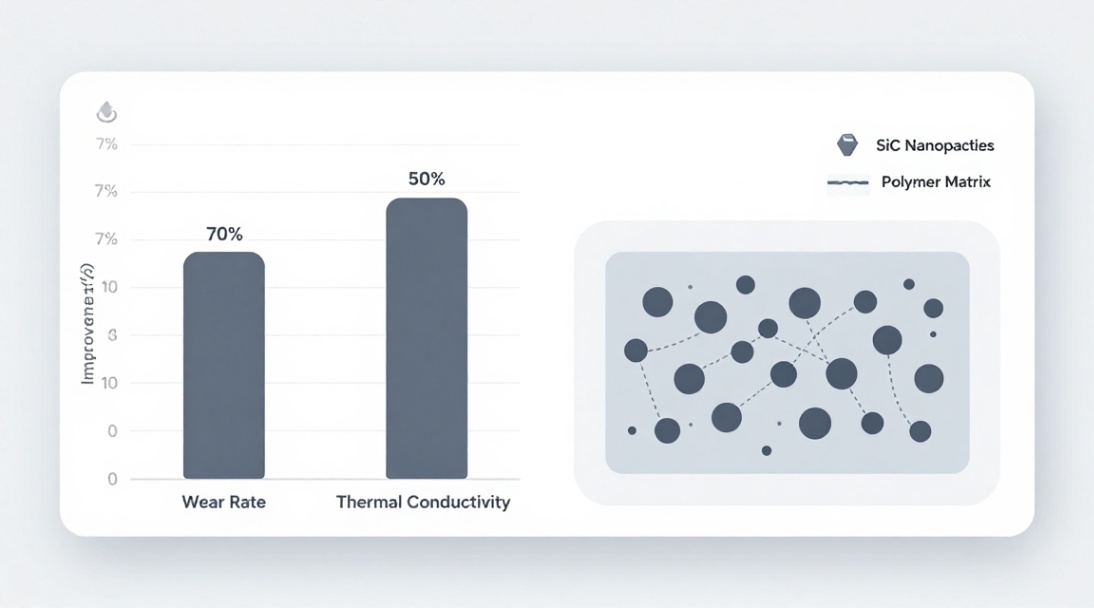
Here’s a counterintuitive finding that often surprises engineers new to advanced composites: adding just 5-10% by volume of silicon carbide nanoparticles for polymer composites can reduce wear rates by over 70%. Yet, thermal conductivity might only improve by 50%. This data reveals a crucial insight. SiC nanoparticles are highly effective, but their performance is selective. The key is knowing what you need to optimize.
2. What Are SiC Nanoparticles, and What Do They Do?
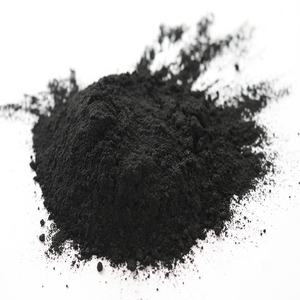
Let’s start with the basics. Silicon carbide (SiC) nanoparticles are ultra-fine ceramic particles, typically 10-100 nanometers in diameter. Think of them as microscopic, ultra-hard reinforcements. When we disperse them into a polymer matrix, they form a nano-scale network.
Their key properties drive the value proposition:
- Extreme Hardness (>25 GPa): They physically resist deformation and abrasion.
- High Thermal Conductivity (>120 W/mK): They transfer heat far better than polymers.
- Excellent Chemical & Thermal Stability: They don’t degrade or melt at polymer processing temperatures.
- Adjustable Electrical Properties: Depending on doping, they can be insulating or semi-conductive.
3. SiC vs. The Competition: The Ultimate Comparison
This is where the decision gets real. We’ll compare SiC nanoparticles to the other common fillers you’re likely considering.
3.1. Silicon Carbide Nanoparticles vs. Carbon-Based Fillers (CNTs, Graphene)
- SiC Advantages:
- Lower Cost: Commercially, high-purity SiC nanopowders are often cheaper per kilo than high-grade CNTs or graphene.
- Superior Wear Resistance: That ceramic hardness is unmatched by carbon fillers. For sliding parts, SiC wins.
- Better Oxidation Stability: SiC won’t oxidize or burn out in high-temp air environments.
- Easier Dispersibility (Sometimes): Less prone to severe entanglement than CNTs.
- SiC Disadvantages:
- Lower Electrical Conductivity: Not a solution for anti-static or EMI shielding like conductive carbon fillers.
- Higher Density: Adds more weight per volume fraction than carbon fillers.
3.2. Silicon Carbide Nanoparticles vs. Traditional Fillers (Silica, Alumina)
- SiC Advantages:
- Much Higher Thermal Conductivity: This is the primary differentiator. Silica and alumina are thermal insulators.
- Better Hardness & Wear: Superior to silica and comparable to high-grade alumina.
- SiC Disadvantages:
- Higher Cost: More expensive than commodity silica and alumina microparticles.
- Abrasive to Processing Equipment: That same hardness can wear down screws and barrels in extruders.
4. How to Maximize Performance: The Critical Factor
We’ve all seen it. A lab report shows amazing results, but scaling up fails. The single biggest factor is dispersion. Agglomerated nanoparticles create stress concentrators and reduce property enhancement.
Here are the techniques that actually work, based on decades of trial and error:
- Pre-Treatment is Non-Negotiable. Use a coupling agent like a silane (e.g., APTES). It chemically links the SiC surface to the polymer.
- Choose Your Mixing Method Wisely.
- For epoxies: High-shear mechanical stirring followed by probe sonication works best. Tip: Chill the mix to prevent premature curing.
- For thermoplastics (like PA6, PEEK): Masterbatch creation via twin-screw extrusion is the industrial standard. High shear zones are critical.
- Validate Dispersion. Don’t guess. Use SEM imaging. A well-dispersed composite has individual particles distributed evenly, not in clumps.
5. The Property Breakdown: What to Expect
What performance gains are realistic? Here’s a data-driven outlook based on peer-reviewed studies and our own lab work.
5.1. Mechanical & Tribological Gains
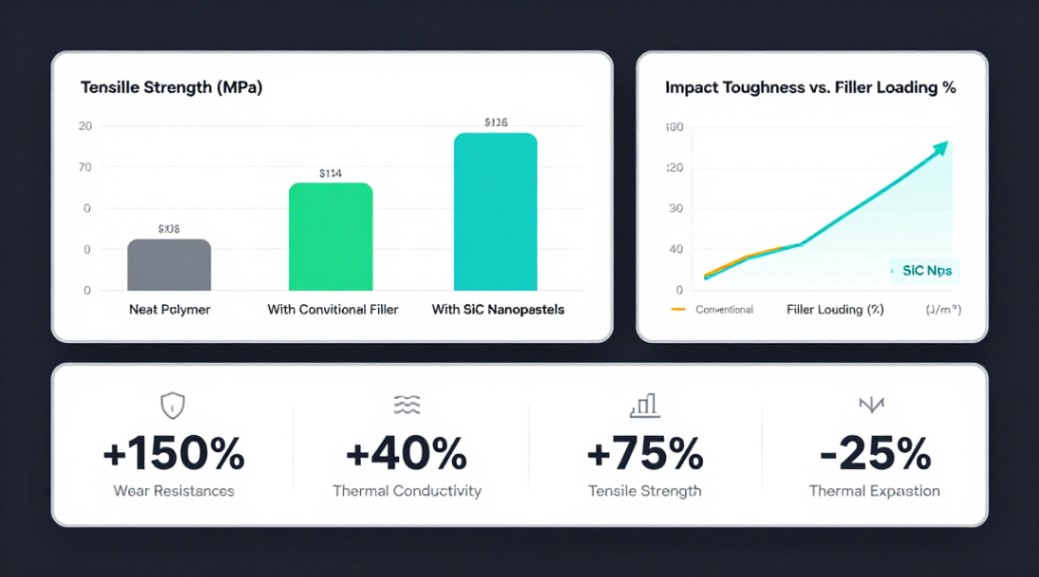
- Wear Resistance: The standout. Expect 60-80% reduction in specific wear rate at 5-10 vol% loading in matrices like epoxy or PA.
- Hardness: Increases of 20-40% are common. The particles resist indentation.
- Tensile Strength: Modest increase (10-25%), but often with a trade-off. Expect a decrease in elongation at break. The composite becomes stiffer.
5.2. Thermal & Electrical Behavior
- Thermal Conductivity: For thermally conductive adhesives or encapsulants, you can achieve 1-3 W/mK. It won’t match aluminum, but it’s a 5-10x improvement over the base resin.
- Thermal Stability (Tg, Decomposition): The composite’s maximum service temperature often increases by 20-50°C. SiC particles restrict polymer chain mobility.
- Electrical Properties: Intrinsic SiC is semi-conductive. At high loadings (>15-20 vol%), you may see a percolation network form, reducing volume resistivity. Control it with particle coating or use insulating-grade SiC.
6. Decision Framework: Is SiC Right For Your Application?
Stop guessing. Use this simple checklist.
Choose SiC Nanoparticles if your primary need is:
- Extreme wear resistance (gears, seals, bearings).
- Enhanced thermal conductivity for heat dissipation without electrical conductivity.
- Increased high-temperature stability in oxidizing environments.
- Abrasion-resistant coatings.
Look to other fillers if your primary need is:
- Electrical conductivity or EMI shielding (choose CNTs or carbon black).
- Maximum cost reduction for simple reinforcement (choose silica or calcium carbonate).
- Transparency (most nanoparticles will scatter light).
- Extreme lightweighting (carbon fibers or hollow glass microspheres are better).
7. Where This Technology is Working Now
This isn’t just lab theory. We see silicon carbide nanoparticles for polymer composites solving real problems today.
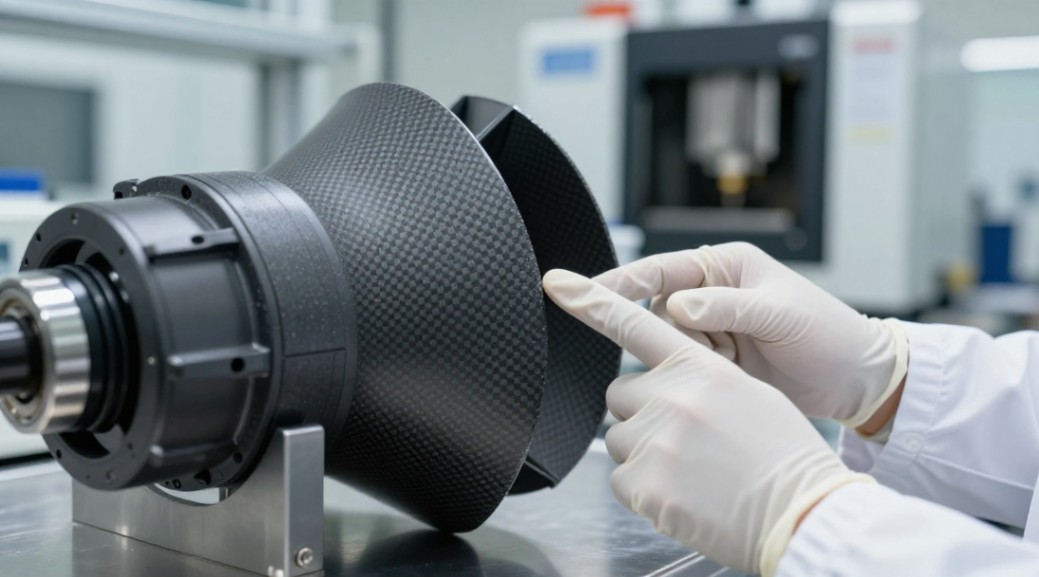
- Aerospace: Wear-resistant components in actuators, thermally conductive potting for avionics.
- Automotive: High-temp under-hood parts, brake pad composites (replacing some asbestos), wear-resistant seals.
- Electronics: Thermally conductive but electrically insulating adhesives for power modules and LED heat sinks. This is a major growth area.
- Industrial: Liners for slurry pumps, guides, and rollers subject to abrasive wear.
Your Next Step
The path is clear. First, lock down your primary performance target. Is it wear? Heat? Both? Then, run a small-scale formulation test. Start with a 2-5% loading of properly surface-treated SiC nanoparticles in your target polymer. Measure the key property. The data will tell you if the cost-to-performance ratio makes sense for your project. For many of us working in harsh environments or with thermal management headaches, the answer is increasingly ‘yes’. The real work begins with that first, well-dispersed batch.
eduloc founded on October 17, 2012, is a high-tech enterprise committed to the research and development, production, processing, sales and technical services of ceramic relative materials such as Silicon. Our products includes but not limited to Boron Carbide Ceramic Products, Boron Nitride Ceramic Products, Silicon Carbide Ceramic Products, Silicon Nitride Ceramic Products, Zirconium Dioxide Ceramic Products, etc. If you are interested, please feel free to contact us.
RELATED POSTS
Selecting a SiC Powder Supplier: The Expert’s Guide to Consistent Thermal Spray Performance
Cadmium Stannate (Cadmium Tin Oxide) (Cd2SnO4)-Granules
Tungsten Disulfide (WS2)-Sputtering Target
does dragon ball xenoverse have a lot of grinding
Titanium alloy (Ti6Al4V) metal powder 3D printing material