High-Density Grinding Media Balls for Industrial Applications

Fine Grinding Ceramics: Why 400 Grit Silicon Carbide is Your Workhorse
A 400 grit silicon carbide powder provides the ideal balance for ceramic finishing. It removes material efficiently while creating a surface ready for polishing. We reach for it more than any other grit in our shop for that critical transition from shaping to finishing.
What Makes 400 Grit SiC Special?
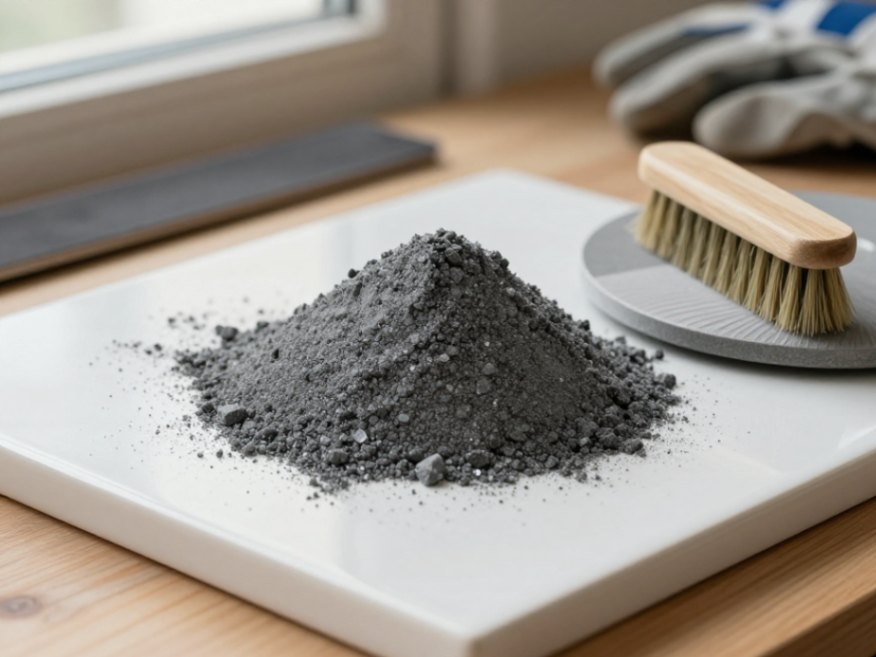
Silicon carbide (SiC) is harder than aluminium oxide. It fractures to create sharp, new cutting edges. At 400 grit (approximately 35 microns), the particles are fine enough to produce a smooth, consistent scratch pattern but aggressive enough for meaningful stock removal. This grit size sits perfectly between coarse shaping (80-220 grit) and final pre-polish stages (600+ grit).
Independent abrasives analysis shows 400 grit SiC achieves a surface roughness (Ra) between 0.8 and 1.2 micrometers on most fired clay bodies. It creates the necessary “key” for glaze adhesion without deep, difficult-to-remove scratches.
Step-by-Step: Wet Grinding with 400 Grit Silicon Carbide Powder
Dry grinding creates hazardous dust and overheats the ceramic. We always use a wet process. Follow these steps.
Step 1: Prepare Your Workspace and Slurry
Wear an approved N95 dust mask, gloves, and eye protection. Mix your slurry in a dedicated container. A common starting ratio is 1 part 400 grit SiC powder to 3 parts water by volume. The consistency should resemble thin milk. Too thick and it will glaze over; too thin and it lacks cutting power.
Step 2: Apply Slurry and Begin Grinding
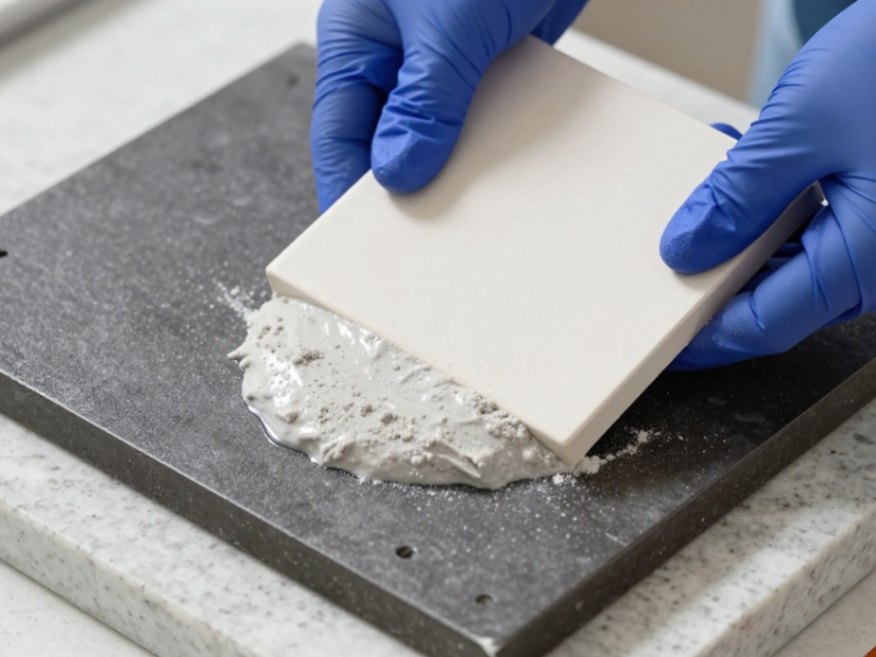
Place your ceramic piece on a stable, non-porous surface like a granite slab. Pour a small pool of slurry onto the slab. Use a cast iron or glass lapping plate. Apply even, moderate pressure and move the piece in a consistent figure-eight pattern. This prevents grooving and ensures even wear on both the piece and the plate.
Step 3: Maintain and Refresh the Slurry
The slurry will darken with ceramic residue and break down. Refresh it every 2-3 minutes by adding a teaspoon of fresh powder and a splash of water. Consistent slurry maintenance is the single biggest factor in achieving a uniform finish. Do not let the paste dry out.
Step 4: Clean and Inspect Between Grits
Once the desired stock removal is complete, rinse the piece and your hands thoroughly with clean water. Use a separate brush to clean the lapping plate. Any stray coarse grit will contaminate your next, finer step and ruin the finish. Inspect the surface under bright light to ensure the 400-grit scratch pattern is even.
| Step | Key Action | Pro Tip |
|---|---|---|
| Slurry Mix | 1:3 ratio SiC to water by volume | Mix in a sealed bottle for consistent results. |
| Application | Figure-eight motion on granite/glass | Lift and rotate the piece every 30 seconds. |
| Maintenance | Refresh slurry every 2-3 minutes | Dark, worn slurry cuts slower and less predictably. |
| Cleaning | Complete rinse before next grit | Use a dedicated parts washer or separate rinse bucket. |
Choosing Your Tools: SiC Powder vs. Diamond Wheels
We use loose 400 grit SiC powder for freehand lapping, complex curves, and large flat areas. It conforms to any shape. Diamond grinding wheels impregnated with 400 grit diamond are better for precise, machine-guided operations on very hard technical ceramics like alumina or zirconia. Diamond lasts longer but costs significantly more. For most studio pottery and prototyping, loose SiC powder offers unbeatable versatility and value.
Sourcing and Handling Quality 400 Grit Powder
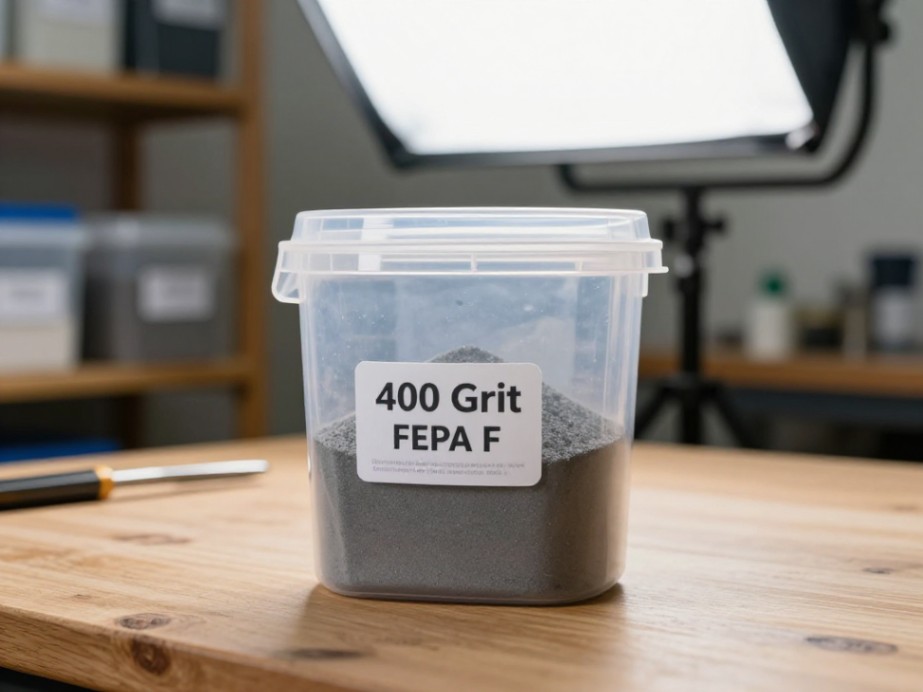
Not all silicon carbide is equal. Look for powder labeled “FEPA F” or “JIS#400.” This indicates proper particle size distribution. Cheap powders often have a high fraction of off-size grains that cause deep scratches. Store powder in its original, sealed container in a dry place. Treat it with the same respect you would any fine, hazardous particulate. Proper disposal follows local regulations for non-toxic industrial waste.
Mastering 400 grit silicon carbide powder transforms your ceramic finishing. It bridges the gap between rough shaping and a flawless surface. Start with a small bag, master the wet grinding process, and you will find it becomes an indispensable part of your workflow.
eduloc founded on October 17, 2012, is a high-tech enterprise committed to the research and development, production, processing, sales and technical services of ceramic relative materials such as Mastering. Our products includes but not limited to Boron Carbide Ceramic Products, Boron Nitride Ceramic Products, Silicon Carbide Ceramic Products, Silicon Nitride Ceramic Products, Zirconium Dioxide Ceramic Products, etc. If you are interested, please feel free to contact us.
RELATED POSTS
Zirconium Dioxide Balls Achieve Ultra-Low Wear Rate And Extend Life By 50%

Shanghai port container throughput recovery has a positive impact on the spot shipment meaning market

Copper Bromide (CuBr)-Powder
Cobalt Platinum Alloy (PtCo (50:50))-Sputtering Target
Samarium Boride (SmB6)-Sputtering Target