High-Density Grinding Media Balls for Industrial Applications

The Problem With Most Blasting Media
Have you ever spent hours blasting a delicate mold, only to find embedded particles or a surface that’s still too rough? Do you watch your abrasive consumption costs climb while dust clouds choke your workspace? You’re not alone. Many shops tolerate slow progress, media breakdown, and inconsistent finishes because they haven’t found the right tool. The frustration is real. You need an abrasive that cuts fast, leaves a pristine finish, and doesn’t vanish into the air after two passes.
Why Fine Grade Silicon Carbide Powder Is Different
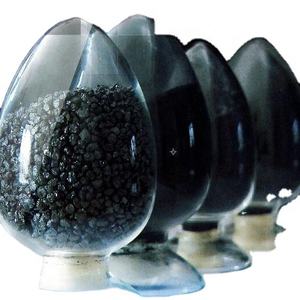
Fine grade silicon carbide powder for blasting isn’t just another abrasive. It’s a precision tool. Think of it as the difference between sanding with coarse sandpaper and using a fine-grit polishing stone. Its extreme hardness and sharp, angular grains allow for aggressive cutting with a surprisingly fine finish. Unlike softer media that rounds off and loses cutting power, silicon carbide maintains its sharp edges, leading to less consumption and more consistent results blast after blast.
How to Choose and Use Fine Grade Silicon Carbide
Step 1: Select the Correct Grit for Your Job
Choosing the right mesh size is your first critical decision. "Fine grade" typically covers a range from 120 grit for heavier etching up to 220 or 320 grit for cosmetic finishing. Match the grit to your desired surface profile (Ra value). A finer grit produces a smoother, more refined surface.
| Grit (Mesh) | Primary Use Case | Expected Surface Result |
|---|---|---|
| 120 – 150 | Aggressive cleaning, rust removal, moderate surface prep. | Clean, slightly textured profile. Ideal for paint adhesion. |
| 180 – 220 | Mold and die cleaning, deburring, fine surface preparation. | Smooth, uniform matte finish. Removes light scale without damaging substrates. |
| 240 – 320+ | Cosmetic finishing, etching, delicate part cleaning. | Very smooth, near-polished appearance. Excellent for aluminum and stainless steel. |
Step 2: Configure Your Equipment for Optimal Performance
Fine silicon carbide powder requires specific settings. Using standard sandblasting pressures will waste media and potentially damage the workpiece. Follow these equipment guidelines:
- Pressure: Operate between 40-80 PSI. Lower pressure gives more control for delicate work; higher pressure accelerates cleaning.
- Nozzle: Use a carbide-lined or boron nitride nozzle. Standard steel nozzles will wear out rapidly.
- Moisture Control: Ensure your air supply is dry. Moisture causes the fine powder to clump and clog your system.
- Blast Cabinet: A well-sealed cabinet with proper dust collection is non-negotiable. It contains the media for recycling and protects the operator.
Step 3: Execute the Blasting Process
Hold the nozzle at a consistent 6 to 12 inches from the surface. Use smooth, sweeping motions. Do not focus the stream on one spot. Over-blasting can generate excess heat. Let the abrasive do the work. Its sharpness means you don’t need excessive force. You’ll notice the cutting action is fast and clean, with minimal dust compared to softer, friable abrasives.
Critical Advantages Over Common Alternatives
Why do professionals switch? On forums like Reddit and practicalmachinist.com, users who made the switch report: "My media consumption dropped by 60% on mold work," and "The finish on my aerospace components is now consistently perfect, with no embedded particles." Here’s the data-driven comparison:
| Abrasive Media | Hardness (Mohs) | Cutting Speed | Dust Creation | Reusability |
|---|---|---|---|---|
| Fine Silicon Carbide | 9.5 | Very Fast | Low | Excellent |
| Aluminum Oxide | 9.0 | Fast | Medium | Good |
| Glass Bead | 6.0 | Slow | Low | Good |
| Crushed Glass | 5.5 | Medium | High | Poor |
| Sand (Silica) | 7.0 | Medium | Extremely High | Poor |
The key takeaway: silicon carbide’s combination of extreme hardness and angularity delivers faster cutting with less waste. Its low free silica content makes it a safer choice for operator health compared to dangerous silica sand.
Essential Safety and Handling Protocols
Never compromise on safety. Even with low-dust media, you must wear proper PPE. This includes a NIOSH-approved abrasive blasting respirator, protective goggles, heavy gloves, and a blast suit. Always work in a ventilated, contained environment like a dedicated blast cabinet or room. For disposal, consult local regulations. Spent silicon carbide is inert but should be collected and disposed of as non-hazardous industrial waste.
Making the Business Case for Fine Silicon Carbide
Yes, fine grade silicon carbide powder has a higher initial cost per pound than sand or crushed glass. Look at total cost. Its reusability cuts media consumption by 50-80% on many jobs. You save on labour because jobs finish faster. You save on filter changes and shop cleanup due to lower dust. You achieve higher quality results that reduce reject rates. For precision work, it’s not an expense; it’s an investment that pays back quickly through efficiency and superior outcomes.
Start with a small batch. Test it on a critical application like cleaning an injection mold or preparing a high-value weld. Feel the difference in cutting speed. Examine the finish quality. Measure your media usage. The performance speaks for itself. Once you experience the control and results, you’ll understand why it’s the expert’s choice for demanding blasting work.
eduloc founded on October 17, 2012, is a high-tech enterprise committed to the research and development, production, processing, sales and technical services of ceramic relative materials such as Fine. Our products includes but not limited to Boron Carbide Ceramic Products, Boron Nitride Ceramic Products, Silicon Carbide Ceramic Products, Silicon Nitride Ceramic Products, Zirconium Dioxide Ceramic Products, etc. If you are interested, please feel free to contact us.
RELATED POSTS
Lithium hexafluoroantimonate (LiSbF6)-Powder
Holmium (III) Bromide hydrate (HoBr3. xH2O)-Crystalline

German scientists have developed a solid-state lithium-sulfur battery with excellent performance
Titanium Aluminum Alloy (TiAl (10:90 at%))-Sputtering Target
Cerium(III) acetate sesquihydrate (Ce(C2H3O2)3•1.5H2O)-Crystalline