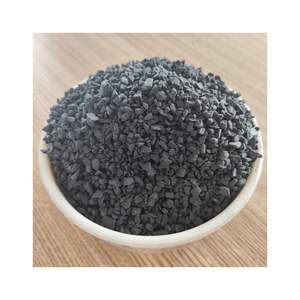
High-Density Grinding Media Balls for Industrial Applications

Key takeaways
- Silicon carbide balls are a polishing medium whose suitability depends on matching properties to a specific process window.
- High hardness supports material removal but requires process control to protect wafer surface quality.
- Predictable wear behavior helps maintain stable polishing conditions.
- Thermal stability and chemical compatibility with the slurry define the usable process range.
- Ball size, consistency, and surface finish are practical selection factors.
- No performance data or certifications are asserted here; verify specifications with the supplier.
What Makes Silicon Carbide Balls Ideal for Semiconductor Wafer Polishing?
Silicon carbide balls are ideal for semiconductor wafer polishing because they combine high hardness, good thermal stability, controllable wear behavior, and the ability to be finished to tight dimensional tolerances — properties that support the uniform material removal and surface quality wafer polishing demands. Whether a given silicon carbide ball is suitable depends on its grade, purity, size consistency, and how the polishing process (slurry, pressure, pad, and equipment) is configured. Silicon carbide balls are therefore best understood as a grinding and polishing medium whose value in wafer polishing comes from matching material properties to a specific process window, not from a single universal advantage.
This article defines what silicon carbide balls are in the polishing context, explains the mechanisms that make them relevant to semiconductor wafer polishing, sets out the conditions and trade-offs that determine suitability, and notes where information is insufficient to make firm claims. It is written for readers who need a clear, condition-aware overview rather than promotional assertions.
Definition: What Silicon Carbide Balls Are in a Polishing Context
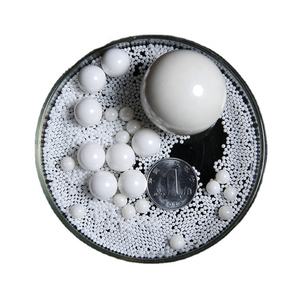
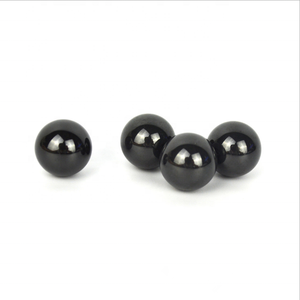
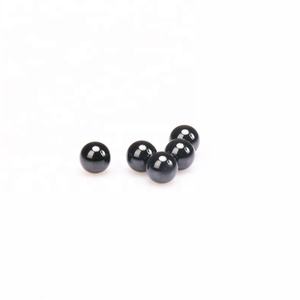
Silicon carbide balls are spherical bodies made primarily of silicon carbide (SiC), a ceramic material known for high hardness and thermal stability. In a polishing context, they function as a grinding or polishing medium: they are placed in contact with a workpiece — directly or through a slurry — and, under controlled motion and pressure, contribute to material removal and surface refinement.
The definition matters because it sets the boundary of the discussion. A silicon carbide ball is not a finished polishing process; it is one input among several. Its contribution depends on ball size and size distribution, surface finish, purity, and the surrounding process. Two nominally similar balls can behave differently if their grade or consistency differs.
For semiconductor wafer polishing, silicon carbide balls are a candidate medium whose properties must be evaluated against the requirements of the wafer surface, the acceptable removal rate, and the tolerated defect level. The definition is therefore functional: a silicon carbide ball is ideal when its measurable properties align with those process requirements.
Why Hardness and Wear Behavior Matter for Wafer Polishing
Wafer polishing requires controlled material removal while limiting unwanted surface damage. A medium with high hardness can support removal, but hardness alone is not sufficient: the way the medium wears, and the consistency of that wear, influences whether the process stays stable over time.
Silicon carbide's high hardness is the property most often cited in discussions of its use as a grinding or polishing medium. In practical terms, the balls can participate in material removal without deforming as readily as softer media. The trade-off is that harder media can also introduce surface features if the process is not matched to the workpiece and the finishing step.
Wear behavior is the second half of the story. A medium that wears unevenly changes the effective contact conditions during polishing, which can affect uniformity. Silicon carbide balls are therefore evaluated not only for hardness but for how predictably they wear under the intended load and motion. This is a process-matching question, and the answer depends on the specific setup rather than on the material alone.
Thermal Stability and Chemical Considerations
Polishing processes can generate heat at the contact interface, and the medium's response to that heat is part of its suitability. Silicon carbide is valued in high-temperature and wear-resistant applications, which is why thermal stability appears among the reasons it is considered for demanding polishing tasks. The practical condition is that the process temperature and the surrounding chemistry must remain within the range the medium and the wafer can tolerate.
Chemical compatibility is equally important. Wafer polishing often involves slurries with specific pH and additive packages. The medium must be compatible with that chemistry, and the wafer surface must not be adversely affected. Silicon carbide's role here should be assessed against the actual slurry and process conditions rather than assumed.
Together, thermal and chemical considerations define a boundary: silicon carbide balls are a reasonable candidate when the process stays within compatible thermal and chemical limits, and they should be re-evaluated when those limits change.
Key Properties at a Glance
The table below summarizes the main property considerations discussed in this article. It is a summary of the points already covered, not a specification sheet; actual values depend on the specific product and must be confirmed with the supplier.
| Aspect | What it means for wafer polishing |
|---|---|
| Hardness | Supports material removal; requires process matching to limit surface damage |
| Wear behavior | Predictable wear helps maintain stable contact conditions and uniformity |
| Thermal stability | Relevant where polishing generates heat; must stay within tolerable limits |
| Chemical compatibility | Must be compatible with slurry chemistry and the wafer surface |
| Size and consistency | Contributes to uniform contact; depends on the available ball grade |
| Process matching | Suitability depends on the specific polishing setup, not the material alone |
Conditions and Trade-offs That Determine Suitability
Suitability is conditional. Silicon carbide balls are more likely to be a good fit when the process requires a hard, wear-resistant medium, when the slurry and thermal environment are compatible, and when the ball size and consistency can be controlled to the level the wafer finish requires. They are less likely to be a good fit when the process is sensitive to hard-particle contact damage, when the chemistry is incompatible, or when the available ball grade cannot meet the required consistency.
There are also trade-offs to weigh. Harder media can support removal but may demand tighter process control to protect surface quality. Consistency in ball size and finish supports uniformity but may constrain sourcing options. Cost is a further consideration, but it should be assessed against total process performance rather than unit price alone; a cost-effectiveness comparison depends on the specific application and cannot be reduced to a general rule.
The practical next step is to define the process window — target removal, acceptable surface quality, slurry chemistry, and temperature — and then evaluate candidate silicon carbide ball grades against it.
What This Overview Does Not Establish
This article defines the relevant properties and the conditions under which silicon carbide balls are considered for semiconductor wafer polishing. It does not provide measured performance data, certification details, or case results, because no such source materials were supplied for this draft. Claims about specific removal rates, defect levels, or comparative rankings against other media would require verifiable evidence and are therefore not made here.
Readers evaluating a specific product should request the supplier's documented specifications — including purity, size distribution, and surface finish — and validate them in their own process. That is the appropriate way to convert the general properties discussed above into a decision.
Frequently asked questions
Are silicon carbide balls always the best choice for wafer polishing?
No. Silicon carbide balls are a candidate medium whose suitability depends on the process window, including slurry chemistry, temperature, required surface quality, and the available ball grade. They should be evaluated against those conditions rather than assumed to be universally best.
What properties should be checked when selecting silicon carbide balls?
Relevant properties include hardness, wear behavior, thermal stability, chemical compatibility, and size and surface-finish consistency. Documented specifications from the supplier should be requested and validated in the actual process.
Does this article provide performance data for silicon carbide balls?
No. This overview defines the relevant properties and conditions but does not include measured performance data, certifications, or case results, because no such source materials were provided.
About Us
We are a professional supplier of high-performance grinding media, including alumina, silicon carbide, zirconia, and stainless steel balls. Our products serve lithium batteries, semiconductors, photovoltaics, and ceramics. With advanced technology and strict quality control, we deliver reliable quality, customized solutions, and fast delivery to global partners.
RELATED POSTS

Aluminum Nitride Ceramic Substrate Is A Better Choice And An Irresistable Trend
The Self-Healing Coating Technology On The Surface Of Silicon Carbide Balls Has Been Introduced

Is Boron a metal or non-metal? What’s The Boron Properties and Boron Uses?

Bismuth Selenide Telluride (BiSeTe2)-Sputtering Target
Sodium antimonate trihydrate (NaSbO3•3H2O)-Powder